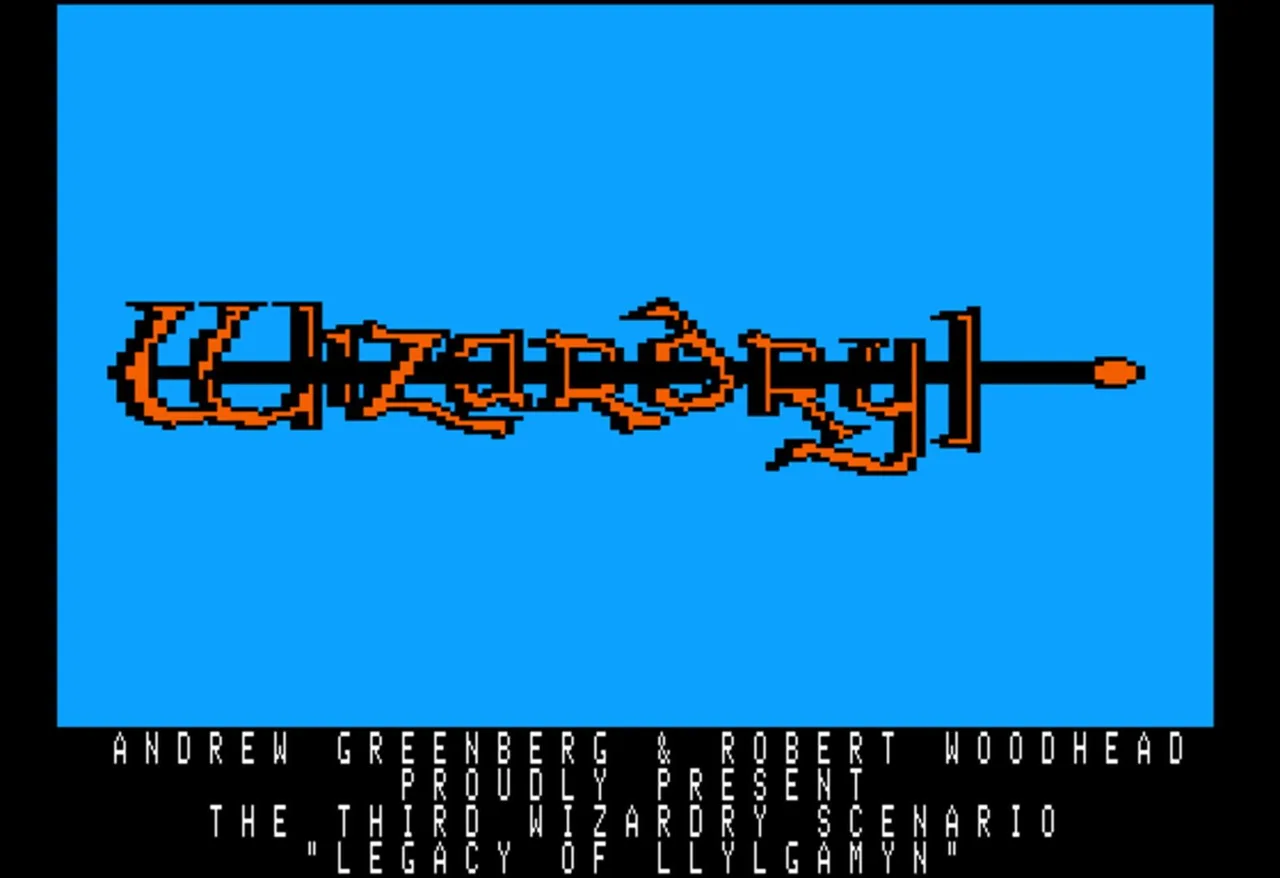
Wizardry: Legacy of Llylgamyn - The Third Scenario (1983)
Wizardry: Legacy of Llylgamyn - The Third Scenario is a 1983 role-playing (rpg) video game made by Sir-tech Software.
A generation after the Staff of Gnilda was recovered, peace holds until the earth itself turns hostile. Earthquakes and tidal waves batter Llylgamyn. The sages name the Orb of Scrying as the city's one hope, and the dragon L'kbreth guards it. Legacy of Llylgamyn sends the children of earlier heroes back underground. The third scenario adds rotating passages and shifting facings that make mapping harder than ever. You descend, chart every turn, and climb toward the dragon's lair while the city shakes above you.
Similar games
Explore Wizardry: Legacy of Llylgamyn - The Third Scenario guides
Wizardry: Legacy of Llylgamyn - The Third Scenario in our writing
- Companion guide: The Dungeon Crawler: Grid by Grid Through Gaming's Oldest Genre
A few thoughts on Wizardry: Legacy of Llylgamyn - The Third Scenario
Start with the earlier scenarios to know the world and the class ladder before this one twists your compass. Fans of its punishing cartography should try Might and Magic and The Bard's Tale, and Etrian Odyssey on handhelds keeps the draw-your-own-map ritual alive. Dragon Quest carried this bloodline to consoles.
Grid crawlers with mazes that turn against you
Legacy of Llylgamyn adds rotating passages and shifting facings that make its dungeon actively work against your sense of direction, the same disorienting trick Legend of Grimrock 2 and Arx Fatalis pull with spinning rooms and false walls. Dungeon Master, Etrian Odyssey, Operencia: The Stolen Sun and Stonekeep all demand the same constant remapping when the ground itself stops staying still.
CRPGs where your whole party levels up together
The Third Scenario lets the children of earlier heroes carry an inherited party forward, the same generational, whole-party progression that Might and Magic VI and Wizardry 8 build entire campaigns around. Baldur's Gate and Ultima VII: The Black Gate keep the same emphasis on a bonded group growing together, while Betrayal at Krondor, Darklands and Wasteland show how far that Wizardry-era party structure traveled.
Pulp fantasy on screen when Llylgamyn was young
Legacy of Llylgamyn came out the same pulp-fantasy moment that gave film audiences Conan the Barbarian and Dragonslayer, both trading in the same low-magic, monster-guarded-treasure setup as the hunt for the Orb of Scrying. Excalibur shares its interest in ancient relics guarded by something worse than soldiers, and Monty Python and the Holy Grail sends up the same quest-and-dragon furniture with a straight face.
Fantasy sagas built around a long, dangerous descent
Legacy of Llylgamyn sends a new generation down to face a threat their parents already fought once, echoing how The Fellowship of the Ring hands its quest to a small company facing something ancient. A Game of Thrones and its TV adaptation build the same slow-burn sense of a world under real threat, and The Name of the Wind treats its hero's descent into old dangers with the same weight.