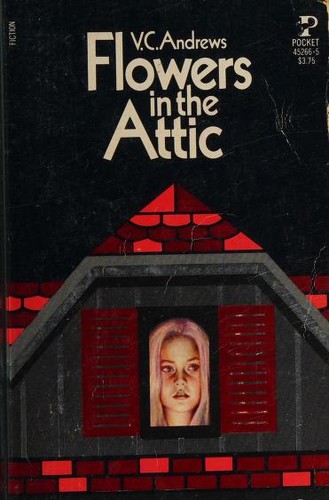

The book that launched a Gothic empire
V.C. Andrews published Flowers in the Attic in 1979, and the publishing industry did not know what to do with it. The novel follows the four Dollanganger children, Chris, Cathy, Cory, and Carrie, locked away in their grandmother's attic by a mother trying to reclaim her inheritance. It is a book about imprisonment, betrayal, and the damage parents do to children, wrapped in the guise of a Gothic melodrama. It became a word-of-mouth sensation, passed between teenage girls for years before anyone called it a classic.
Andrews (and, after her death in 1986, the ghostwriters working under her name) turned the Dollanganger family into a five-book series. The novels found their way to screen twice, separated by nearly three decades and aimed at very different audiences. The 1987 theatrical film softened the story to earn a PG-13 rating. The 2014 Lifetime film leaned back into the source material's more disturbing content and sparked a run of sequels on the same network. Neither version has fully satisfied readers who grew up with the book, which may be the truest measure of how much the novel got under people's skin.
Every version of Flowers in the Attic
The source novel, its sequels, and every screen adaptation


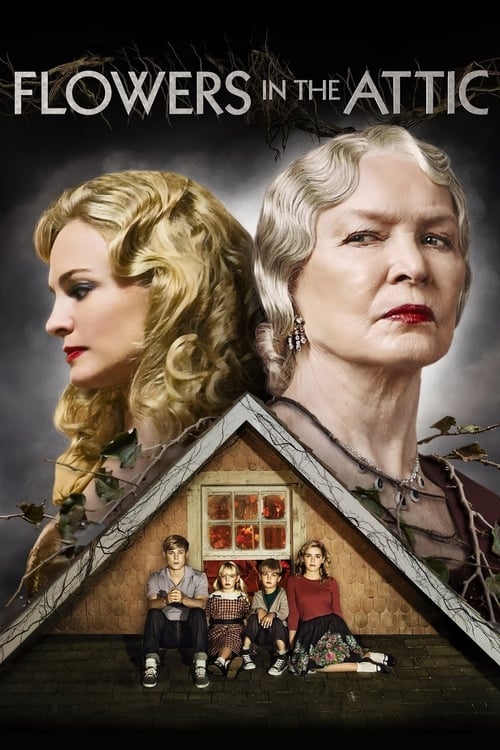
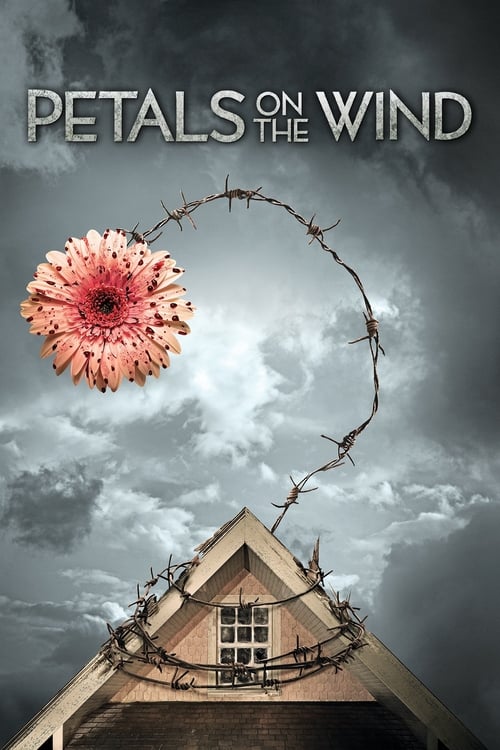

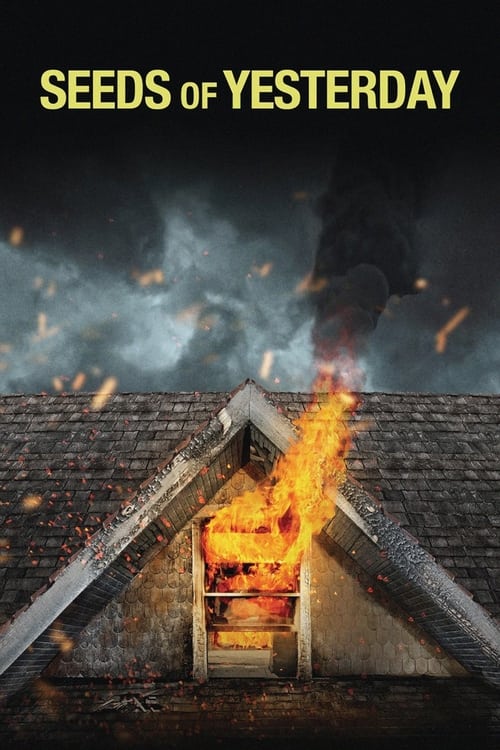
The Dollanganger story across four decades
- 1979V.C. Andrews publishes the original novel Flowers in the Attic
- 1980First sequel: Cathy's story continues Petals on the Wind
- 1981Third generation enters the picture If There Be Thorns
- 1984Fourth book closes the Dollanganger saga
- 1986V.C. Andrews dies at 63; ghostwriters continue under her name
- 1987First theatrical film, directed by Jeffrey Bloom Flowers in the Attic
- 1993Prequel novel published posthumously under Andrews' name
- 2014Lifetime film restarts the franchise with a more faithful adaptation Flowers in the Attic
- 2014Lifetime sequel follows the same year Petals on the Wind
- 2015Lifetime continues with back-to-back sequels If There Be Thorns
- 2015Fourth Lifetime installment completes the saga Seeds of Yesterday
If you love the Gothic family horror
Stories about family secrets, inherited damage, and houses that trap their inhabitants


If you love the V.C. Andrews world
Other Andrews novels and their adaptations, plus the paperback Gothic tradition

If you love children trapped by cruel adults
Captivity, control, and the long aftermath of childhood confinement
The book is the only version that gets the full horror
Both screen versions strip the novel down to its plot mechanics and lose almost everything that made it work. Andrews writes from inside Cathy's head, and that interiority, her love, her shame, her slow recognition of what is happening to her, is where the book lives. The 1987 film softened the story so thoroughly that it barely registers as disturbing. The 2014 Lifetime version is more faithful in incident, but television's pace and a modest budget flatten the sense of time passing, of children genuinely rotting in a room. The paperback, creased and handed from person to person, remains the version that leaves a mark.
The 2014 Lifetime film is more than a guilty pleasure
The Lifetime remake is easy to dismiss, and plenty of critics did. Kiernan Shipka's Cathy is a genuinely compelling performance, and Heather Graham's mother is appropriately monstrous without tipping into camp. Ellen Burstyn as the grandmother gives the film a gravity that the 1987 version never had. It is not a great film. It is, however, a reasonably honest attempt at the source material, and it takes its characters seriously enough that the betrayals land with some weight. For a Lifetime production it is also notably well shot, with a production design that earns the Gothic setting.
The 1987 film earns its reputation as the version to skip
Jeffrey Bloom's 1987 theatrical version was compromised before filming finished. The studio demanded a PG-13 rating and cut the material that gives the story its charge. Louise Fletcher does her best as the grandmother but is working with a script that removes her character's logic. The ending was rewritten in a way that misunderstands the entire point of the novel. Andrews reportedly disliked it. For anyone curious about the adaptations, start with 2014 and work back to the novel. This version is the cautionary tale, not the entry point.