
A cinema defined by what was forbidden
For most of the twentieth century, making a film in Catalan was a political act before it was an artistic one. Franco's regime banned the language from public life, and Spanish-language production in Barcelona meant the genre factories of the 1960s and 70s: horror, exploitation, the so-called Escuela de Barcelona that answered Madrid's commercial cinema with cool, fashion-shoot formalism. Catalan as a spoken film language barely existed until the dictatorship ended.
What followed was less a movement than a long act of recovery. Public broadcaster TV3 (launched 1983) became the spine of the industry, normalizing Catalan on screen and funding the features that the market alone would never have backed. The result is a cinema with a peculiar double identity: rooted in a small language, yet routed through one of Europe's most cosmopolitan film cities, where Cannes ambitions and a household tongue share the same frame.
The modern story is the one worth telling. Over two decades a generation born around the end of the dictatorship (Isaki Lacuesta, Albert Serra, Carla Simon, Mar Coll, Jaime Rosales) turned Catalan from a quota requirement into the natural register of deeply personal cinema. In 2022 Simon's Alcarras, spoken almost entirely in rural Catalan, won the Golden Bear in Berlin. The language that the state tried to silence took the top prize at a major festival.
The auteurs who set the terms
Three filmmakers anchor the contemporary scene, and they could not be more different. Albert Serra is the provocateur-formalist, building glacial, painterly films out of literary myth (Don Quixote, Casanova, the dying Sun King) and treating cinema as a high-art happening. Isaki Lacuesta is the shape-shifter, sliding between documentary and fiction, twice winning the top prize at San Sebastian. Carla Simon is the memoirist, mining her own family history in rural Catalonia with a tenderness that disarms.
Around them sits a deep bench: Jaime Rosales and his austere experiments with form, Mar Coll's sharp domestic dramas, Marc Recha's quiet rural lyricism, and the documentary tradition that runs through the whole national project. Catalan cinema is not big, but it is unusually serious about what film can be.
A small language forced its directors to be specific, and specificity is what travels. Alcarras is about one family's peach harvest, which is exactly why it played in a hundred countries.CrossBinge editors
From ban to Golden Bear
- 1967The Escuela de Barcelona crests with Vicente Aranda's cool, mod-inflected formalism Fata Morgana
- 1983TV3 launches, normalizing Catalan on screen and becoming the industry's funding spine
- 1992Bigas Luna's Iberian-erotic comedy makes a young Javier Bardem a star Jamon Jamon
- 2006Albert Serra reinvents Don Quixote as slow-cinema myth
- 2010Pa negre sweeps the Goyas, a rare majority-Catalan film to dominate Spain's top awards
- 2017Carla Simon's debut wins the Berlinale's best first feature Summer 1993
- 2022Alcarras wins the Golden Bear; a rural Catalan film takes Berlin's top prize
The Bigas Luna problem, and the genre underbelly
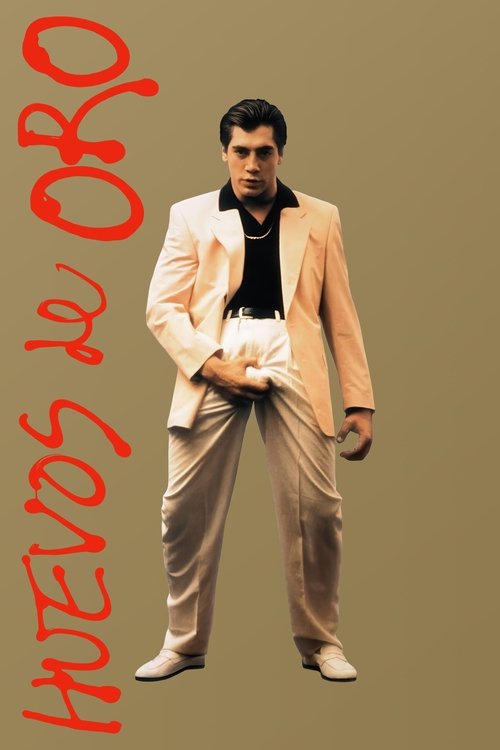
No honest account skips Bigas Luna. His baroque, sun-drunk fables of Spanish appetite (Jamon Jamon, Golden Balls, The Tit and the Moon) launched Bardem and Penelope Cruz and remain among the most internationally famous films ever made by a Catalan director. They were mostly in Spanish, which is the recurring tension of this cinema: its biggest exports often abandon the language at the heart of the project.
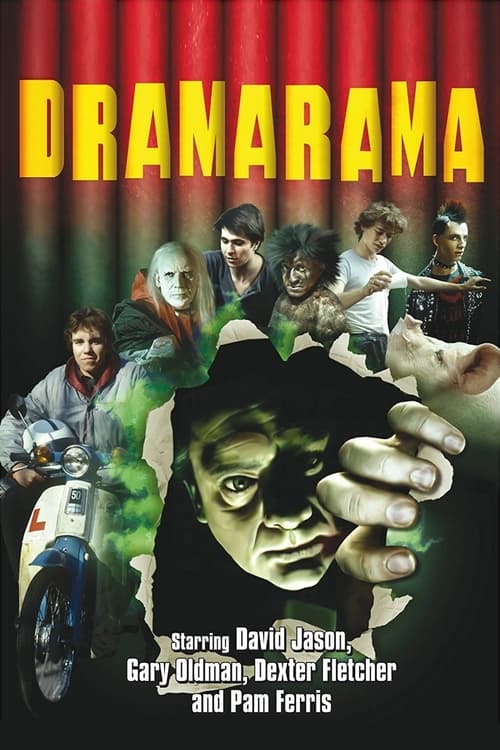
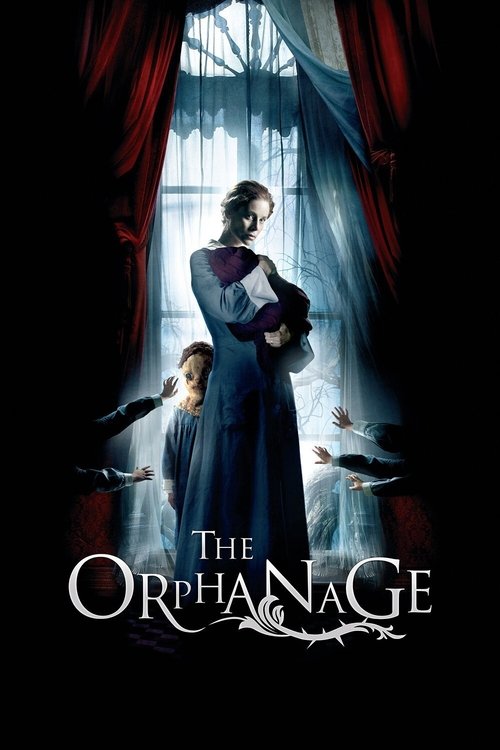
The same is true of the genre tradition. Jaume Balaguero and Paco Plaza's REC turned a Barcelona apartment block into one of horror's great found-footage nightmares, and Jaume Collet-Serra and J.A. Bayona went on to Hollywood. Brilliant Catalan filmmakers, rarely Catalan-language films. That gap, between Catalonia's film talent and its film language, is the most interesting unresolved question on the page.
Barcelona on screen, in any language
The Catalan film industry's most exported faces, from Bigas Luna to horror


![[REC]](https://image.tmdb.org/t/p/w500/hgyJR4sgMsee6xMFM3xYiG6cDCh.jpg)
The page beneath the screen
Catalan literature, the canon that feeds the films


TV3 deserves more credit than any single auteur
It is tempting to write the history of Catalan cinema as a procession of geniuses. The truth is more institutional. Without TV3, the public broadcaster that has co-financed and aired Catalan-language film since 1983, there is no audience habit, no production pipeline, and no normalization of the language as something you simply watch a film in. Long-running daily drama such as El cor de la ciutat did as much to make Catalan ordinary on screen as any festival winner did to make it prestigious. Auteurs get the Golden Bears; the broadcaster built the room they were standing in.


Catalan on the small screen
The TV3 generation, plus the streaming wave that followed