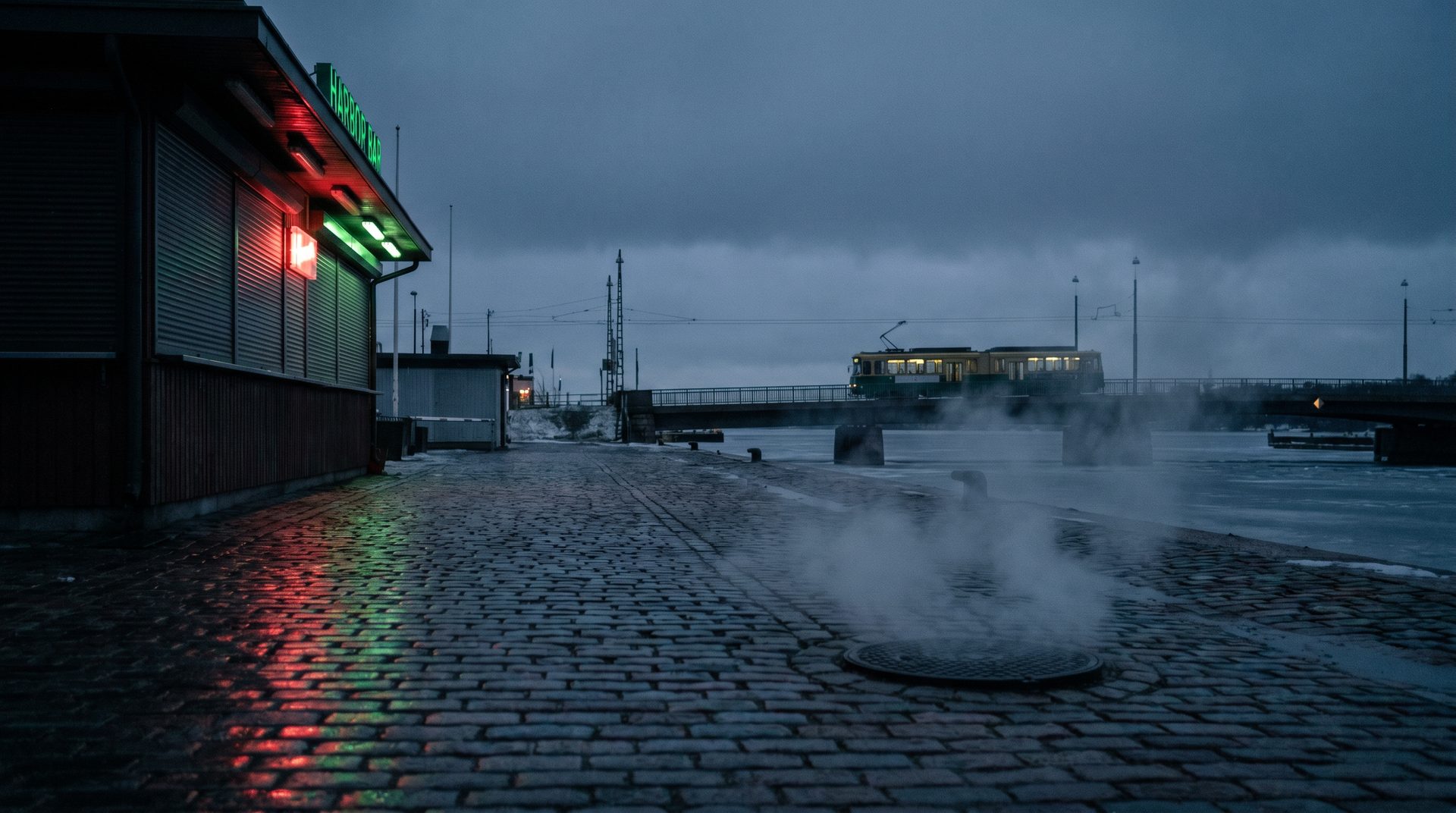

A cinema of withheld feeling
Finnish film has a temperature, and it is cold. Not unfeeling, but reserved to the point of comedy. The defining mode is deadpan: characters who say almost nothing, who absorb catastrophe with a blink, whose dignity is measured by how little they complain. No filmmaker codified this better than Aki Kaurismaki, whose proletarian tragicomedies turned dingy bars, jukeboxes, and unemployed dockworkers into a private universe of romantic stoicism. His films look like the 1950s even when set now, scored by old rock and roll and tango, framed in flat, painterly color.
But Finland is more than one auteur. Its cinema carries the weight of a small nation that fought two brutal wars against the Soviet Union, and the war film remains a national institution. It carries the long shadow of language and isolation, of a culture wedged between Sweden and Russia that built its own myths. And in the last decade it has produced genuine global breakouts, from a snow-bound action oddity to an Oscar-nominated romance, proving the deadpan travels.
The Kaurismaki canon
The auteur who made Finnish melancholy an export
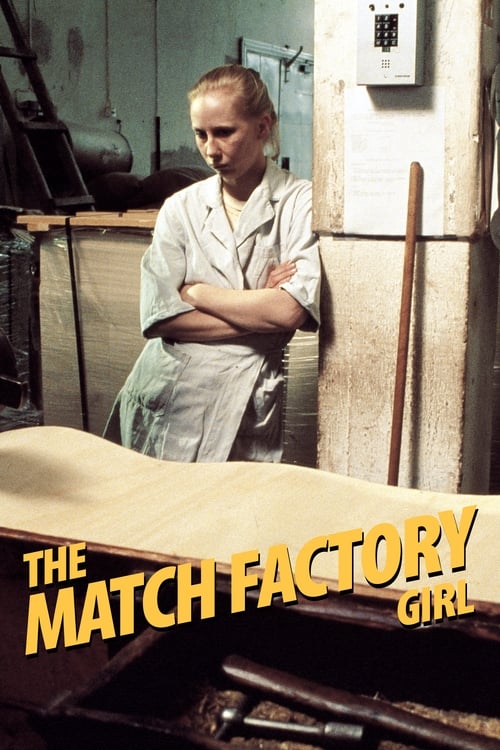
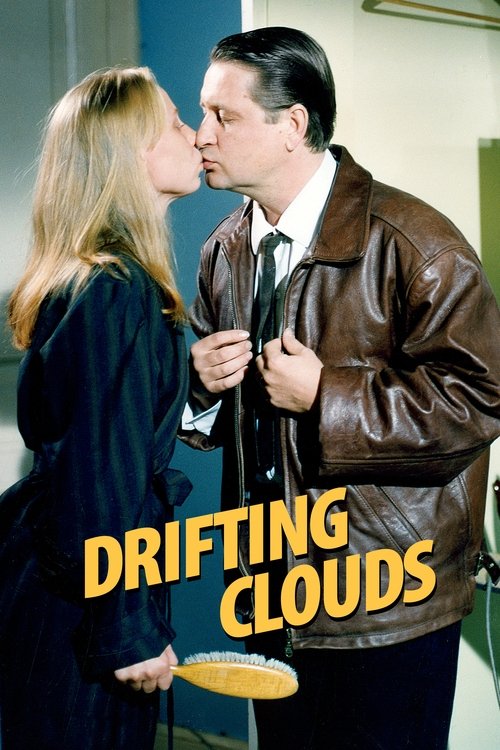

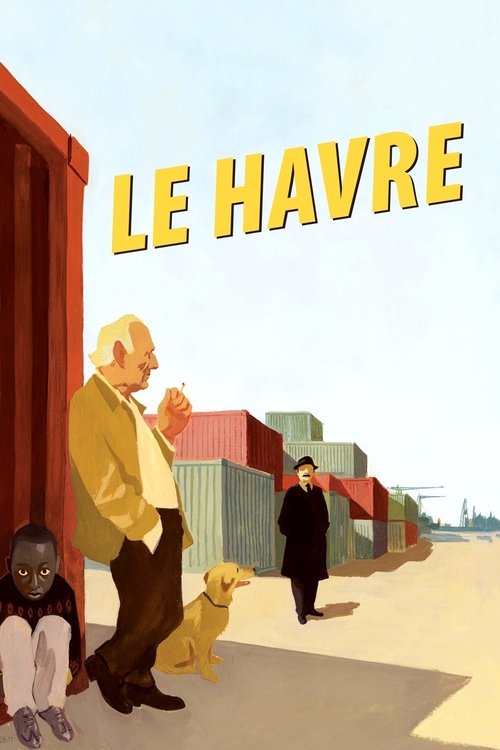

Kaurismaki's characters never raise their voices because the world has already won the argument. What is left is loyalty, a cigarette, and a dog.CrossBinge editors
The war, and the woods
No subject grips Finnish cinema like the Winter and Continuation Wars. The Unknown Soldier, adapted from Vaino Linna's monumental novel, has been filmed three times (1955, 1985, 2017), and each version is a national event, an unsentimental account of ordinary conscripts in a war they did not choose. Edvin Laine's 1955 original is one of the most-watched Finnish films on its home soil, traditionally broadcast around Independence Day. Alongside the war epic sits a strain of bleak rural and survival drama, where the forest and the frozen lake are characters in their own right.
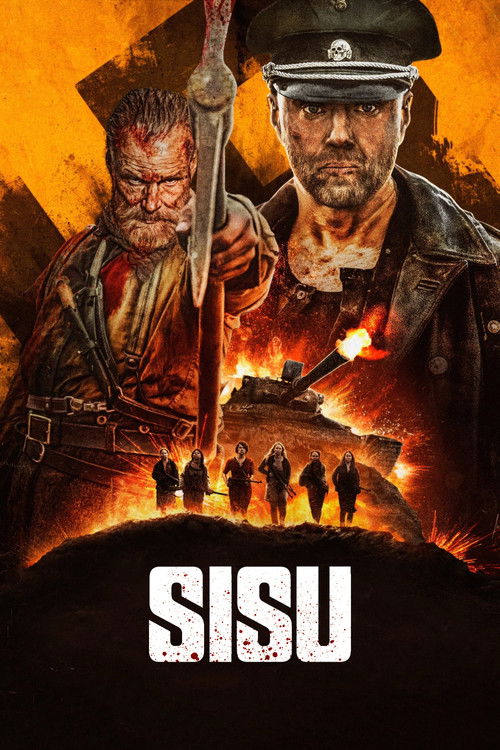
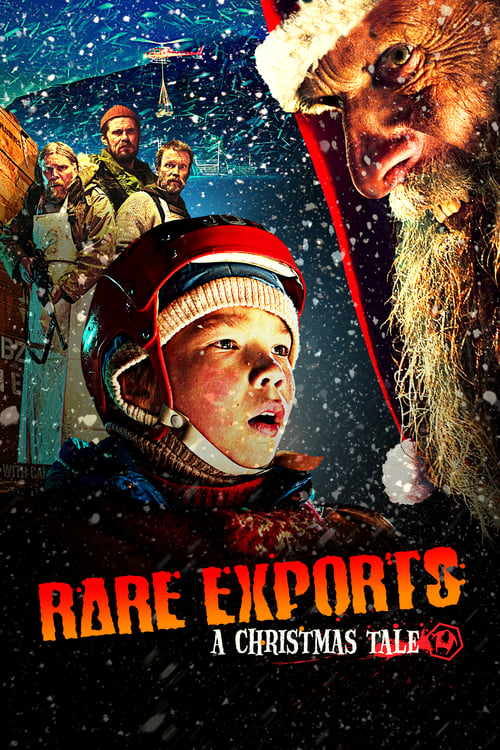
The modern industry has also learned to play genre with a straight face. Rare Exports: A Christmas Tale reimagined Santa Claus as a buried pagan monster. Sisu sent a near-mythical old prospector through Lapland slaughtering Nazis with the rhythm of a spaghetti western. Both export the Finnish self-image (taciturn, indestructible, faintly absurd) into pulp.
War, survival, and the frozen north
Where the landscape is the antagonist
A chronology of Finnish film
- 1955Edvin Laine's adaptation becomes a national monument
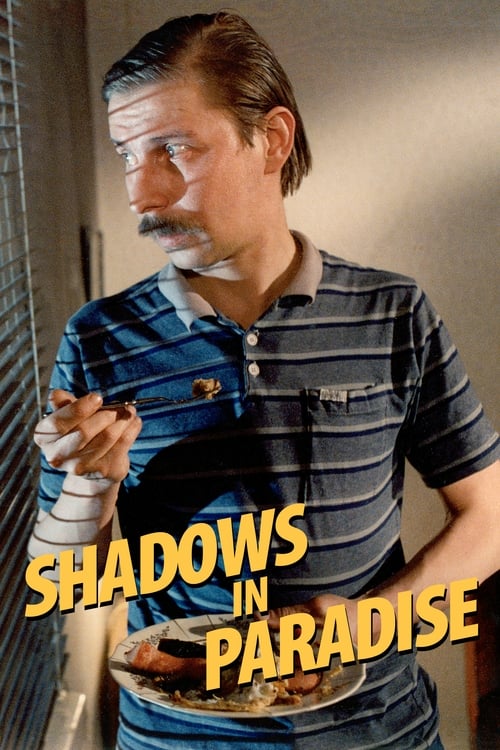
- 1986Aki Kaurismaki opens his Proletariat trilogy Shadows in Paradise
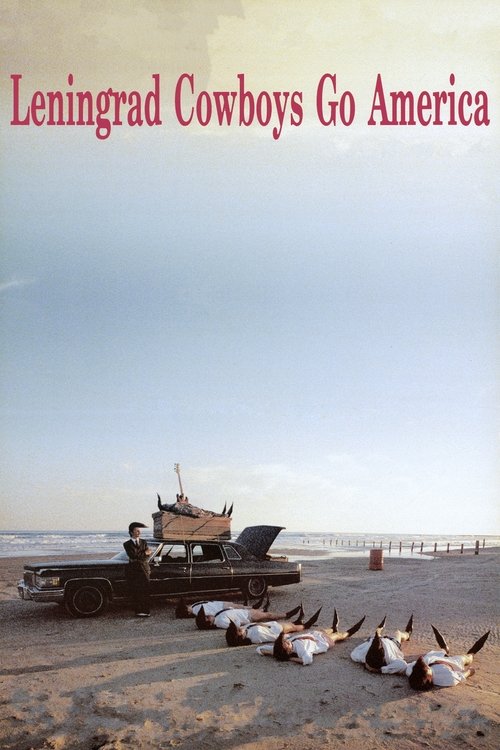
- 1989The Leningrad Cowboys take the deadpan road movie global Leningrad Cowboys Go America
- 1990The bleakest, purest Kaurismaki fable The Match Factory Girl
- 2002Cannes Grand Prix and an Oscar nomination The Man Without a Past
- 2010Finnish genre horror breaks out internationally Rare Exports: A Christmas Tale
- 2022A Lapland action myth becomes a worldwide hit Sisu
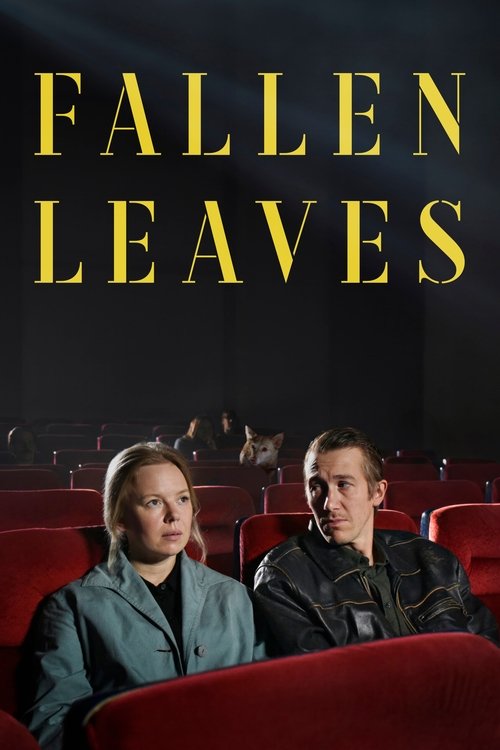
- 2023Kaurismaki returns with an Oscar-nominated romance Fallen Leaves
New voices and the contemporary wave
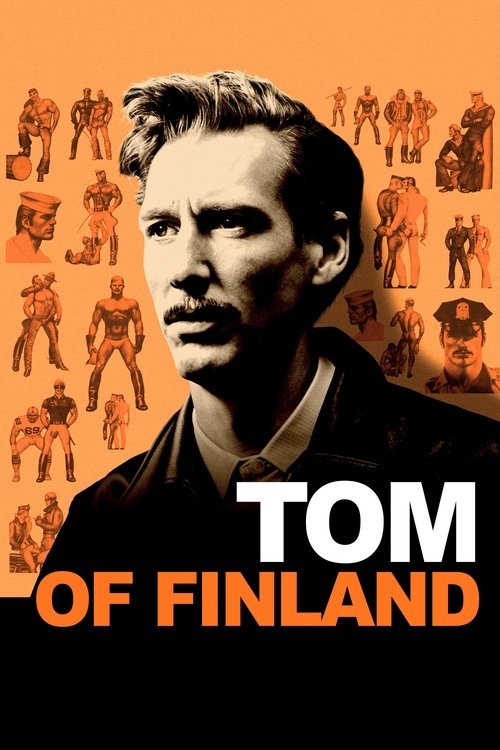
Beyond Kaurismaki, a younger generation has widened the range. Juho Kuosmanen brought a tender, handheld realism with The Happiest Day in the Life of Olli Maki and the Cannes-winning Compartment No. 6, a train romance that swapped icy minimalism for warmth. Klaus Haro works in handsome period drama. Dome Karukoski went from local comedies to the Tom of Finland biopic and Hollywood's Tolkien. There is also a hardy tradition of children's and family fantasy, much of it tied to the Moomins, Tove Jansson's Finnish-Swedish creations that became one of the country's most beloved cultural exports across books, animation, and music.
The new realists
Contemporary auteurs pushing past the deadpan


Read the source: Finnish literature on screen
The novels and characters behind the films


Fallen Leaves proves the deadpan never aged
Some worried that Kaurismaki's style had calcified into self-parody, the same jukeboxes, the same expressionless lovers, the same shabby apartments. Fallen Leaves answered them. Made in his sixties, it is funnier and more political than his work has any right to be, with the Ukraine war leaking from a radio into a romance between two lonely workers. The deadpan was never a gimmick. It is a moral position: that decency persists quietly, without spectacle, and that a film can be both tender and allergic to sentiment. Forty years on, no one does it better.