Don't Start With The Exorcist
7 min read
Every year the same two titles get handed to anyone who says they want to try horror: The Exorcist and Halloween. Both are extraordinary films. Both are the wrong first step, and it is worth saying out loud why. William Friedkin's 1973 adaptation of William Peter Blatty's novel was the first horror film ever nominated for Best Picture, and reports of people fainting in cinemas were part of its release. John Carpenter's 1978 film was made for around $300,000, took $70 million, and handed the next two decades the final girl, the killer's point of view and the holiday setting. Nine sequels and two remakes later, every beat in both films has been quoted, parodied and rebuilt so often that a newcomer meets the copies before the original. You do not get frightened. You get to recognize things.
The season is already open
Horror does not wait for October. The horror calendar Phantasmagoria keeps lists twenty-two releases across August alone, and they are not spread evenly: eleven of them, half the month, land on the last two Fridays, six on August 21 and five on August 28. Two classics are back on screens before that, with Train to Busan returning for its tenth anniversary on Friday, August 14 and The Texas Chain Saw Massacre on Tuesday, August 18. By the time the pumpkins are out, the good stuff has been available for six weeks.
So the next four weeks are the right window to build a taste for this, which means admitting something the film-first canon hides. Horror's strongest recent work is not concentrated in cinema. It is in television, in novels and, most uncomfortably for people who do not play games, in games. Anyone who only watches horror films is missing most of what the genre is currently making. What follows is a ladder, ordered from the easiest door to the hardest, and no two rungs are the same medium by accident.
1
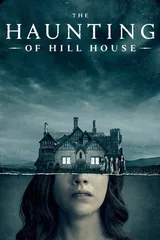
The Haunting of Hill House
2018 Netflix series, 10 episodes
The door. Mike Flanagan takes Shirley Jackson's premise and rebuilds it as a family drama about five siblings who cannot agree on what happened to them, which is why it works on people who insist they do not like horror. Episode six, "Two Storms", is built from extended takes that slide between a funeral home and the house, and it is where most viewers stop treating this as background television. Stephen King called the show close to a work of genius.
2
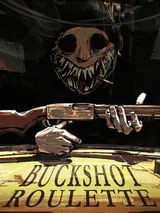
Buckshot Roulette
2023 game, Windows, Linux and Xbox
The cheapest way to learn what horror feels like when you are the one making the decision. Mike Klubnika's game sits you across a table from a dealer in a 1998 nightclub, playing Russian roulette with a shotgun over three rounds. There is no running, no aiming and nothing to master except nerve and item management. It had sold four million copies by December 2024 and reached Xbox on July 8, 2026, so the barrier to trying it has never been lower.
3
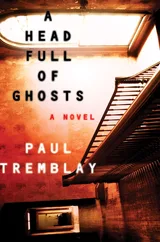
A Head Full of Ghosts: A Novel
2015 novel by Paul Tremblay
If you were about to reach for the 1973 possession classic, read this instead. Tremblay gives a Massachusetts family a fourteen-year-old daughter who may be possessed and a reality TV crew filming her exorcism, then hands the telling to her younger sister fifteen years on, alongside blog posts picking apart how the show was edited. It won the Bram Stoker Award for the year's best novel, and Stephen King said it scared the living hell out of him. The book knows the exorcism canon better than you do, and uses that against you.
4
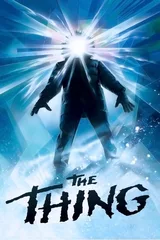
The Thing
1982 film
The first film on the ladder, and deliberately not a supernatural one. Carpenter's version of the 1938 novella Who Goes There? was attacked on release as cynical and excessive, took $19.6 million against a $15 million budget, and is now routinely named one of the best horror films ever made. Rob Bottin's creature work, built with a team of thirty-five people, still looks impossible. Watch it for the paranoia, which is the part every imitator has failed to copy.
5
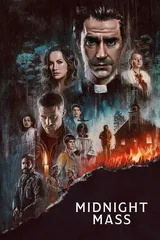
Midnight Mass
2021 Netflix miniseries, 7 episodes
Here the list starts asking for patience. Flanagan's seven-episode story about an isolated island parish and its new priest is a vampire story that spends most of its running time on grief, addiction and belief, in monologues long enough that some critics found them exhausting. They are also the best writing he has done. Hamish Linklater's Father Paul is the most frightening performance on this entire list, and he almost never raises his voice.
6
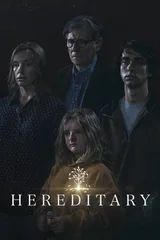
Hereditary
2018 film
Ari Aster's first feature, and the point where the climb gets steep. Critics gave it 90 percent on Rotten Tomatoes. Opening-weekend audiences gave it a D+ CinemaScore, which may be the most honest review it has received: people were not disappointed, they were ambushed. It is a film about inherited grief that refuses to release any tension it builds, and Toni Collette's performance is the reason viewers still flinch at the sound of a tongue click.
7
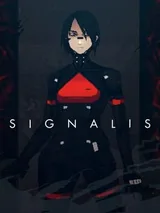
Signalis
2022 game
For anyone drawn to Silent Hill as an idea but wanting something stranger. The German studio rose-engine built a survival horror game out of locked-door design borrowed from Resident Evil, imagery out of Neon Genesis Evangelion, and the literary dread of Lovecraft and Robert W. Chambers, then set it in a hostile mining facility where an android is searching for someone. The inventory limits are cruel on purpose. It won Best Narrative and Best Indie Horror at the 2023 Horror Game Awards, and it is the only thing here that gets less clear the more of it you understand.
8
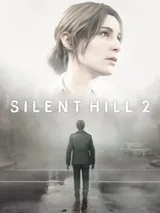
Silent Hill 2
2024 remake of the 2001 game
The hardest thing on this list, and the reason the games belong here at all. Bloober's remake keeps what made the original unbearable: a man walking through a fogged-out town looking for a wife who died three years ago, and monsters that are not metaphors so much as confessions. Nothing else in horror makes you the one doing the damage quite this patiently. Give it twenty hours or do not start it.
9
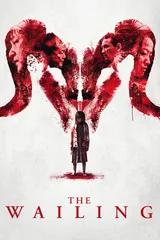
The Wailing
2016 film, South Korea
The graduation test, and the one rung that turns the whole ladder against you. Everything above it teaches that modern horror gives dread a cause you can name. Na Hong-jin's film spends its first hour as a rural police procedural about a village falling ill, hands you a cause, takes it back, then takes back the thing it offered in its place. A policeman has to decide who to believe, and he decides wrong, and the film has quietly arranged for you to decide wrong beside him. It screened out of competition at Cannes in 2016. Read nothing about it first.
What the order is doing
Read the ladder from the top and the argument shows. The first three rungs do not ask you to sit alone in the dark and be brave. They ask for ten hours of television, one evening at a table with a shotgun, and a paperback. What they teach is the thing the costume-party canon cannot teach, because it was made before the audience got fluent: modern horror runs on dread with a cause you already recognize. Grief in the Netflix series. Faith in Midnight Mass. Family in Hereditary. The monster is the delivery mechanism, not the subject.
The change of medium matters as much as the change of title. Games make you complicit in a way that film physically cannot, which is why survival horror does something to players that no jump scare has ever managed. Novels put you inside a narrator who is lying to you, which is psychological horror operating with no safety rail. Television has the hours to make you love a family before it begins taking them apart. Judging the genre by its films alone is like judging a band by its singles.
Start tonight
Put on the Netflix series. An episode is under an hour, it will not scare you off, and by episode six you will know whether the rest of this belongs to you. If you have already seen it, jump to A Head Full of Ghosts, which you can finish before Friday, August 14.
Then keep going past the eight. Under the Skin, Jonathan Glazer's adaptation of Michel Faber's novel, reached cinemas in 2014 after a Venice premiere, was shot partly on hidden cameras with people who did not know they were in a film, and carries a Mica Levi score more unsettling than anything in the October canon. And Shirley Jackson's 1959 novel remains the ceiling: a National Book Award finalist that both Neil Gaiman and Carmen Maria Machado named the scariest book they had ever read when the New York Times asked in 2018. Read it after the series and you can see exactly what Mike Flanagan kept, what he threw out, and how much of the dread was already sitting there in 1959.
None of this requires waiting for October. The releases have already started, and the list above will still be the right answer in November.