What Is the Right Metal Gear Order?
On Thursday, Metal Gear Solid: Master Collection Vol. 2 arrives with Metal Gear Solid 4: Guns of the Patriots and Metal Gear Solid: Peace Walker. A purchase bonus adds Metal Gear: Ghost Babel, the 2000 handheld entry. Put those games beside the first Master Collection and chronology begins to look like the responsible choice. The menu has handed you decades of fictional history. Why not begin at the earliest date and march forward?
Because Metal Gear does not tell one clean history. It tells stories about who controls history, what gets withheld, and how a familiar mission changes once you understand the person giving the order. Chronology can arrange the events. It cannot preserve the experience. For a first run, release order is not fan orthodoxy. It is the route that lets each game ask its question before a later game supplies an answer.
Start where the series learned to look back
Begin with Metal Gear Solid, the 1998 PlayStation game. It introduces Solid Snake, Shadow Moses, and the series' basic grammar with enough confidence that a newcomer does not need an encyclopedia first. Sneak past a guard. Learn what a codec call can reveal. Notice how often the game makes the player question the briefing. Its references to earlier missions establish a past without demanding that you complete two older games before you are allowed through the door.
If those references catch your interest, circle back after the credits to Metal Gear and Metal Gear 2: Solid Snake. Konami includes both in Master Collection Vol. 1, and they matter. They establish the original Outer Heaven missions and show how much of the later series was already present in compact form. They are valuable context, but they should be an optional prologue for a new player, not an admissions test. Starting with the 1998 game gives you the stronger dramatic entrance and the more readable mechanical one.
Let MGS2 argue with the game you just played
Go next to Metal Gear Solid 2: Sons of Liberty. This is where release order stops being a tidy preference and becomes essential. Konami's own archive describes its development theme as surpassing the first game while moving from PlayStation to PlayStation 2 and from one century to another. The sequel is built in conversation with Metal Gear Solid. It borrows expectations, repeats shapes, and makes the player's familiarity part of the material.
A chronological list treats MGS2 as another incident on a timeline. Played second, it becomes an argument about sequels, information, and the desire to experience the first game again with more polish. You do not need spoilers to understand the rule: the game expects you to arrive carrying memories of Shadow Moses. Deny it those memories and some of its sharpest choices become merely strange. Give it the correct predecessor and the strangeness has a target.
The prequel belongs third
Then play Metal Gear Solid 3: Snake Eater. Its story moves back to 1964 and follows Naked Snake during the Cold War, which makes it the obvious first stop on a chronological chart. Resist that chart. A prequel is rarely only an origin. It is a reply written with knowledge of what the audience already knows.
Placed after MGS1 and MGS2, Snake Eater can change the emotional meaning of names, loyalties, and institutions you have already encountered. The player understands the destination, so every hopeful beginning carries pressure. Played first, it remains an excellent survival-stealth adventure. Played third, it also becomes tragedy. The difference is not plot comprehension. It is dramatic weight. This is the strongest proof that historical order and storytelling order are different things.
MGS4 is an ending, not an introduction
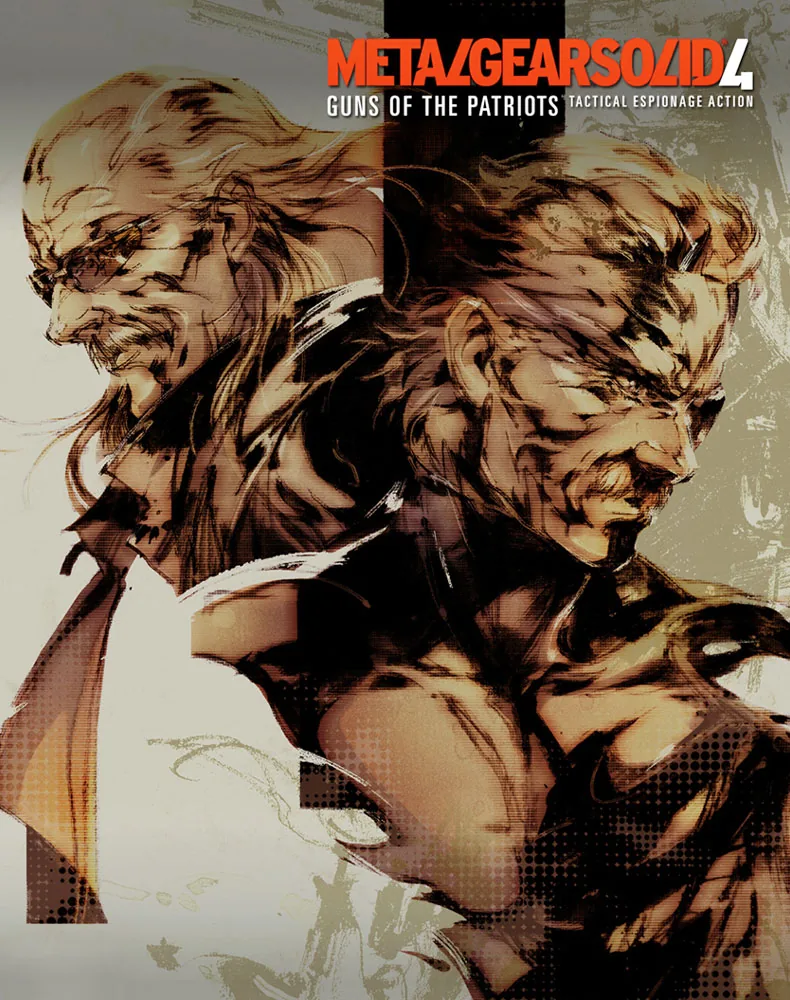
Continue to Metal Gear Solid 4: Guns of the Patriots. Konami's Master Book sample calls it a conclusion to the saga and describes its final confrontation between Solid Snake and Big Boss. That word, conclusion, should settle the placement. MGS4 is crowded with returns, consequences, and attempts to close loops. Its excess is part of the appeal, but only if the loops were opened for you first.
Starting here because Vol. 2 makes the game newly convenient would be like beginning a television drama with the reunion special. You could follow the immediate action, and the included Master Book could explain the names, but explanation is not investment. The pleasure comes from recognition. Play MGS4 after the first three Solid games and let it be enormous, sentimental, exhausting, and final in the way it was designed to be.
Peace Walker opens the second movement
After MGS4, play Metal Gear Solid: Peace Walker. Release order now sends you backward in fictional time again, but with a purpose. You have seen the saga reach for an ending. Peace Walker can reopen Big Boss's story without pretending the destination is unknown. Its mission-based structure and emphasis on building a force also prepare you for the form the next games will take.
Follow it with Metal Gear Solid V: Ground Zeroes, then Metal Gear Solid V: The Phantom Pain. Ground Zeroes is the compact prologue; The Phantom Pain is the much larger follow-through. Together they extend systems and ideas introduced by Peace Walker. Playing them before MGS4 may produce a neater calendar, but it weakens the deliberate rhythm of ending one version of the saga before returning to the history that made that ending possible. Release order allows the series to close, reopen, and become something mechanically different.
Keep Ghost Babel outside the main line
Save Metal Gear: Ghost Babel for last, or use it as a palate cleanser between major entries. Nintendo describes it as the series' first handheld title, released in 2000, and Vol. 2 presents it as a purchase bonus rather than one of the two central games. Its place in the package should not be mistaken for a missing chapter between MGS4 and Peace Walker.
Treat it as an alternate route: a compact Metal Gear that shows how the stealth formula was translated to Game Boy Color. That makes it interesting after you understand the main series, when its variations are visible. Forcing it into the central chronology creates a problem the game does not need to solve. Not every Snake mission has to carry the entire canon on its back.
The practical order
For a newcomer, the clean route is Metal Gear Solid, Metal Gear Solid 2: Sons of Liberty, Metal Gear Solid 3: Snake Eater, Metal Gear Solid 4: Guns of the Patriots, Metal Gear Solid: Peace Walker, Metal Gear Solid V: Ground Zeroes, and Metal Gear Solid V: The Phantom Pain. Add Metal Gear and Metal Gear 2: Solid Snake after the first game if you want the original missions while their references are fresh. Put Metal Gear: Ghost Babel wherever you want a side story, with the end of the run as the simplest home.
That order is not complete down to every spin-off, remake, and regional extra. It is a route for someone who wants the main dramatic line without turning the franchise into coursework. The series is complicated because it uses complication as an artistic tool. Do not solve that tool before it has a chance to work on you. Begin with the 1998 game, follow the releases, and let Metal Gear reveal its past at the moments it chose.