Why The Strain Is Worth Finishing
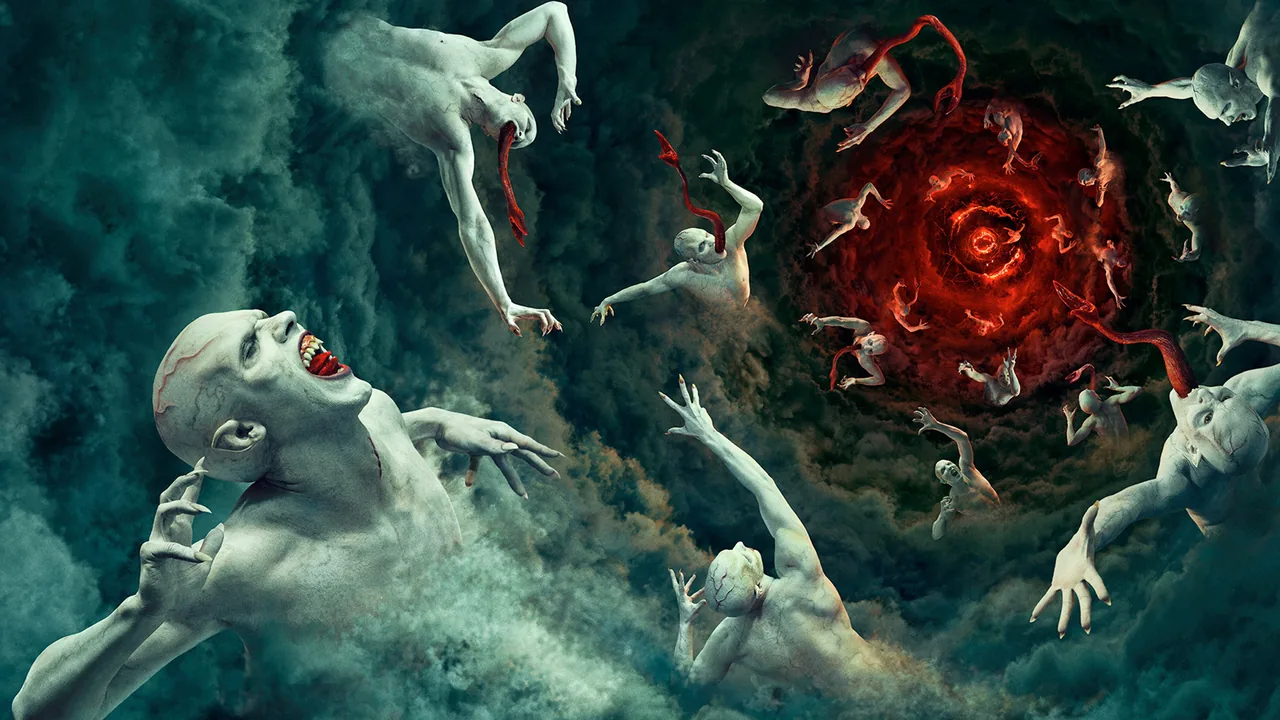
On Saturday, September 5, The Strain sat at No. 99 on our chart of the most popular sci-fi and fantasy TV shows. Two weeks later, on Saturday, September 19, it was No. 30. Sixty-nine places in fourteen days, for a show whose last episode aired on September 17, 2017.
The show has no new episodes to promote. Our charts measure blended popularity, which tells us that people are finding the show and nothing about why. So we will skip the guessing and answer the question that actually matters if you are one of those people: is The Strain worth starting in 2026, and how far should you go?
Short version: yes, start it. Just know where the road gets rough.

What you are signing up for
The setup is the best pitch in vampire television. A plane lands and everyone aboard is dead. Corey Stoll plays Ephraim Goodweather, who runs the CDC's Canary team, and what his people find looks like a virus with the fingerprints of an ancient strain of vampirism. David Bradley is Abraham Setrakian, a Holocaust survivor turned pawnbroker who knows exactly what came off that plane and wants the bodies destroyed. Kevin Durand is Vasiliy Fet, a rat exterminator who becomes the best reason to keep watching.
Guillermo del Toro created the show with the crime novelist Chuck Hogan, from their novel trilogy: The Strain (2009), The Fall (2010) and The Night Eternal (2011). Del Toro and Hogan wrote the pilot, and del Toro directed it. Carlton Cuse ran the show for FX across four seasons and 46 episodes.
That pilot is the reason to press play. Del Toro pitched the idea as television in 2006 and turned it into books only after the network president at Fox asked if he could make it a comedy. By the time it reached FX, he knew precisely what it should look like: grounded, procedural, then slowly stranger. The creature design is pure del Toro. These vampires spread by parasitic worms, a long way from capes and seduction, and FX's original key art, a worm burrowing into a human eye, drew enough complaints that the network replaced it on several billboards.








Where to stop, season by season
Seasons one and two (26 episodes). This is the Strain everyone remembers. Critics agreed: Rotten Tomatoes rates season one at 84 percent, praising "an effective mix of supernatural thrills and B-movie gore," and season two at 78 percent, with a consensus that "gory action helps compensate for an unfocused narrative." That second line is fair: the plotting wobbles, though the monsters hold up the whole way.
Season three (10 episodes). This is where the show sags, its weakest stretch, and its 55 percent score comes with the most honest consensus you will read about it: "Content with mediocrity, The Strain suffers under the weight of a stagnant story, scraping by on the pedigree of its style and visual effects." If you are going to bail, bail here, and you will have had 26 good episodes.
Season four (10 episodes). This is why you should stay. Cuse originally planned five seasons, then FX made the fourth the last. "After finishing the writing on season three, Guillermo, Chuck and I looked at our remaining story and felt the best version could be told in one more season," Cuse said when the final season was announced in September 2016. The compression helped. Season four holds a 100 percent score from 13 reviews, a small sample, with critics saying it "concludes on a high note."
Our verdict, then: watch seasons one and two as if they were the whole thing. If the finale of season two leaves you wanting more, push through season three knowing it is only ten episodes, because the ending is worth having. In the US, TV Insider's listings put it on Hulu, Shudder and AMC+.


The outbreak film climbing next door
On our chart of the most popular horror movies, Colony went from No. 17 on September 5 to No. 6 on September 19, and it now sits at No. 71 on our chart of the most popular 2020s movies. If The Strain is working for you, this is the natural double bill: another contained outbreak, another infection that seems to think.
Yeon Sang-ho, who made Train to Busan, directed it and wrote it with Choi Gyu-seok. Jun Ji-hyun plays Kwon Se-jeong, an ostracized biotechnology professor who turns up to a company presentation in an office building just as a scientist with a grudge unleashes a mutated slime mold. The building locks down. The infected share what they sense through a web of mycelium and learn from every failed attack, which is a genuinely nasty idea for a zombie film.
It premiered in the Midnight Screenings section at Cannes on May 15, opened in South Korea on May 21, and Well Go USA set its North American release for August 28. Critics were warm rather than rapturous: 81 percent on Rotten Tomatoes, whose consensus says it "lacks the vivid characterizations that distinguish director Yeon Sang-ho's best work but mostly reaffirms his mastery over zombie mayhem." That is about right. Go in for the swarm; the characters are thin.
Other climbers over the same two weeks: The Vampire Diaries rose from No. 25 to No. 13 on the sci-fi and fantasy chart, Futurama from No. 41 to No. 31, and on our drama TV chart The Lord of the Rings: The Rings of Power went from No. 57 to No. 45. Horror season is here, and your queue seems to know it.
If The Strain hooks you
Start with the books. The show follows the trilogy closely until the end, when FX's cut squeezed The Night Eternal, planned as two seasons, into one. If season four feels brisk, the novel is the long version, and The Strain and The Fall give you the procedural detail del Toro brought Hogan in to write.
Then go back to where del Toro's New York horror started. Mimic (1997) is the ancestor: a disease carried by cockroaches is killing Manhattan's children, and the fix breeds something worse. Cronos (1993) turns on an alchemist's device that promises eternal life, at a price. The Devil's Backbone and Pan's Labyrinth are the Spanish pair, set at the end of the Civil War and just after it, ghosts and fairy tales with real cruelty underneath. Crimson Peak is his gothic romance in a house that bleeds. And Guillermo del Toro's Cabinet of Curiosities is eight tales of terror he curated for anthology television. Then chase Colony with Train to Busan, Yeon's 2016 zombie film on an express train.