Sierra On-Line
Studio · founded 1979 · US
The house that graphic adventures built, from a spare-bedroom startup called On-Line Systems to the studio behind King's Quest, Space Quest, Gabriel Knight, and the golden age of point-and-click.
Sierra On-Line: The Golden Age of the Quest — Our deep read on the studio's golden age of graphic adventures, from Mystery House to Gabriel Knight.
A spare bedroom in Oakhurst
Sierra began in 1979 as On-Line Systems, run by Ken and Roberta Williams out of their home near Oakhurst, California. Ken was a programmer chasing contract work; Roberta, after playing the text adventure Colossal Cave, was convinced the genre was missing something obvious. It was missing pictures. Their 1980 game Mystery House put a crude line drawing on the screen above the text parser and effectively invented the graphic adventure. It sold well enough to fund the next one, and the next, and the company moved up into the Sierra Nevada foothills that gave it its name.
The early days
- King's Quest I
- King's Quest II
- King's Quest III
- Space Quest 1: Roger Wilco in the Sarien Encounter
- Space Quest 2: Vohaul's Revenge
- Leisure Suit Larry in the Land of the Lounge Lizards
- Police Quest: In Pursuit of the Death Angel
- Quest for Glory 1: So You Want to Be a Hero
King's Quest and the animated adventure
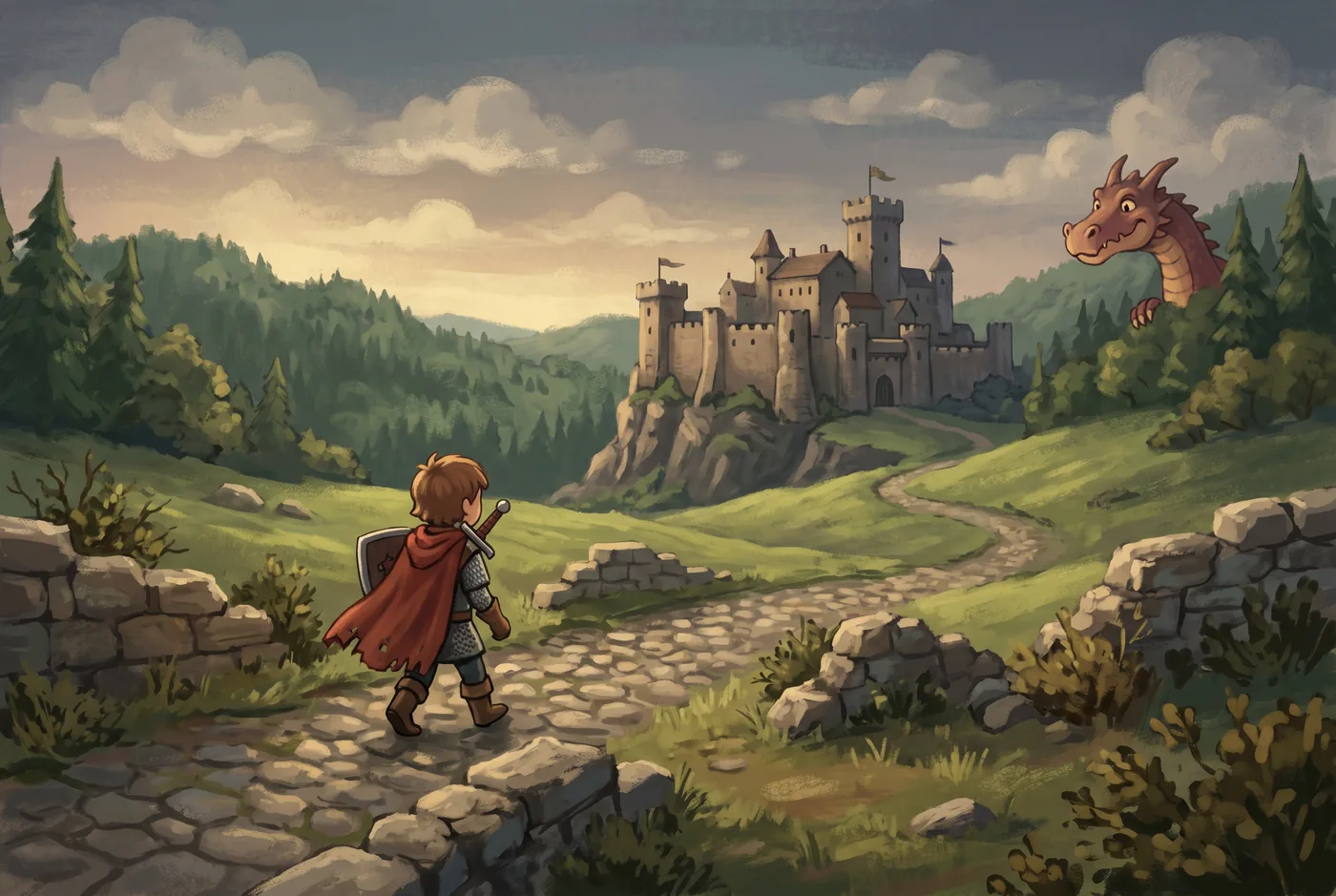
The company renamed itself Sierra On-Line in 1982, and in 1984 it made the leap that defined it. IBM wanted a showcase game for its new PCjr, and Roberta Williams delivered King's Quest: a fairy-tale kingdom you explored as a little animated knight who could walk behind trees and in front of castles, a screen you moved through rather than just read. Built on Sierra's own AGI engine, and later the sharper SCI engine, it set the template for a decade of Sierra adventures, parser-driven puzzles wrapped in hand-painted worlds.
The golden age
Through the late 1980s and mid-1990s Sierra ran a stable of adventure series that each had its own personality: the storybook fantasy of King's Quest, the sci-fi slapstick of Space Quest, the police procedural of Police Quest, the adult comedy of Leisure Suit Larry, and the RPG-flavored Quest for Glory. Then came the CD-ROM era and Sierra pushed it hard, with the full-motion-video horror of Phantasmagoria and Jane Jensen's literary Gabriel Knight, still one of the best-written games of the period.
The point-and-click golden age
- King's Quest V
- King's Quest 7: The Princeless Bride
- Space Quest 4: Roger Wilco and the Time Rippers
- Gabriel Knight: Sins of the Fathers
- Gabriel Knight 2: The Beast Within
- Phantasmagoria
- Quest for Glory 4: Shadows of Darkness
- Leisure Suit Larry 6: Shape Up or Slip Out!
- Leisure Suit Larry 7: Love for Sail!
- Torin's Passage
The people behind
- Roberta Williams — Co-founder, designer
- Ken Williams — Co-founder, CEO
- Jane Jensen — Designer, writer
- Al Lowe — Designer, composer
- Scott Murphy — Designer
- Mark Crowe — Artist, designer
Bought, scandalized, and hollowed out
In 1996 Sierra was acquired by CUC International, and the deal proved catastrophic. CUC became Cendant, and in 1998 it collapsed under one of the largest accounting-fraud scandals of the decade. Sierra was caught in the wreckage. Ken and Roberta Williams left, the Oakhurst studio that had been the company's heart was closed in 1999, and the pieces were sold to Havas and then Vivendi. The name survived, but as a publishing label. In that guise Sierra Studios still had one more classic in it: in 1998 it published Half-Life, which rewrote what a shooter could be.
Sierra as publisher
- Half-Life
- Half-Life: Opposing Force
- Homeworld
- No One Lives Forever 2: A Spy in H.A.R.M.'s Way
- F.E.A.R.
- SWAT 4
A name that keeps coming back
Vivendi's games arm merged into Activision Blizzard, which shelved the Sierra brand for years before reviving it in 2014 as a home for throwback titles, including a well-received episodic reboot of King's Quest by The Odd Gentlemen. The revival was modest and the label has stayed quiet since, but Sierra's real legacy is not a logo. It is the adventure genre itself, carried forward by the designers who trained there and by a fan community that still builds new games in the old Sierra style.