
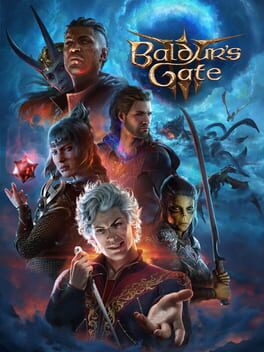
In 2023, a turn-based role-playing game with paragraphs of dialogue, dice rolls, and a menu of ways to fail became the biggest game on the planet. Baldur's Gate III sold in numbers reserved for shooters and sports franchises, swept Game of the Year, and did it while asking players to read. That success looked sudden. It was not. Larian Studios had been rehearsing that exact trick for a quarter of a century, in a small office in Ghent, Belgium, under a founder, Swen Vincke, who refused to make any other kind of game.
What Larian sells is not a setting or a mascot. It is a promise: the world will react. Pour water on a fire and it goes out. Push a barrel of oil down the stairs and light it. Talk your way past a fight, or shove the person you are talking to off a cliff. The studio's reputation runs on a single sentence players keep repeating in disbelief, "the game lets you do that," and on the long, stubborn climb it took to make that sentence reliable.
Start here
The two games that define modern Larian: the phenomenon, and the masterpiece that made it possible.
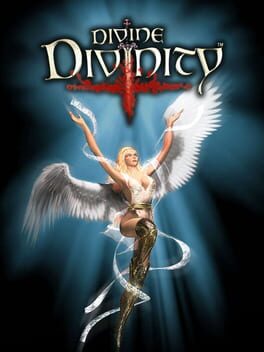
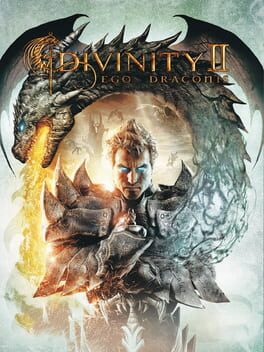
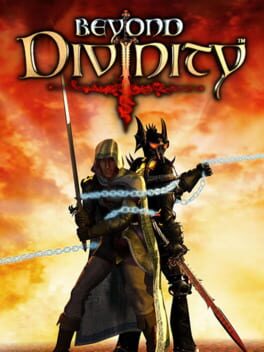
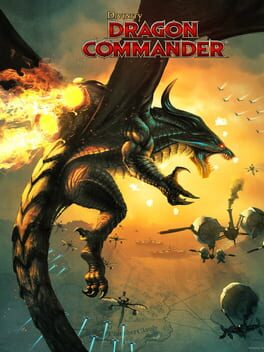
The origin is humbler than the legend. Divine Divinity arrived in 2002, an isometric action-RPG openly chasing the audience Diablo and Ultima had built, and it was good enough to matter and rough enough to nearly sink the company. Larian spent the 2000s in a familiar indie loop: a promising game, a publisher deal that went sideways, near-bankruptcy, and one more attempt. Beyond Divinity in 2004 experimented with a soul-bound companion system. Divinity II in 2009 let you literally transform into a dragon and fly over the map. Dragon Commander in 2013 grafted real-time strategy and political intrigue onto the same universe. None were hits. All were laboratories.
The long climb: classic Divinity
Divine Divinity to Dragon Commander, the two decades of experiments that taught Larian how to build a reactive world.
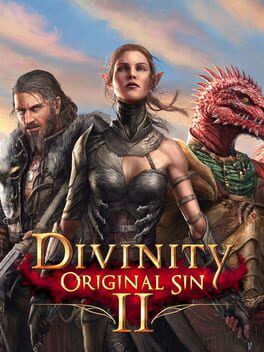
The Original Sin breakthrough
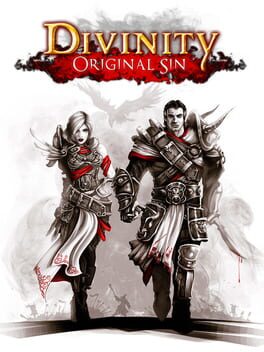
The pair that rebuilt the CRPG from the ground up: shared surfaces, drop-in co-op, and the freedom to solve any room your way.
From Ghent to Game of the Year
- 1996Swen Vincke founds Larian Studios in Belgium.
- 2002Divine Divinity launches, a well-reviewed action-RPG that also nearly bankrupts the studio.
- 2004Beyond Divinity experiments with soul-forged companions.
- 2009Divinity II: Ego Draconis lets players transform into a dragon.
- 2013Divinity: Dragon Commander fuses RTS, RPG, and political debate.
- 2014Divinity: Original Sin, Kickstarter-funded, revives turn-based co-op CRPGs.
- 2017Divinity: Original Sin II is hailed as one of the best RPGs ever made.
- 2020Baldur's Gate III enters Early Access under a Wizards of the Coast / D&D license.
- 2023Baldur's Gate III releases in full and sweeps Game of the Year.
Larian did not get lucky with Baldur's Gate 3. It spent 25 years learning how to earn that sentence, the game lets you do that, and then aimed it at Dungeons & Dragons.
Frequently asked
What is Larian Studios best known for?
Larian is best known for Baldur's Gate III (2023), the Game of the Year-winning Dungeons & Dragons CRPG, and for the Divinity series that preceded it, especially Divinity: Original Sin II (2017). The studio's signature is deeply reactive, systems-driven role-playing: elemental and physics interactions, turn-based combat, drop-in co-op, and an unusual amount of freedom to solve problems your own way.
Do I need to play the Divinity games before Baldur's Gate 3?
No. Baldur's Gate III is a standalone story set in Dungeons & Dragons' Forgotten Realms and requires no prior Larian games. That said, Divinity: Original Sin II is the clearest preview of how Baldur's Gate 3 plays, since it uses the same reactive combat and co-op design under Larian's own ruleset rather than D&D 5th Edition.
How is Baldur's Gate 3 connected to Dungeons & Dragons?
Baldur's Gate III was made under a license from Wizards of the Coast, the owner of Dungeons & Dragons. It uses the D&D 5th Edition rules and is set in the Forgotten Realms, continuing the lineage of the original Baldur's Gate games from the late 1990s. That tabletop foundation is the main cross-media thread running through the game, from its dice rolls to its classes and spells.
Who founded Larian Studios and where are they based?
Larian Studios was founded in 1996 by Swen Vincke and is headquartered in Ghent, Belgium, with additional studios opened over the years. Vincke remained the driving creative voice across the entire climb from Divine Divinity in 2002 to Baldur's Gate III in 2023, a rare example of one founder steering a studio from near-bankruptcy to Game of the Year.