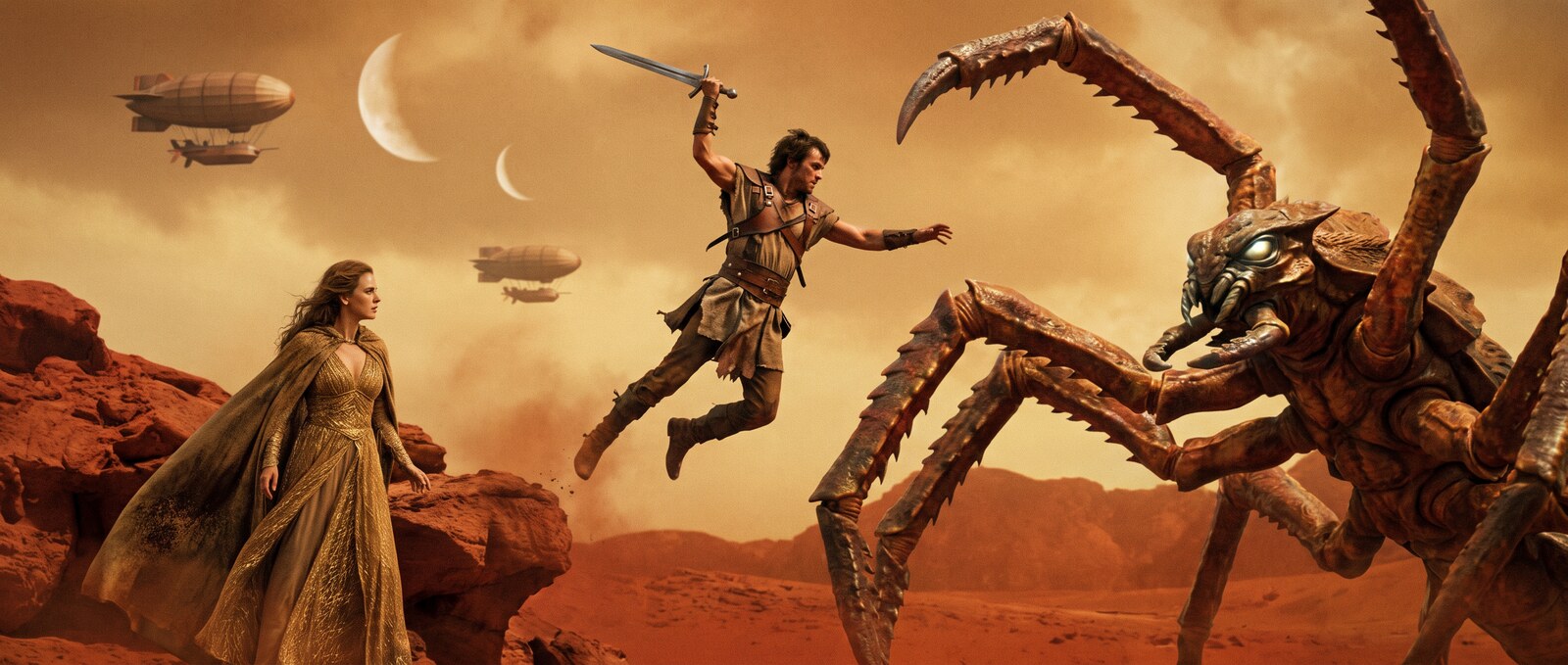

Sword and planet is the pulpiest, most gloriously unembarrassed corner of science fiction: an Earthman finds himself on a strange alien world of ancient civilizations, exotic beasts and beautiful princesses, and wins the day with a blade in his hand even as ray-guns and airships fill the sky. Edgar Rice Burroughs invented it in 1912 when he flung John Carter to Mars, Flash Gordon gave it its serial look, Leigh Brackett brought it real style, and James Cameron's Avatar reinvented it for the blockbuster age.
This is the complete guide across every medium: the Barsoom saga and the Burroughs tradition, the pulp planetary romances, the sword-and-planet films, the Saturday-morning cosmos of He-Man and his kin, the modern blockbusters, and the games that let you walk an alien frontier.
The essential sword and planet



The Barsoom saga and Burroughs


A Princess of Mars invented an entire genre
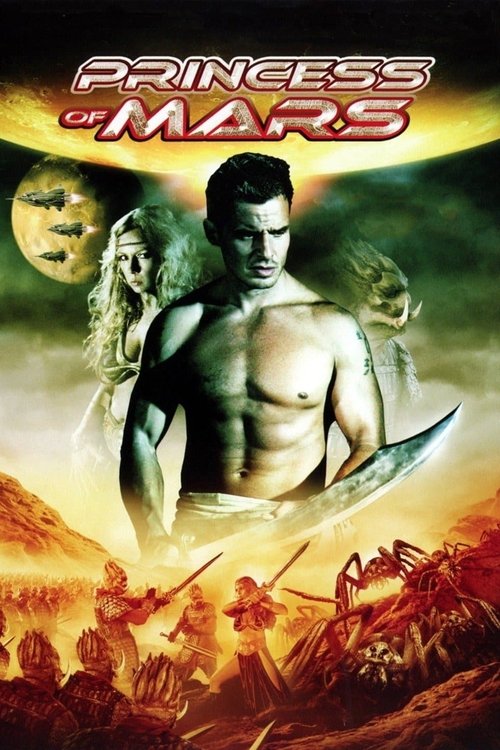
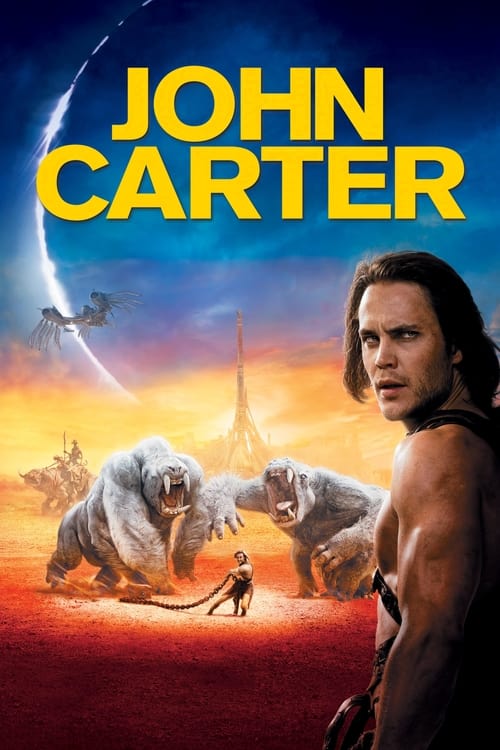
Edgar Rice Burroughs sent a Confederate soldier named John Carter to a dying Mars and, in doing so, created sword and planet whole cloth: the exotic red world of Barsoom, the four-armed green Tharks, the airships, the princess Dejah Thoris, and a hero who leaps across the low-gravity landscape with a sword in hand. Its influence is incalculable, running straight through Flash Gordon, Star Wars and Avatar. Every planetary romance since is a descendant of this gleeful, headlong adventure.
The pulp planetary romance


On screen: the sword-and-planet film
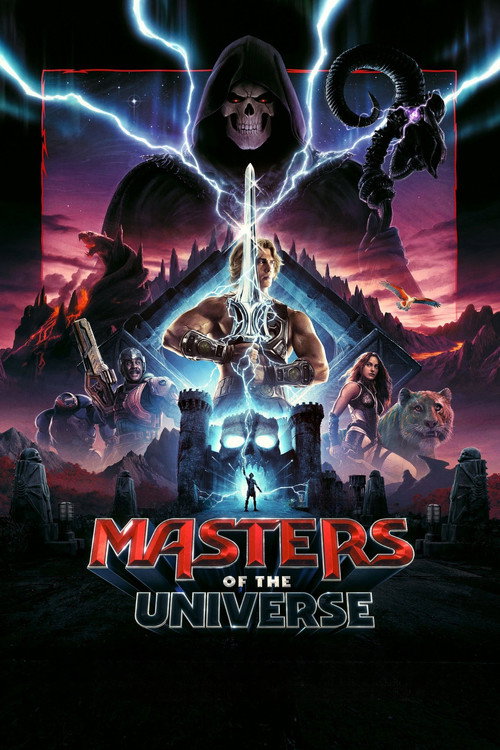
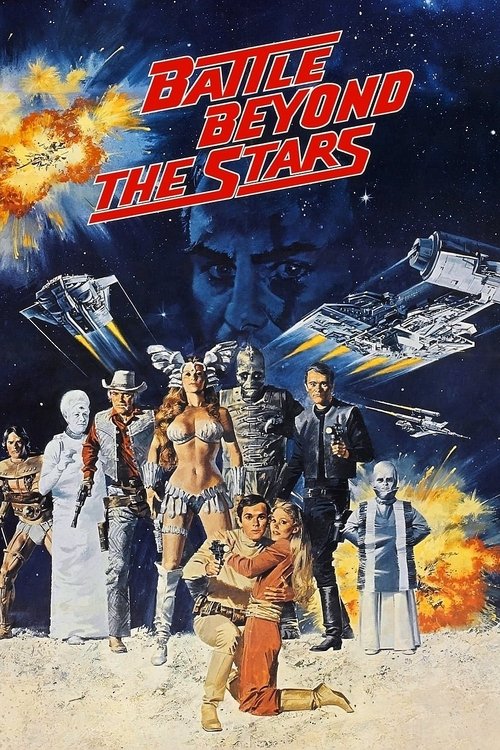
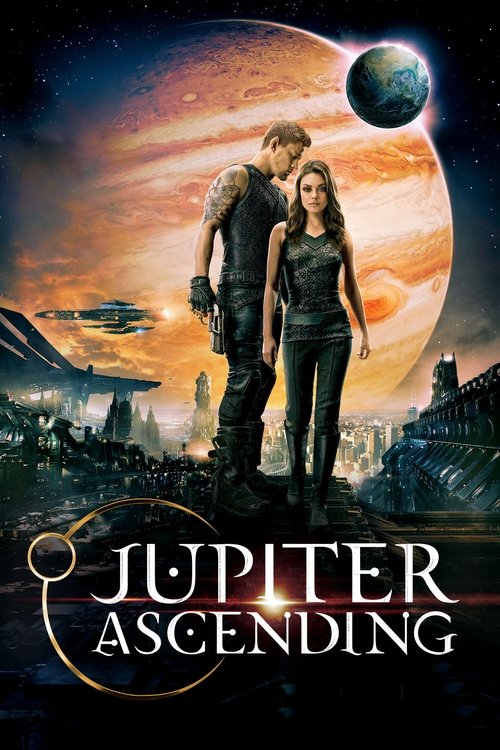
He-Man and the Saturday-morning cosmos
Flash Gordon gave the genre its look
When Flash Gordon leapt from the newspaper strips to the movie serials in the 1930s, he fixed the visual language of pulp science fiction for a century: the rocket ships trailing sparks, the art-deco alien cities, the caped tyrant, the ray-gun and the sword wielded side by side. The gloriously camp 1980 film, scored by Queen, made the whole aesthetic into pop-art spectacle. Its DNA is in Star Wars, and in every space adventure that chooses wonder over plausibility.
Play the alien frontier
Leigh Brackett's dying Mars


The timeline
- 1912Edgar Rice Burroughs's A Princess of Mars invents the sword-and-planet genre. Princess of Mars
- 1934The Flash Gordon comic strip fixes the look of pulp space adventure. Flash Gordon
- 1949Leigh Brackett's The Sword of Rhiannon brings style to the dying-Mars romance. The Sword of Rhiannon
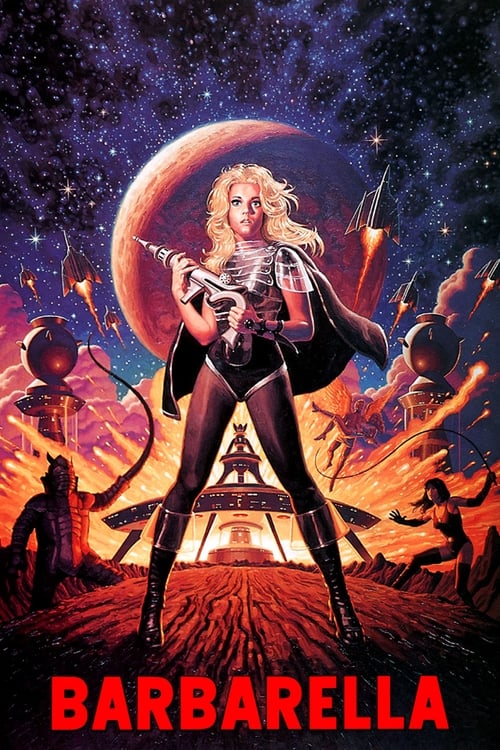
- 1968Barbarella turns planetary romance into psychedelic pop cinema. Barbarella
- 1980The Flash Gordon film makes the pulp aesthetic into camp spectacle. Flash Gordon
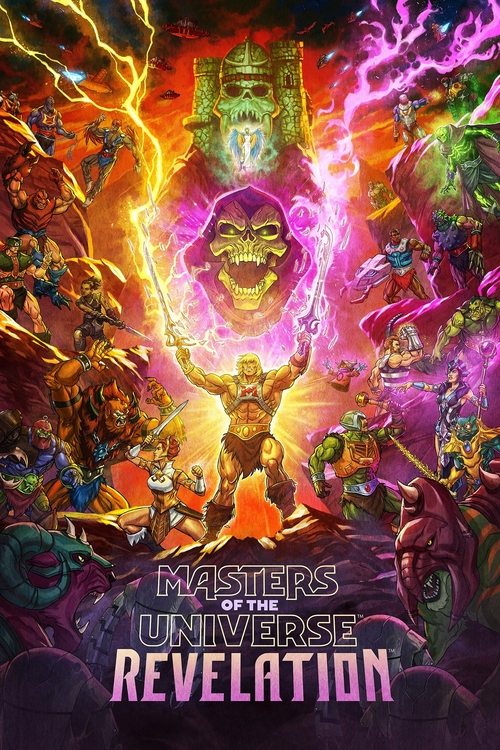
- 1983He-Man and the Masters of the Universe brings sword and planet to Saturday mornings. He-Man and the Masters of the Universe
- 2009Avatar reinvents planetary romance as the biggest film in history. Avatar
- 2012John Carter finally brings Barsoom to the big screen. John Carter
Leigh Brackett brought real style to the pulps
Before she wrote The Empire Strikes Back, Leigh Brackett was the queen of planetary romance, spinning tales of a dying, romantic Mars of dead-sea bottoms and ancient ruins, and of her hard-bitten adventurer Eric John Stark. She took the raw Burroughs formula and gave it mood, melancholy and genuine literary craft, proving sword and planet could be beautiful as well as thrilling. Her Mars is the one every wistful red-desert adventure still borrows.
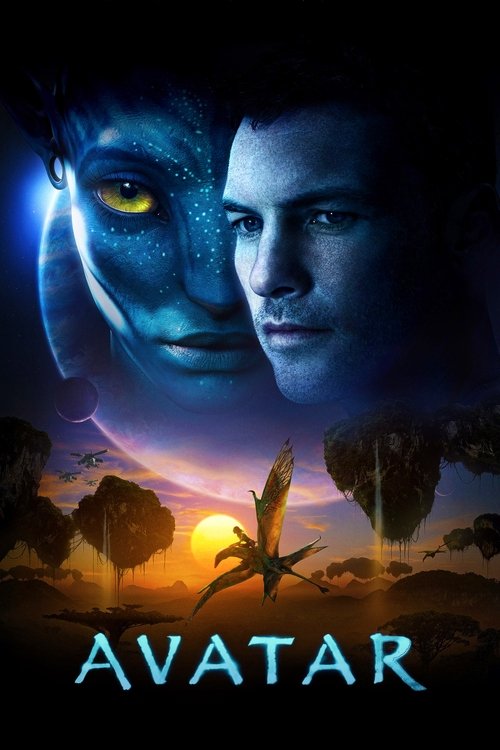
Avatar reinvented sword and planet for the blockbuster age
Strip away the 3D and James Cameron's Avatar is pure planetary romance: an Earthman travels to an exotic alien world, falls for a warrior princess, learns the ways of her people, tames a fearsome flying beast and takes up arms against the invaders. It is A Princess of Mars with a rainforest instead of a desert, and its staggering success proved the century-old formula still has overwhelming pull. Sword and planet never died; it just got a new coat of paint.
The pulp visionaries
Keep exploring
Space Opera
Explore the Space Opera guide →Frequently asked
What is sword and planet?
Sword and planet (also called planetary romance) is a subgenre of science fiction and science fantasy set on exotic alien worlds where adventurers fight with swords and other close weapons even amid advanced or alien technology. It typically features an Earthman hero transported to a strange planet, beautiful royalty, monstrous beasts and grand romance. Edgar Rice Burroughs's Barsoom (Mars) novels are the defining example.
Why do sword-and-planet heroes use swords in a science-fiction setting?
It is partly pulp convention and partly in-world logic: many sword-and-planet settings feature ancient, decadent or resource-depleted civilizations where personal honor, tradition or a scarcity of power favors the blade. The mix of swordplay with airships and ray-guns is a deliberate romantic aesthetic, prizing heroic physical adventure over cold technology.
What is the difference between sword and planet and space opera?
Space opera is about grand interstellar civilizations, starship fleets and galaxy-spanning conflict. Sword and planet is more intimate and earthbound (or single-planet-bound): one hero, one exotic world, personal combat and romance. Sword and planet is also usually more overtly pulpy and fantastical. Star Wars famously blends both traditions.
Where should I start with sword and planet?
Edgar Rice Burroughs's A Princess of Mars is the essential starting point. For its style at its best, Leigh Brackett's dying-Mars stories such as The Sword of Rhiannon. On screen, the 1980 Flash Gordon, the underrated John Carter (2012), and, in spirit, James Cameron's Avatar.