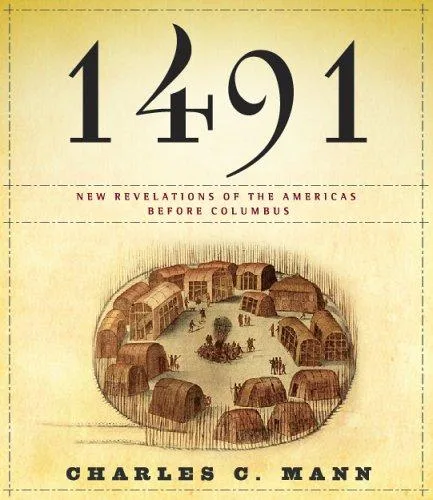
1491 (2005)
1491 is a 2005 origin book written by Charles C. Mann.
Charles C. Mann gathers three decades of archaeology, anthropology, and demography to redraw the Americas before Columbus. The old picture of sparse nomadic bands living lightly on untouched land does not survive the evidence. Mann reports cities larger than any in Europe, Tenochtitlan with its clean streets and running water, engineered landscapes from the Amazon to New England, and populations that later collapsed under imported disease. He writes as a journalist tracking working scientists and their disputes, so the reader sees how the new consensus was argued into being. The result reframes a hemisphere's deep past.
Similar books
Explore 1491 guides
A few thoughts on 1491
For a filmed companion, the documentary series 1491: The Untold Story of the Americas Before Columbus surveys the same reappraised civilizations across the hemisphere. Strategy players curious about how such societies rose and fell can trace parallel arcs in Sid Meier's Civilization, where population, agriculture, and disease shape every empire's fate.
Adventure games that make you excavate a lost civilization
Mann spends 1491 uncovering the scale of what was actually built across the Americas before Columbus arrived. These games chase a similar thrill of monumental, half-buried history: Uncharted's crews dig through jungle ruins for a forgotten city, while Civilization VI hands you the tools to raise an empire from a single settler, tech tree and all.
Assassin's Creed games that turn real history into a playable world
1491 rebuilds the pre-Columbian Americas from archaeology and demography rather than myth. The Assassin's Creed series does something similar with its own settings: Renaissance Florence in II and Brotherhood, the American Revolution's contested frontier in III, and the Caribbean's colonial trade routes in Black Flag, all rendered with the same appetite for lived-in historical detail.
Comics that restage history's great empires as epic sagas
1491 measures empires by roads, cities and grain stores rather than swords. These comics take the more theatrical route through history's power struggles: Kingdom restages China's brutal unification wars, 300 recasts Thermopylae as myth, and League of Extraordinary Gentlemen and Scarlet Traces both stage the British Empire's Victorian reach as pulp adventure.