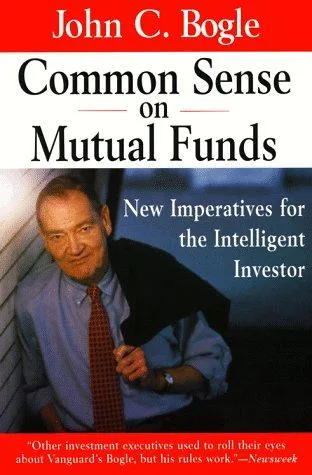
Common sense on mutual funds (1999)
Common sense on mutual funds is a 1999 mutual funds book written by John C. Bogle.
John Bogle spent a career arguing that the surest way to build wealth is also the least glamorous: buy a low-cost, broadly diversified index fund and hold it for the long run. In this updated second edition, the mutual fund pioneer walks investors through how funds actually work, why costs and complexity quietly erode returns, and how a patient, simple strategy tends to beat the majority of Wall Street professionals over time. Written in plain language for anyone building a portfolio, it makes a steady, evidence-minded case against chasing performance and in favor of letting common sense do the heavy lifting.
Similar books
Explore Common sense on mutual funds guides
A few thoughts on Common sense on mutual funds
Investors persuaded by John C. Bogle's low-cost gospel should read Burton Malkiel's A Random Walk Down Wall Street, which makes the academic case for indexing, or Bogle's own shorter Little Book of Common Sense Investing. For the darker side of Wall Street complexity, the film The Big Short dramatizes how opaque products blow up, while PBS Frontline digs into the fees and incentives that quietly cost ordinary savers.
Plain-spoken guides that reward patience and discipline
John Bogle argues that simple, low-cost investing beats clever complexity over time. These practical books share that clear-eyed philosophy, cutting through noise to teach money, skill and strategy in plain language, each making a patient, evidence-minded case that steady principles tend to outlast whatever the crowd is chasing this year.
Evidence-minded documentary series that follow the facts
Bogle wins his argument the way good journalism does, with data and plain reasoning rather than hype. These long-running documentary series work the same way, investigating money, science and history with rigor and curiosity, ideal if you like the book's calm, show-your-work approach to understanding how the world actually operates.