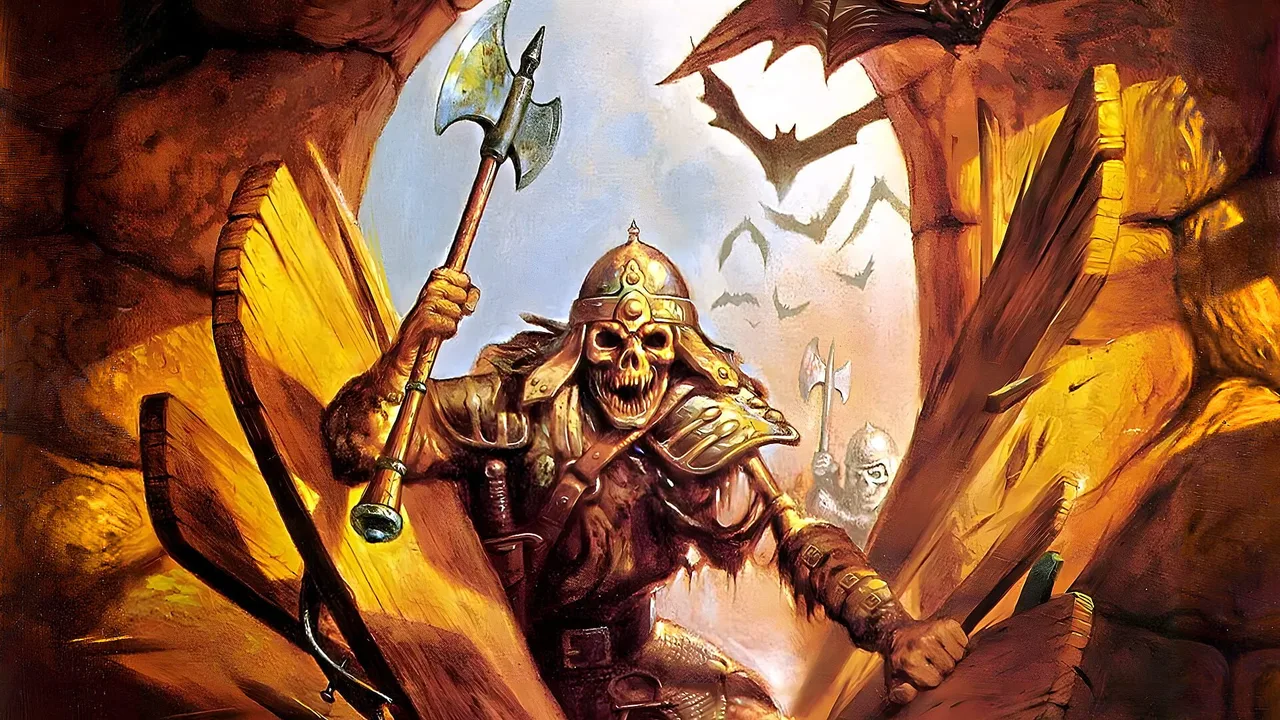
Eye of the Beholder (1991)
Eye of the Beholder is a 1991 real time strategy (rts) video game made by Westwood Associates.
Something has gone wrong beneath Waterdeep, and the city's lords send a party down into the sewers to find out what. Westwood's real-time crawler moves grid by grid through the catacombs, rendering the dungeon in a first-person view that felt startlingly solid on 1991 hardware. It runs on Advanced Dungeons & Dragons 2nd Edition rules inside TSR's Forgotten Realms, so spell memorization, thief skills, and party balance all matter. The claustrophobia is the point. No daylight, no map but the one you draw, and pressure plates and riddles guard every locked door. Descent is the only way forward.
Similar games
Explore Eye of the Beholder guides
Eye of the Beholder in our writing
- Companion guide: The Golden Age of the CRPG: 1981 to 1999
- Companion guide: Dungeons & Dragons on the PC: From the Gold Box to Baldur's Gate 3
A few thoughts on Eye of the Beholder
Westwood built this in Dungeon Master's image, so that real-time crawler is the obvious companion piece. Fans drawn to the Forgotten Realms have richer roads now: the Baldur's Gate games set party-based D&D loose in the same world, and the film Dungeons & Dragons: Honor Among Thieves plays in that setting with an adventuring party of its own.
D&D adventures where the rulebook is the real dungeon master
Eye of the Beholder runs on Advanced Dungeons & Dragons 2nd Edition rules, so spell memorization and thief skills matter as much as swordplay. Dungeons & Dragons: Honor Among Thieves, Baldur's Gate, Planescape: Torment and Pool of Radiance all carry that same TSR-built ruleset onto the screen, where the system itself is as much a character as anyone in the party.
Other hardcore rule systems from the same CRPG generation
Eye of the Beholder demands you track party balance and thief skills the way its 1991 rulebook intended, with no shortcuts offered. Fallout, Betrayal at Krondor, Darklands, Daggerfall, Wasteland, Ultima IV and Ultima VII all build their own dense, unforgiving systems from that same era, rewarding players willing to learn a whole new rulebook from scratch.
First-person crawls built from the same claustrophobic bones
Eye of the Beholder never lets daylight in, just torchlit sewers, pressure plates and riddles guarding every locked door. Legend of Grimrock and its sequel, Dungeon Master, Ultima Underworld, Arx Fatalis, Vaporum, Operencia and Stonekeep share that same grid-by-grid descent, where the only map that exists is the one you draw yourself.
Sword-and-sorcery epics from the same fantasy shelf
Eye of the Beholder sends a hired company down into Waterdeep's sewers to face whatever TSR's Forgotten Realms has waiting below. The Fellowship of the Ring, Conan the Barbarian, Excalibur, Dragonslayer, A Game of Thrones, The Name of the Wind and Game of Thrones share that same medieval-fantasy backbone, companies and courts caught up in something far larger than themselves.