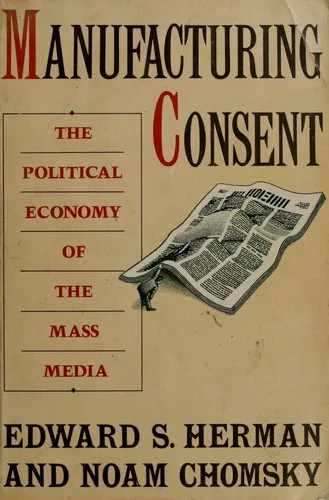
Manufacturing consent (1988)
Manufacturing consent is a 1988 mass media book written by Edward S. Herman and Noam Chomsky.
Two scholars set out to explain why the American press, free of state censorship, so often reports the world the way powerful interests would prefer. Edward Herman and Noam Chomsky lay out a propaganda model built on five filters: concentrated media ownership, advertising revenue, reliance on official sources, organized flak, and a governing ideology. They test it against real coverage, comparing how similar atrocities in friendly and unfriendly states get framed. The argument is systematic and heavily documented, less a conspiracy theory than an account of market incentives and professional routine quietly shaping what counts as news.
Similar books
Explore Manufacturing consent guides
A few thoughts on Manufacturing consent
The 1992 documentary Manufacturing Consent: Noam Chomsky and the Media puts these ideas on screen with Noam Chomsky himself. Adam Curtis's series The Century of the Self traces how public relations learned to shape mass desire, and Sidney Lumet's film Network turns the same anxieties about ratings-driven news into savage satire.
Books that show how power hides behind the official story
Manufacturing Consent argues the American press manufactures its own consensus through owners, advertisers and official sources rather than official censorship. Network dramatizes that same ratings-driven newsroom decades earlier, while The 48 Laws of Power, The New Jim Crow, Debt and The Wealth of Nations each expose a different system, media, prisons, credit, markets, built to look neutral while quietly serving the powerful.
For readers who want to see the craft behind what they're shown
Manufacturing Consent trains readers to notice the choices editors make before a story ever reaches print. How to Lie with Statistics does the same for numbers, Film Art and Understanding Comics: The Invisible Art unpack the grammar of moving images and comic panels, The Manga Guides turns dense technical subjects into readable pictures, and The World According to Jeff Goldblum pokes at the design hiding inside ordinary objects.