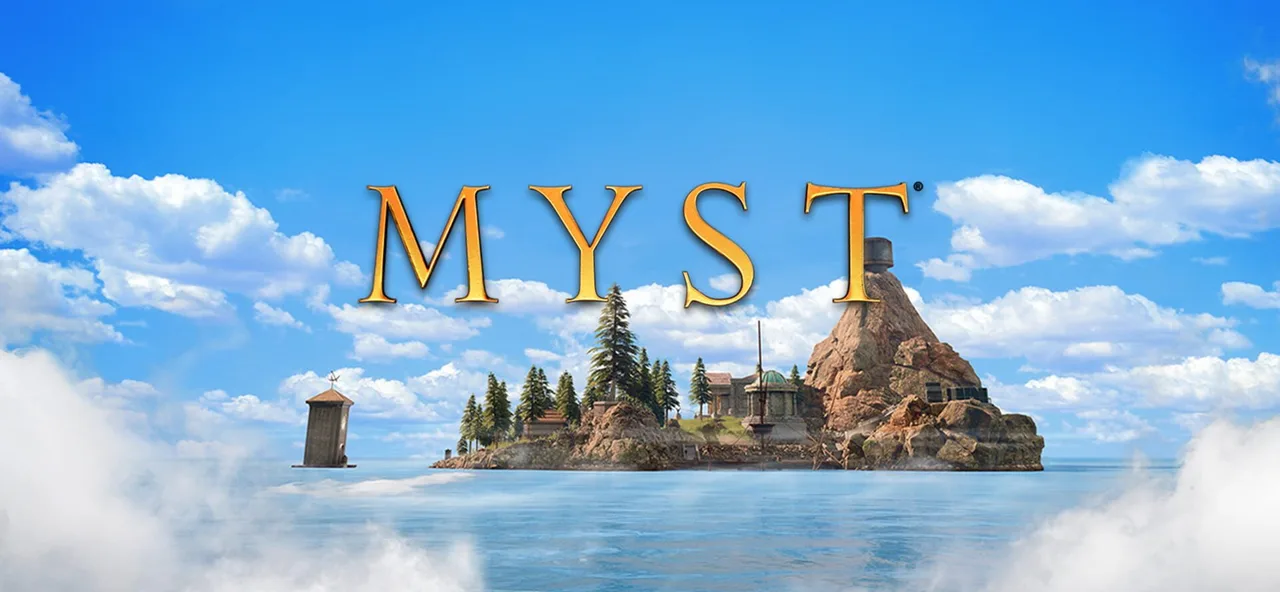
Myst (2020)
Myst is a 2020 puzzle video game made by Cyan Worlds.
You arrive on Myst Island alone, with no instructions and no map. The island holds elaborate machinery, deserted libraries, and fractured journals left by a man named Atrus, and every mechanism connects to something else if you look carefully enough. Cyan's 2020 rebuild reconstructs the original from scratch for VR and flatscreen play, adding richer geometry, new ambient audio, and optional puzzle randomisation that changes the solution set between playthroughs. The pace is the original's: unhurried, observational, built on the conviction that the environment itself is the puzzle.
Similar games
Explore Myst guides
Myst in our writing
- Companion guide: Broderbund: Prince of Persia, Myst and the Early Software Age
- Companion guide: The Well World: Jack L. Chalker's Planet of 1,560 Species
A few thoughts on Myst
If the methodical, world-first puzzle design appeals, Portal offers a similar sense of spatial reasoning in an enclosed environment, letting the mechanics teach you their own logic without hand-holding. Both games trust the player to sit with a problem before the path becomes clear.
Mysteries you solve by paying attention, not by fighting
Myst drops you on an island with no instructions, trusting you to solve everything through careful observation. Sherlock Holmes and Death Note both build entire stories around deduction from small details, The Mentalist reads a room the way Myst reads a room full of machinery, Portal 2 solves every chamber through looking rather than fighting, and Law & Order follows the same patient thread from clue to conclusion.
Albums built as one immersive, unbroken mood
Myst is built as one unhurried, fully-realized mood rather than a collection of set pieces, and these albums commit to the same idea. In the Court of the Crimson King and Metropolis, Pt. 2 construct entire sonic worlds meant to be explored start to finish, Black Holes and Revelations commits as fully to its own widescreen atmosphere, and Nebraska strips everything back to prove restraint can be just as immersive.
Piecing together what happened from what someone left behind
Myst tells its story entirely through what a vanished man named Atrus left behind: journals, machinery, fragments of a life. Thirteen Reasons Why and Mr. Mercedes both build their mysteries out of evidence someone left after the fact, FROM strands its characters piecing together a town's rules from scraps other residents recorded, and NCIS turns physical evidence into the only reliable witness left.