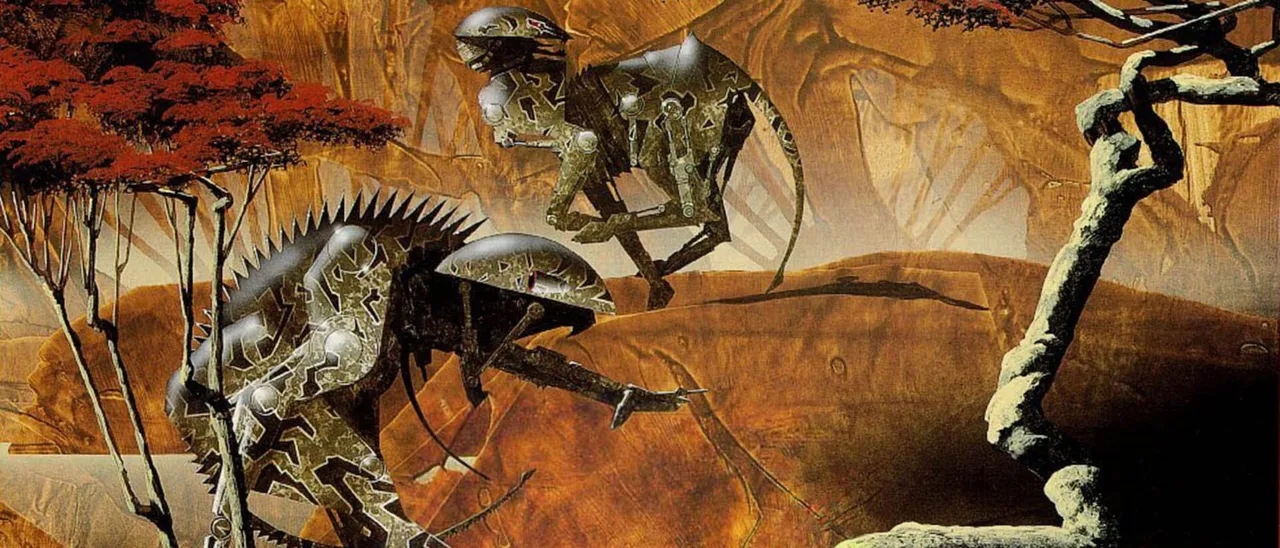
Shadow of the Beast (1989)
Shadow of the Beast is a 1989 platform video game made by Reflections Interactive and The Creative Assembly.
Brooding and painterly, Shadow of the Beast drops you into a hostile alien landscape as a creature who was never meant to be monstrous. Developed by Reflections for the Amiga in 1989, the game announced itself through sheer spectacle: twelve layers of parallax-scrolling backdrops, rich colours, and a David Whittaker score built from sampled instruments that felt nothing like anything else on home computers. Combat is simple but punishing. The atmosphere does most of the work, making the world feel vast, strange, and indifferent in a way that few games of its era attempted.
Similar games
Explore Shadow of the Beast guides
Shadow of the Beast in our writing
- Companion guide: Psygnosis: Wipeout, Lemmings and the Coolest Studio in Games
A few thoughts on Shadow of the Beast
If the brooding, elemental mood of Beast appeals, the soundtrack ワンダと巨像 大地の咆哮 captures a similar sense of ancient, sorrowful scale, with Kow Otani's orchestral score for Shadow of the Colossus conveying loneliness through music alone.
Albums that sound like nothing else when they came out
Shadow of the Beast built its atmosphere from a David Whittaker score sampled from real instruments, a sound Amiga owners had never heard used that way before. These records share that same startling arrival: King Crimson's prog debut, Vangelis's synth work for Blade Runner, Fates Warning's early prog metal, Nightwish's orchestral surge, and the sweeping score for Return of the King.
Characters transformed into something monstrous against their will
Shadow of the Beast turns its hero into a creature who never chose to look monstrous, trapped in a body that terrifies everyone around him. These comics follow the same ache: mutated turtles raised in a sewer, a half-demon fighting his own blood, a teacher reshaped into a tentacled giant, a brother bound into armor, and villains built from stolen bodies.
Settings so hostile and strange they become the real villain
Shadow of the Beast strands you in an alien landscape that feels vast, strange, and indifferent to whether you survive it. That same dread runs through a town that will not let its strangers leave, a hallway with no exit and no explanation, an occupied Earth patrolled by something inhuman, a highway stalked by monsters, and a wasteland where the world itself went wrong first.
Open worlds built to make you feel impossibly small
Shadow of the Beast rendered its world across twelve layers of parallax scrolling so the landscape felt endless in every direction. These games chase that same scale: a fractured continent full of dragons and legend, a war-scarred kingdom overrun by things worse than monsters, a state built for gang turf and open highway, an entire criminal underworld, and a dying frontier with nowhere left to run.