Sid Meier's Civilization (1991)
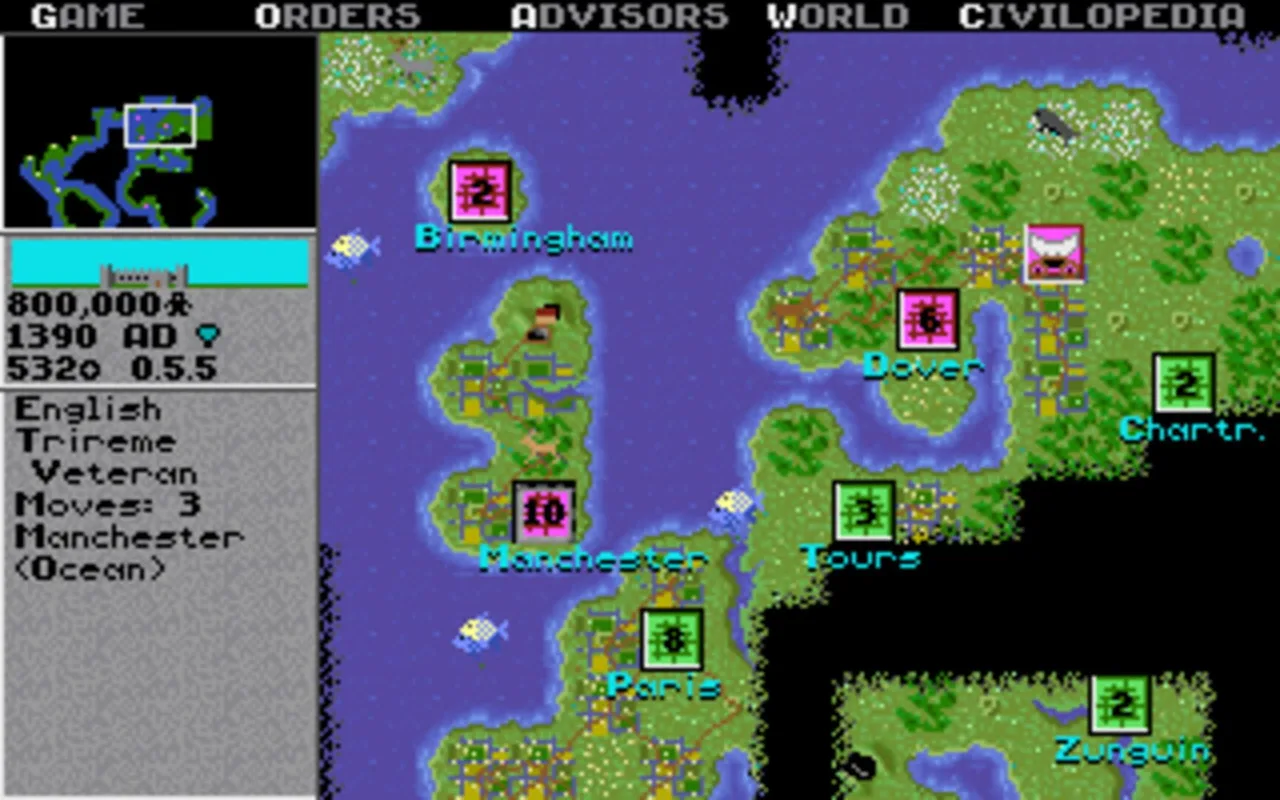
Sid Meier's Civilization is a 1991 strategy video game made by MPS Labs.
Civilization starts in 4000 BC with a single settler on a blank continent and the ambition to build an empire that outlasts history. Sid Meier's 1991 original established the template: found cities, research technologies along a tree that spans the wheel to space travel, field armies, negotiate with rival leaders, and manage the happiness and production of an expanding empire across two hundred turns. Every decision compounds. A city placed one hex in the wrong direction can shape a civilization's fate for three thousand in-game years.
Similar games
Explore Sid Meier's Civilization guides
Sid Meier's Civilization in our writing
- Companion guide: MicroProse: Flight Sims, Sid Meier and the Empire of One More Turn
A few thoughts on Sid Meier's Civilization
Players who want the same long-arc strategic tension in a more modern system will find it in Sid Meier's Civilization V, which retains the core empire-building loop while adding hex grids and city-states. Age of Empires II: The Age of Kings runs a parallel argument in real time: the same sweep of historical eras, compressed into individual military campaigns.
More games with that one-more-turn pull that destroys sleep
Civilization's reputation came from a specific structural choice: every turn produces something useful, every decision opens another one, and stopping always means leaving one more interesting problem unsolved. The loop never releases because the game never gives you a natural pause. These picks are built on the same compulsive forward motion, where the next state is always worth seeing.
If building and growing your civilization was the real appeal
The city-building layer in Civilization is what most players remember: the moment a size-two settlement becomes a productive city, the decision tree for which improvements to prioritize, the satisfaction of a well-run empire by the modern era. These picks share that construction and management loop, where the challenge is growth and governance rather than military conquest.