The Bard's Tale III: Thief of Fate (1988)
The Bard's Tale III: Thief of Fate is a 1988 role-playing (rpg) video game made by Interplay Productions.
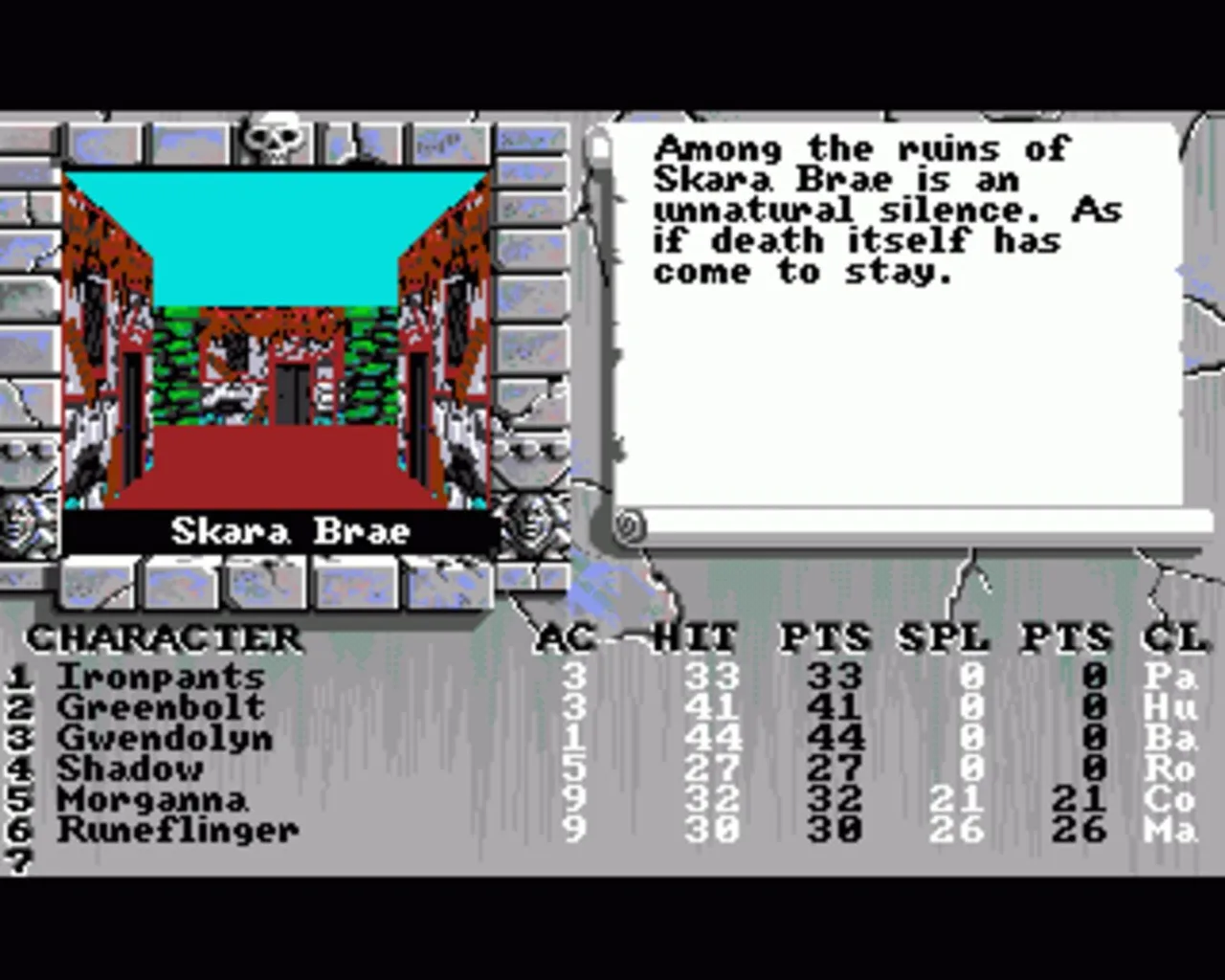
The party that killed Mangar barely has time to celebrate. His master, the Mad God Tarjan, has leveled Skara Brae, and the survivors huddle in a refugee camp on its edge. Thief of Fate is the largest of the original trilogy, opening beyond the ruined town into separate realms reached through time warps, among them ancient Rome and Berlin during the Second World War. Two new classes join the roster, the Geomancer and the Chronomancer, and a welcome auto-map spares you some of the graph paper. The crawling stays as unforgiving as ever.
Similar games
Explore The Bard's Tale III: Thief of Fate guides
The Bard's Tale III: Thief of Fate in our writing
- Companion guide: The Dungeon Crawler: Grid by Grid Through Gaming's Oldest Genre
A few thoughts on The Bard's Tale III: Thief of Fate
Play The Destiny Knight first for the setup, then press on into these time-torn realms. Wizardry VI: Bane of the Cosmic Forge offers a deeper, stranger crawl from the same era. Ultima IV and V trade the maze focus for a living, moral world, but reward the same appetite for sprawling first-person adventure and careful mapping.
First-person dungeon crawlers with grid maps and real challenge
Thief of Fate finally hands players an auto-map, but the labyrinths connecting Skara Brae's ruins to ancient Rome and wartime Berlin are still merciless. Legend of Grimrock, Legend of Grimrock II, Dungeon Master, Ultima Underworld: The Stygian Abyss, Arx Fatalis, Wizardry 8, Might and Magic VI: The Mandate of Heaven, Stonekeep, Anvil of Dawn, and Vaporum share that same first-person maze-crawling tension.
Classic CRPGs from the same 1980s-90s golden age
Thief of Fate closes out the original Bard's Tale trilogy with the same unforgiving stat math and turn-based combat running through Baldur's Gate, Planescape: Torment, Fallout, Ultima IV: Quest of the Avatar, Ultima VII: The Black Gate, Betrayal at Krondor, Darklands, The Elder Scrolls II: Daggerfall, Wasteland, and Pool of Radiance, the CRPGs that built the genre before it moved to 3D.
Sword-and-sorcery quests across film, book, and TV
Thief of Fate scatters Mangar's shattered wand across time warps into ancient Rome and wartime Berlin, a scale of adventure matching Conan the Barbarian, Excalibur, and Dragonslayer on screen, and The Fellowship of the Ring, A Game of Thrones, The Name of the Wind, and Game of Thrones in prose and television, all quests where a small band carries outsized stakes.