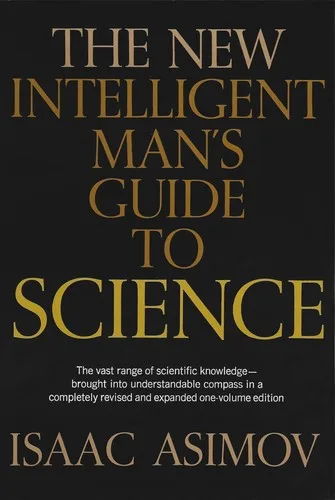
The Intelligent Man's Guide to Science (1960)
The Intelligent Man's Guide to Science is a 1960 science book written by Isaac Asimov.
Isaac Asimov set out in 1960 to explain the whole of modern science to a curious general reader, and largely managed it. Across two volumes he moves from the physical sciences, astronomy, physics, and chemistry, into the biological ones, always in plain language and a clear expository line. Later revisions carried the survey forward under new titles as the knowledge advanced. The book reflects Asimov's conviction that no field is too technical to explain, and that a patient nonspecialist can follow the reasoning from first principles all the way to the frontier.
Similar books
Explore The Intelligent Man's Guide to Science guides
A few thoughts on The Intelligent Man's Guide to Science
Carl Sagan's television series Cosmos carries the same generous mission, walking a lay audience from atoms to galaxies with wonder and clarity. Isaac Asimov's own science fiction makes the natural next shelf, the same plain-spoken curiosity turned loose on invented worlds instead of real ones.
Shows and movies that explain how the world actually works
Isaac Asimov wrote his science guide so a curious nonspecialist could follow real ideas from basic principles to the frontier, and these titles carry the same spirit into other media. Cosmos and American Experience translate physics, biology and history into clear television, Oppenheimer dramatizes the physics that reshaped the century, and Into Thin Air explains altitude and weather with the same patient exactness.