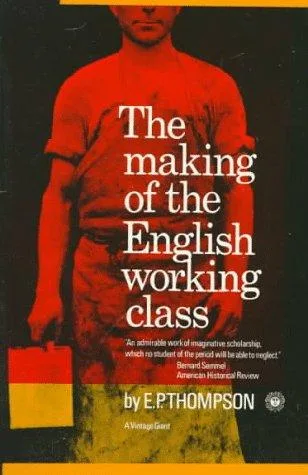
The making of the English working class (1963)
The making of the English working class is a 1963 history book written by E. P. Thompson and E.P. Thompson.
E. P. Thompson set out to rescue ordinary people from what he called the condescension of posterity. Across the formative years of 1780 to 1832, this landmark social history follows English artisans, weavers, and laborers as they forge a shared class identity out of riot, radicalism, and the upheavals of early industry. Thompson treats the poor not as an anonymous mass acted upon by economics, but as political agents making their own history. First published in 1963, it reshaped how historians read the lives of the people who built modern Britain.
Similar books
Explore The making of the English working class guides
A few thoughts on The making of the English working class
Peaky Blinders dramatizes the same English industrial world a century on, where working-class ambition collides with a rigged order. For the on-the-ground texture of factory-age poverty, Ken Loach's films carry Thompson's sympathies into fiction. Readers wanting the wider argument can pair it with Eric Hobsbawm's histories of the age of revolution.
Histories and testimonies of ordinary lives against power
E. P. Thompson rescued weavers and laborers from the condescension of posterity, treating the poor as makers of their own history. These books share that ground-level view: a former slave's own account, a study of what debt has meant across millennia, a colonial society pushed toward revolt. Each hands the record back to people usually written out of it.
Ordinary people caught in the tides of history on screen
Thompson's subject is history made from below, by the people industry and empire acted upon. These series dramatize the same forces: a working-class family clawing up after the war, midwives in a poor postwar parish, slaves and the conquered pushing back. They put common lives at the centre of upheavals usually told from the top.
Revolt and class conflict in comics and games
The riots and radicalism in Thompson's account are people refusing to stay powerless. These comics and games chase the same current: a floating city torn apart by class and labor, a Soviet Superman, Spartans and warring states, a revolution fought hand to hand. Each turns the clash between the powerful and the many into its engine.