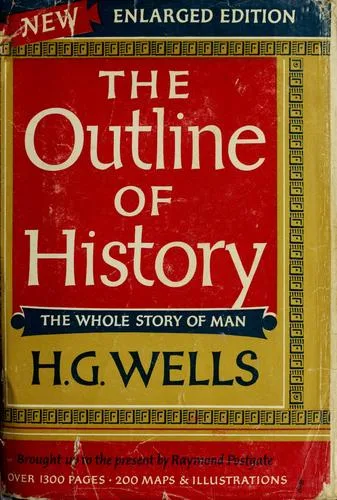
The Outline of History (1919)
The Outline of History is a 1919 world history book written by H. G. Wells.
Best known for scientific romances, H. G. Wells turned in 1919 to something vaster: the whole story of life and humankind, from the cooling of the Earth to the trenches of the First World War. He built it as one flowing narrative rather than a pile of dates, tracing how Egypt, Greece, Rome and the modern empires rose and fell. Issued in twenty-four fortnightly parts and then a single volume, it sold more than two million copies and reshaped how history was taught. Wells modeled the whole effort on Diderot's Encyclopedie.
Similar books
Explore The Outline of History guides
A few thoughts on The Outline of History
For more grand sweeps of the human past, NOVA turns science and history into hour-long investigations, while Vikings and The Last Kingdom dramatize the collisions of peoples H. G. Wells charts in prose. Assassin's Creed II lets you walk Renaissance Italy street by street, and the comic 300 renders antiquity as stark myth. Different windows onto the same long story.
Sweep through the rise and fall of civilizations on screen
Wells told the whole human story as one flowing narrative, watching empires rise and fall. These series span that range on screen, from Viking raids and Roman arenas to a scheming imperial palace and an industrial city's underworld, tracing how power shifts across eras. History as living, connected drama rather than a list of dates.
Step into different eras of history through games
Wells modeled his book on Diderot's Encyclopedie, an attempt to hold all of history in one place. These games let you inhabit its chapters instead, climbing through Renaissance Italy, colonial seas, revolutionary America and mythic antiquity. Meticulously reconstructed settings turn the past into a place you can walk around.
History and myth retold in comics
Wells reshaped how history was taught by making it a story anyone could follow. These comics do similar work in pictures, retelling Thermopylae, Roman Gaul, warring Chinese states and the life of the Buddha, plus a Victorian sequel to his own Martian war. History and legend, vivid on the page.