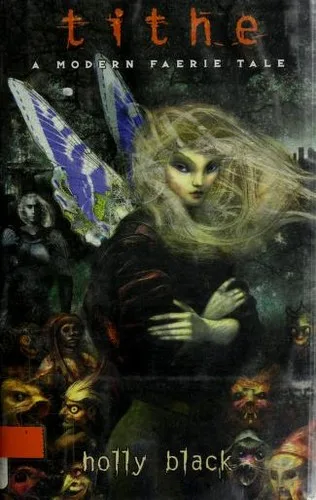
Tithe (2002)
Tithe is a 2002 fiction book written by Holly Black.
Kaye Fierch has grown up on the road with her rocker mother, moving from town to town and never quite fitting anywhere. Back in her grandmother's New Jersey house, the childhood friends she once called imaginary turn out to be real, and so does the truth about Kaye herself. Holly Black writes faerie as something closer to a knife than to fairy dust: the Seelie and Unseelie courts trade in cruelty, beauty, and old bargains that catch mortals in the middle. The tone runs dark and glamorous, set against pinelands, boardwalks, and cheap motels. A modern faerie tale with grit under its nails.
Similar books
Explore Tithe guides
Tithe in our writing
A few thoughts on Tithe
Fans of this dark, glittering take on faerie should watch Pan's Labyrinth, where a child slips into a fae underworld ruled by its own bleak logic. Over the Garden Wall carries the same eerie folklore mood in a gentler key. Both share Holly Black's sense that the otherworld is gorgeous and genuinely dangerous.
Faerie tales with teeth, not fairy dust
Kaye discovers that Holly Black's fae trade in cruelty as easily as beauty, the Seelie and Unseelie courts keeping bargains that favor no mortal. These films, games, and comics share that same edge, folklore rewritten as a real threat rather than a bedtime comfort.
Something ancient and hungry lurking just out of sight
Tithe's Unseelie court trades in bargains that catch mortals with no warning, dread that builds from the corner of the page rather than a jump scare. These shows, a film, and a comic share that slow dread: ordinary places, a forest, a town, a house, hiding something old that answers to no rules but its own.
Music that sounds like the Unseelie court
Tithe's faerie world is glamorous and dangerous in the same breath, all boardwalk neon over something much older and colder. These albums reach for that same register: theatrical, myth-soaked, and a little frightening, the kind of music that could score a bargain struck under a full moon at the edge of the pines.