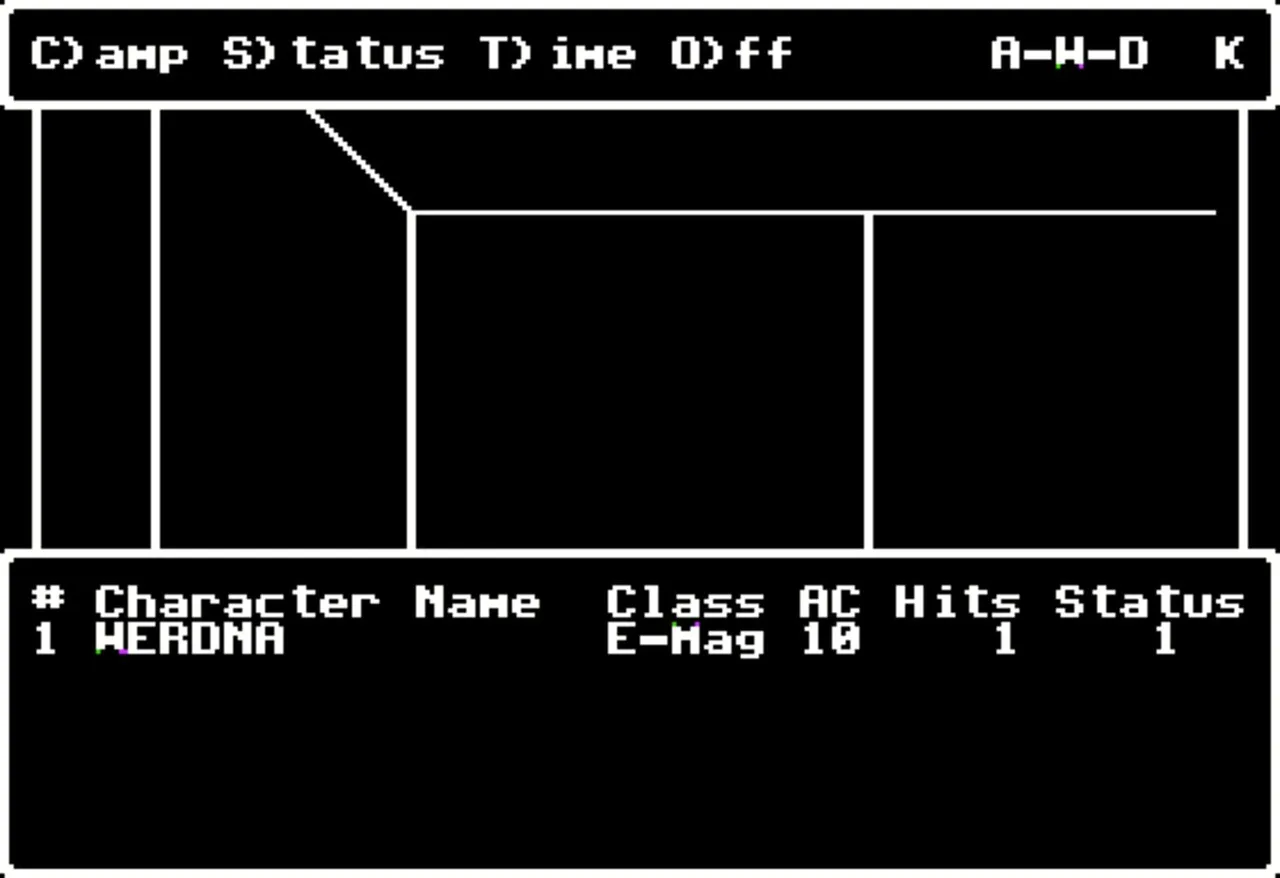
Wizardry: The Return of Werdna - The Fourth Scenario (1987)
Wizardry: The Return of Werdna - The Fourth Scenario is a 1987 role-playing (rpg) video game made by Sir-tech Software.
The villain gets his turn. Defeated and stripped of power, the archmage Werdna wakes at the bottom of his own ten-level labyrinth, tormented by nightmares and hungry for revenge. The Return of Werdna flips the series on its head. You climb upward instead of down, summoning monster allies to fight parties of adventurers built from real players' characters. No experience comes from kills. Power returns only at magic pentagrams. It earned a reputation as one of the hardest games of its era, a puzzle box designed to break veterans. The way out runs through ten floors of your own traps.
Similar games
Explore Wizardry: The Return of Werdna - The Fourth Scenario guides
Wizardry: The Return of Werdna - The Fourth Scenario in our writing
- Companion guide: The Dungeon Crawler: Grid by Grid Through Gaming's Oldest Genre
A few thoughts on Wizardry: The Return of Werdna - The Fourth Scenario
Clear the first scenario before this, since it inverts everything that game taught you about the maze. For more clever role reversals and diabolical design, Dungeon Master rewards the same patient, careful play. Its wicked difficulty pairs with the era's toughest crawlers, so keep The Bard's Tale and Might and Magic close by.
Blobbers that punish every wrong turn
The Return of Werdna is infamous for punishing mistakes harder than almost any dungeon crawler of its era, since Werdna gains nothing from kills and can only recharge at fixed pentagrams scattered through the maze. Legend of Grimrock, Legend of Grimrock 2, Dungeon Master, Arx Fatalis, Stonekeep and Anvil of Dawn all share that same unforgiving, resource-starved crawl where careful play matters more than combat skill.
Turn-based party RPGs with real permadeath stakes
The Return of Werdna earned a reputation as one of the hardest games of its era by making every floor of Werdna's own labyrinth a gauntlet of summoned monsters with no easy grinding. Wizardry 8 and Might and Magic VI keep that same demanding, turn-friendly party structure, while Pool of Radiance, Darklands, Daggerfall and Ultima VII: The Black Gate show how many directions that unforgiving CRPG lineage grew in.
Dark fantasy movies with the same pulpy nerve
The Return of Werdna hands the whole story to its villain, climbing up from defeat toward revenge, a reversal that fits the same pulpy, morally messy fantasy of Conan the Barbarian and Dragonslayer, where power always costs something. Excalibur shares its interest in a fallen figure clawing back what was lost, and Monty Python and the Holy Grail turns the genre's grim castles into a joke without losing their shape.
Fantasy epics that flip hero and villain
The Return of Werdna dares to make its defeated dark wizard the protagonist, a perspective flip fantasy fiction rarely commits to fully. A Game of Thrones and its TV adaptation come closest, giving morally compromised and villainous figures real point-of-view chapters. The Name of the Wind frames its whole story as a legend told from one side, while The Fellowship of the Ring keeps the shape those inversions play against.