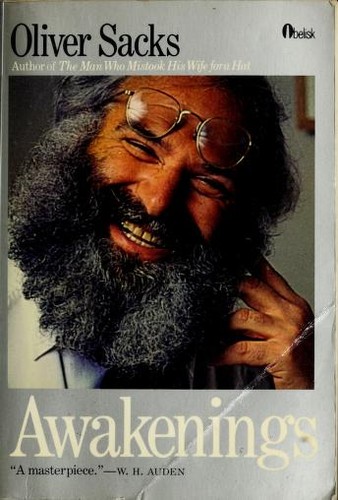

A true story that refused to stay in one place
In 1969, neurologist Oliver Sacks administered L-DOPA to a group of patients at Beth Abraham Hospital in the Bronx who had been locked in a state of near-total stillness since the encephalitis lethargica epidemic of the 1920s. Some of them had been immobile for decades. The drug, then new, briefly brought many of them back to full wakefulness and movement before the side effects grew unmanageable. Sacks wrote up what happened not as a clinical paper but as something closer to a series of intimate portraits, published in 1973 as Awakenings.
The book was not an easy thing to adapt. It has no conventional plot, no villain, no resolution that feels tidy. What it has is a set of people who were given time back and then had it taken away again, and a doctor who watched and did not fully understand what he was witnessing. That difficulty explains why the story took nearly two decades to reach the screen, and why the versions that exist are so different from each other in tone and approach.
Every version of Awakenings
The source memoir, documentary, television adaptation, and feature film

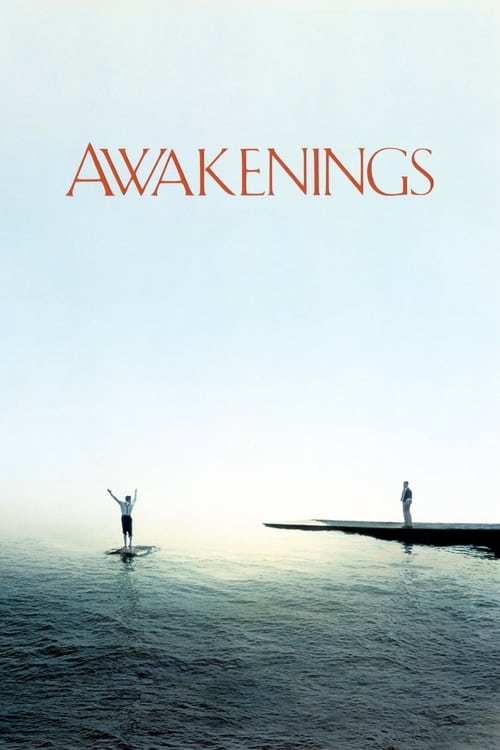

Awakenings across the decades
- 1969L-DOPA trials at Beth Abraham Hospital, the Bronx
- 1973Oliver Sacks publishes his memoir Awakenings
- 1974Yorkshire Television documentary on Sacks's patients Awaken
- 1982Harold Pinter premieres the stage play at the National Theatre, London
- 1984BBC films Pinter's play as a television production
- 1990Penny Marshall directs the Hollywood feature Awakenings
The definitive version: the memoir itself
No adaptation has matched what Sacks achieved on the page. The memoir gives each patient their full history, their pre-encephalitic personality, their inner life during the decades of stillness, and their response to the awakening in precise clinical and humanistic detail. The 1990 film, for all its strengths, necessarily condenses and dramatizes. Pinter's stage piece, A Kind of Alaska, gets at the emotional core but concentrates on a single patient. The book is the only version that holds the whole thing at once.
The crowd-pleaser that softens the edges: the 1990 film
The Penny Marshall film earned its three Academy Award nominations, and Robin Williams and Robert De Niro are both genuinely good in it. The problem is in what it chooses to emphasize: the arc of the awakening, the bond between doctor and patient, a conventional structure built around hope. Sacks's book is actually about the failure of medicine to hold onto what it briefly achieves, and the film retreats from that. It is moving and well-made, and it softens the most difficult thing Sacks wrote.
If you love Awakenings: doctors who bear witness
Medical stories about the limits of treatment and the weight of caring

If you love Awakenings: lost time and returned consciousness
Stories about people who re-enter a world that moved on without them


True stories of medicine and the mind
Medical Drama
Explore the Medical Drama guide →The patients had been given back their lives, and then watched them taken away again. That is what the story is actually about. Most adaptations flinch at the second half.