
The books that earned permanent residence in the mind
Every list like this one is an argument. This one argues that the canon is real, that some books last longer than others, and that pretending otherwise is its own kind of cowardice. What follows is not a diversity syllabus or a syllabus-buster. It is a reckoning: the novels, plays, and epics that a serious reader cannot honestly skip, arranged by what they are rather than when they were assigned. Some of these will surprise nobody. A few should embarrass the prizes that ignored them. One or two will make you want to argue back, which is exactly the point.
The undeniable heavyweights
The books every other list includes, and every other list is right to include


The snub that still stings
Tolstoy never won the Nobel Prize. The committee passed on him every year he was eligible, eventually awarding it to writers who would be footnotes today. Anna Karenina and War and Peace together represent a body of work that no laureate in the prize's history has matched in scope, psychological depth, or sheer moral ambition. The Nobel Prize recovered. The embarrassment has not aged away.
The prize winners that deserved it
When the committees got it right


Five centuries of the novel, by the books that defined each era
- 1605The novel is born The Complete Don Quixote
- 1719The modern adventure story The Adventures of Robinson Crusoe
- 1813The comedy of manners perfected Pride and Prejudice
- 1851American ambition arrives
- 1877The realist peak
- 1922Modernism breaks through
- 1949The political novel hardens Nineteen Eighty-Four
- 1967The Latin American explosion
- 1987Memory and reckoning Beloved
- 2009History reimagined from inside
The ones that work in every decade
Crowd favorites for a reason: these books hold


All great literature is one of two stories: a person goes on a journey, or a stranger comes to town. What makes the best books immortal is what happens inside the person who neither leaves nor arrives.After Tolstoy
The critical darlings who earned it
Books reviewers championed and time proved right
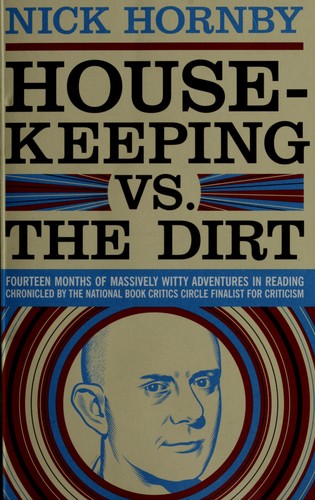


The book that aged best
Middlemarch was reviewed respectfully in 1871 and then quietly filed under Victorian fiction, where it sat until the second half of the twentieth century when critics realized it was the most sophisticated psychological novel in the language. George Eliot understood irony, self-deception, institutional failure, and the tragedy of ordinary ambition with a precision that no one matched for generations. Virginia Woolf called it one of the few English novels written for grown-up people. She was right, and the readership finally caught up.
The genre standouts that transcend genre
Science fiction, crime, and fantasy at the level where classification stops mattering


A note on what gets left out
No list of forty books contains everything. Homer is not here by accident; the Iliad and the Odyssey are foundational poems that predate the novel and deserve their own treatment. The same is true of Shakespeare's plays, Montaigne's essays, and the great works of the Confucian and Sanskrit traditions. This list is specifically novels and the rare collection that functions as one. The missing names are not dismissals. The Brothers Karamazov, Wuthering Heights, Light in August, Their Eyes Were Watching God, The Magic Mountain, Absalom, Absalom!: all of them belong in serious reading lives. The list ends not because the books run out but because a list that never ends is not a list, it is an evasion.