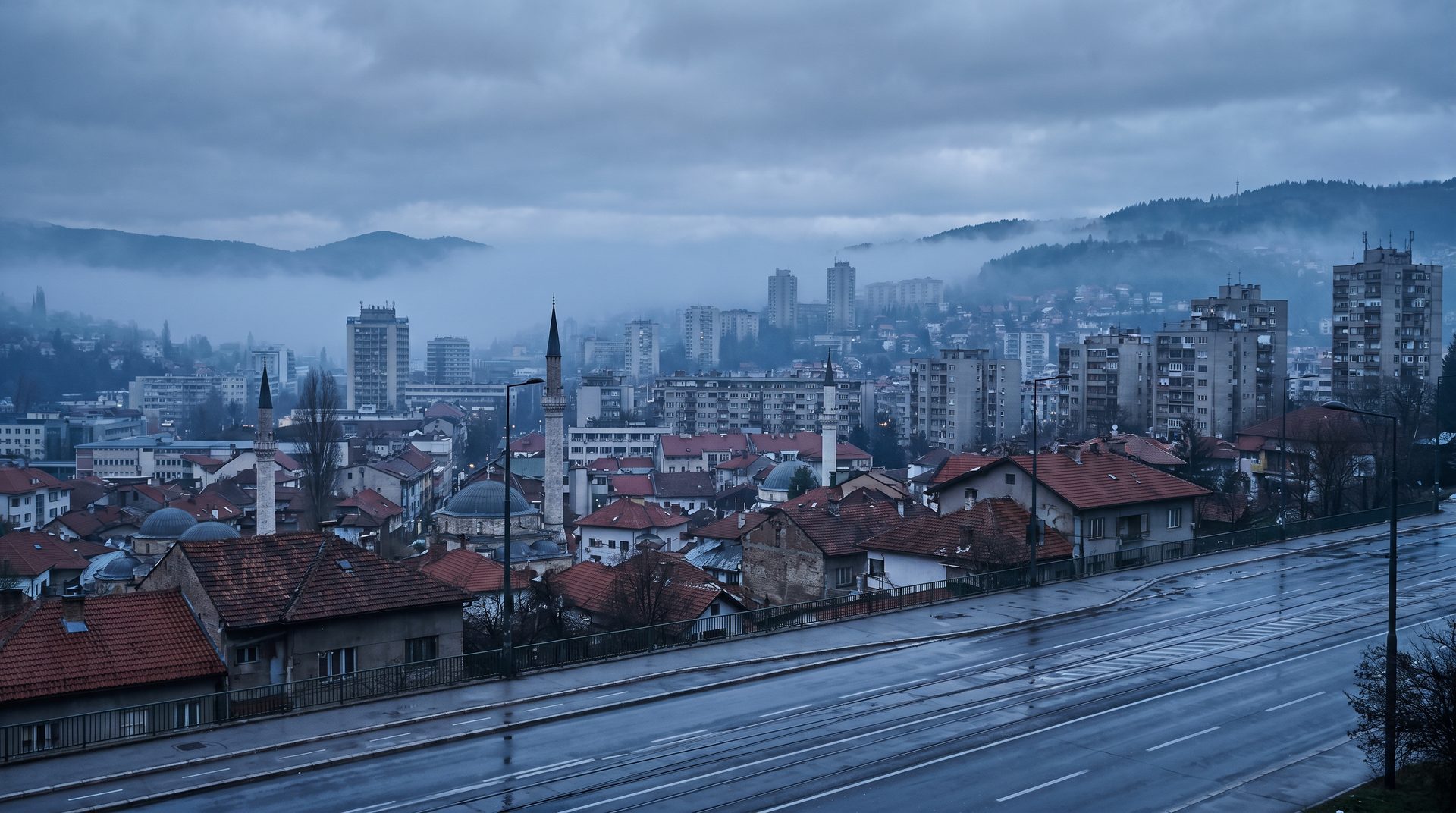

A cinema forged in two Yugoslavias
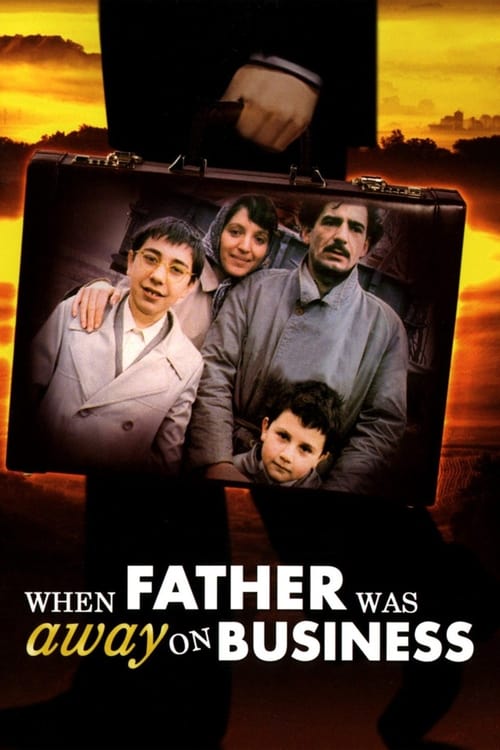
Bosnia and Herzegovina never had the industrial film machinery of Belgrade or Zagreb, yet for its size it produced an outsized share of the old Yugoslav cinema's best work. In the socialist era Sarajevo gave the federation Emir Kusturica, whose Do You Remember Dolly Bell? (1981) and When Father Was Away on Business (1985) read Tito's Yugoslavia through one family's small humiliations, the latter taking the Palme d'Or at Cannes. The city's distinct register was already visible: warmth, mischief, and a refusal to let politics flatten ordinary life.
Then the country itself became the subject. The war of the early 1990s and the siege of Sarajevo did not just interrupt this cinema, they redefined it. Filmmakers who lived through the shelling came out the other side determined to record what had happened without sentimentality. The result is a national cinema unusually preoccupied with moral consequence: what people do to survive, what they owe each other afterward, and how a society lies to itself to keep going.
The global high-water mark came in 2001, when Danis Tanovic's No Man's Land won the Academy Award for Best Foreign Language Film. Its premise, two enemy soldiers and a third man trapped on a mine in the same trench, became a defining metaphor for the whole conflict: stuck between two sides, watched by a largely useless international press, going nowhere.
The siege and after
The films that defined post-war Bosnian cinema



Jasmila Zbanic and the women's reckoning
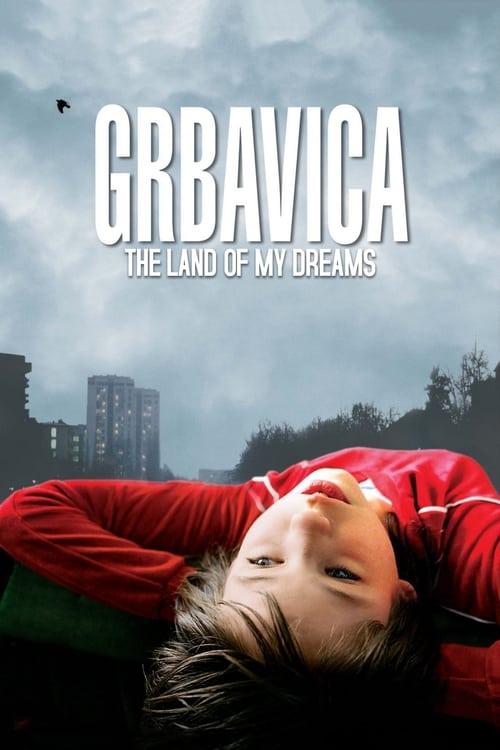
If one filmmaker now stands for Bosnian cinema, it is Jasmila Zbanic. Her debut Grbavica (2006) won the Golden Bear in Berlin and pushed a national conversation about the children born of wartime rape, telling its story through a single mother and a daughter who does not know her own origins. Fourteen years later Quo Vadis, Aida? (2020) returned to the worst hour of the war, the Srebrenica genocide, following a UN translator who cannot save her own family. It was nominated for the Academy Award and is arguably the most accomplished film the country has produced.
Zbanic is part of a generation that insists on looking directly at what happened: Aida Begic (Snow, Children of Sarajevo) and the documentary tradition that ran alongside the fiction. Their films tend to be quiet rather than loud, built on faces and silences instead of spectacle, the opposite of Kusturica's brass-band maximalism.
Kusturica filmed Yugoslavia as a wild party that never ends. The generation after him filmed the morning the party stopped, and who had to clean up.CrossBinge editors
Kusturica and the Yugoslav years
Sarajevo before the war, in all its carnival energy

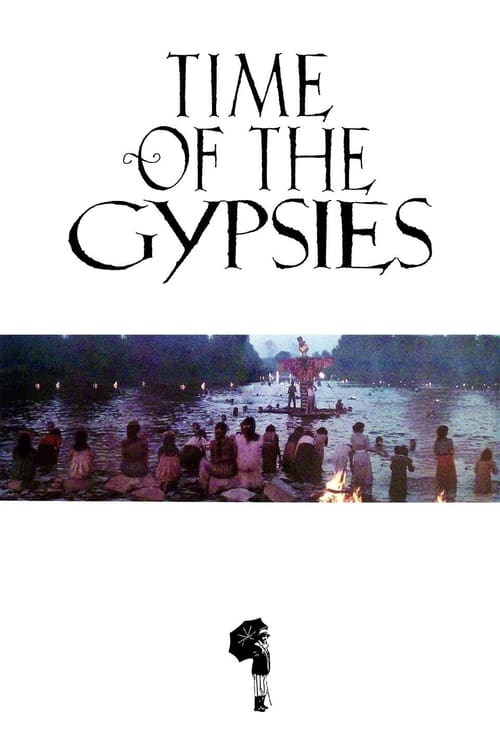
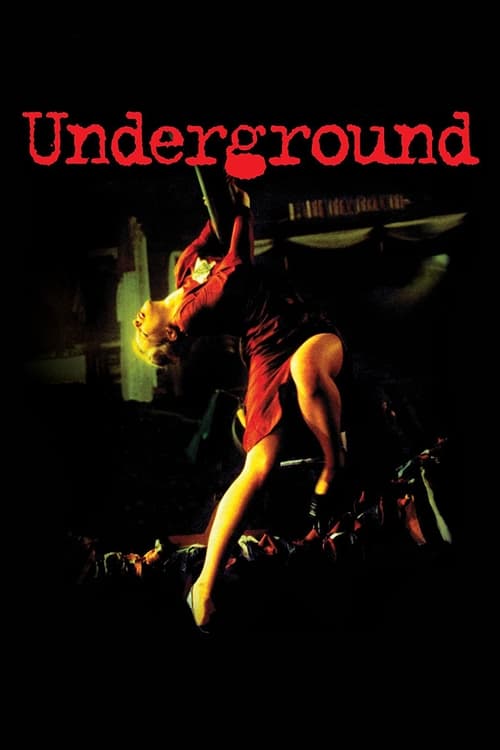
A chronology of Bosnian film
- 1981Kusturica's debut announces a Sarajevo voice Do You Remember Dolly Bell?
- 1985When Father Was Away on Business wins the Palme d'Or When Father Was Away on Business
- 1992The siege of Sarajevo begins; filmmaking continues under fire
- 1995Dayton ends the war; a new cinema of aftermath begins to form
- 2001No Man's Land wins the Academy Award for Best Foreign Language Film No Man's Land
- 2006Grbavica wins the Golden Bear at Berlin Grbavica: The Land of My Dreams
- 2013An Episode in the Life of an Iron Picker, neorealism with real subjects
- 2020Quo Vadis, Aida? confronts Srebrenica, Oscar-nominated Quo Vadis, Aida?
The Sarajevo Film Festival effect
Begun in 1995 while the city was still under siege, the Sarajevo Film Festival became the engine that kept this cinema alive and connected it to the rest of the region. It turned a wartime act of defiance into the most important film event in southeastern Europe, a place where Bosnian, Serbian, Croatian, and wider Balkan filmmakers meet despite the politics that divide their governments. Much of what the world now thinks of as a coherent "Balkan cinema" was effectively curated into existence there.
The through-line in the best of this work is a refusal of easy catharsis. An Episode in the Life of an Iron Picker (2013), Danis Tanovic again, restaged a Roma family's near-fatal collision with a broken healthcare system using the actual people involved. Death in Sarajevo (2016) compressed a century of Balkan grievance into one day at a crumbling hotel. These are films that distrust resolution, because the country they come from never got one.
Quo Vadis, Aida? is the most important Balkan film of the century so far
Plenty of films have circled the wars of the 1990s. Few have the nerve to stand in the exact place where the worst thing happened and refuse to look away. Zbanic builds Srebrenica not as a history lesson but as a procedural of helplessness: a woman with a UN badge and fluent English discovers that none of it can protect the people she loves. The film denies the audience a hero who fixes things, because there was no such hero, and that honesty is what makes it unbearable and necessary. It belongs next to the best European cinema of its decade, not in a regional ghetto.