The Silmarillion Is Not Book Three
Somebody hands you the box set and walks away. Seven or eight spines, no instructions, and a friend somewhere insisting you have to begin with The Silmarillion because that is where the world begins. Do not. Internal chronology is the worst possible guide to the order these books should be read in, and the man who assembled that 1977 volume out of his father's boxes later admitted he had to invent some of what holds it together.
Here is an order worth defending, built out of what is actually on the record: J.R.R. Tolkien's own letters, his son's one interview after forty years of public silence, and the publishing history of a manuscript a London publisher turned down in 1937 for being obscure and, in the phrase that has trailed it ever since, too Celtic.
Start with the children's book, because he rewrote it for you
The Hobbit went on sale on 21 September 1937 from George Allen and Unwin, in a first printing of 1,500 copies that was gone by December. It is short, it is funny, and Tolkien never pretended it was anything other than a children's book, even while explaining exactly where it had been quarried from.
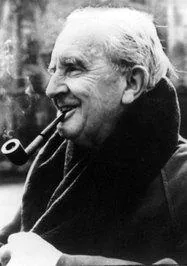
In the same letter he calls the Quest of the Dragon-gold, the main theme of the actual tale, 'quite peripheral and incidental' to that larger cycle. Peripheral, and still the right doorway, for a reason most reading-order arguments skip: the copy on your shelf was rebuilt to be the doorway.
For the 1951 second edition Tolkien went back into the chapter called Riddles in the Dark and changed how Bilbo and Gollum part. In the 1937 text Gollum wagers his magic ring on the riddle game, loses it fairly, and the two part on decent terms. In the revision he is aggressive and distraught, and Bilbo leaves with a curse at his back, because by then the ring had become the Ring and The Lord of the Rings needed the first book to have meant something it had not originally meant.
That retrofit only works forwards. Read it first and you get the joke and the dread in the order the author built them.
Then the novel that was never a trilogy
The sequel came out over fifteen months in three volumes, on 29 July 1954, 11 November 1954 and 20 October 1955, and the split was economic rather than artistic. Tolkien used the word trilogy himself at times and at other times called it plainly incorrect, because the thing was written and conceived as one book, six parts of it, with the volume breaks falling where a printer wanted them.
So read it as one book. Do not take a season off after The Fellowship of the Ring the way you would between instalments of a series, because the pause lands mid-sentence in a story that never planned for it.
And read the appendices. All six, the chronologies and the genealogies and the notes on the calendars and the writing systems. They are not homework. They are the only place in the published novel where the Second Age gets room to breathe, and everyone who has tried to put Middle-earth on a screen since has been living in them.
The Silmarillion is a rescue, not a sequel
Tolkien tried to publish the older legends first. In 1937, with the hobbit book selling, he sent his publisher an incomplete Quenta Silmarillion and was turned down. In 1950 he wanted the ancient matter and the new novel to appear together; when that proved impossible he put his attention into finishing The Lord of the Rings instead. He died in 1973 with the older work still unfinished, and left his son 70 boxes of archives, each stuffed with thousands of unpublished pages.
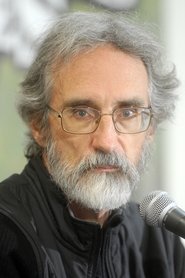
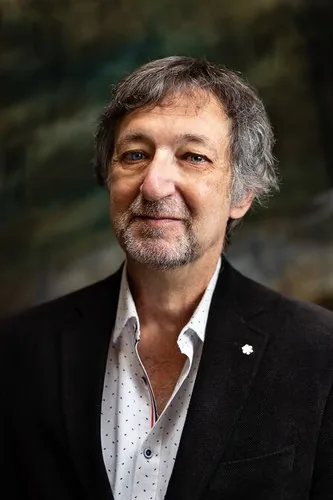
What reached shops on 15 September 1977 was assembled out of those boxes by his son Christopher, with the help of a 26-year-old Canadian writer named Guy Gavriel Kay. Speaking to Le Monde in 2012, after forty years of saying nothing in public, Christopher Tolkien described the result without flinching: 'Right away I thought that the book was good, but a little false, in the sense that I had to invent some passages.' He described a dream from that period too. 'I was in my father's office at Oxford. He came in and started looking for something in great anxiety. Then I realized in horror that it was The Silmarillion, and I was terrified at the thought that he would discover what I had done.'
Kay went into the same paper and came away with a lesson about how books get made: 'the great works have disastrous botched chapters, that the great writers recognise that they didn't work'.
This is the book beginners are told to start with. A posthumous compilation in five parts, running from a creation myth through the drowning of Númenor to a brisk closing chapter on the Third Age, whose first reviewers complained about archaic language and names that were hard to remember, and whose editor thought some of the joins were his own. It is a great book. It is also the last one you should hand to somebody who has never been to Middle-earth.
The door into the First Age is a novel
The step almost nobody recommends is the one that makes the whole thing work. The Children of Húrin was published in 2007, recomposed by Christopher out of material scattered across the archive into what he called a continuous narrative without gaps or interruptions, and this time, he insisted, with 'no element of extraneous invention of any kind'. It went straight to number one on the New York Times hardcover fiction list, and Houghton Mifflin had 900,000 copies in print worldwide inside two weeks, so the appetite was never the problem. What matters for a reader is its shape: one story, one cursed family, front to back, with nobody stopping to recite a genealogy.
Read that, then open The Silmarillion, and the wall of names is no longer a wall. You arrive knowing what Morgoth costs a family, which is exactly the emotional information the compilation assumes you already have.
After that the archive is genuinely open, and you can wander. Unfinished Tales of Númenor and Middle-earth came in 1980. The Book of Lost Tales opened the twelve-volume History of Middle-earth, which Christopher published between 1983 and 1996, typing with three fingers on a machine that had belonged to his father. The Fall of Gondolin followed in 2018, and The Nature of Middle-Earth after his death in January 2020. He never called any of it authorship. He called himself 'the historian of the work, its interpreter'.


Where the screens and the controllers belong
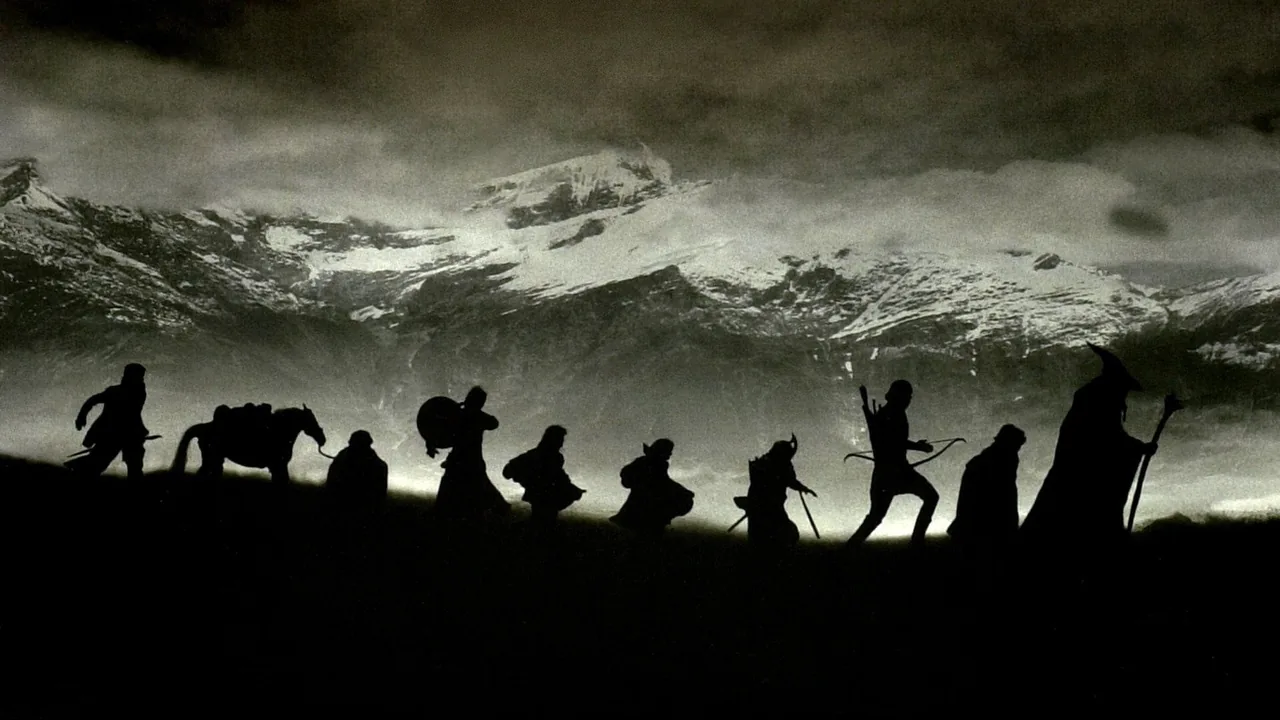
Watch the films after you read, and the reason is not snobbery. It is that the images win. Peter Jackson's trilogy did not compete with the books, it sold them: David Brawn, Tolkien's publisher at HarperCollins, told Le Monde that 25 million copies of the novel went out between 2001 and 2003, and that British sales rose by 1000% after The Lord of the Rings: The Fellowship of the Ring opened. The same piece counts what that success cost in the family's eyes: the look of the films, drawn by the illustrators Alan Lee and John Howe, went on to shape most of the games and the merchandising too. Invited to meet Jackson, the Tolkien family preferred not to. 'They eviscerated the book by making it an action movie for young people aged 15 to 25,' Christopher Tolkien said.
You can love the films and still take that seriously, and the practical version of it is a running order. Books first, then the film trilogy, then everything the rights allow.
The Lord of the Rings: The Rings of Power, which premiered in September 2022, is a Second Age show made by people who were not permitted to use the Second Age books. Amazon bought television rights to the novel and to The Hobbit alone, not to The Silmarillion or Unfinished Tales, so its writers had to build from the Second Age references that survive mostly in those appendices. Read the appendices first and you are watching an interesting problem being solved in public. Skip them and you cannot tell which half is Tolkien.
The Lord of the Rings: The War of the Rohirrim does the same thing with the House of Eorl section of Appendix A, promoting Helm Hammerhand's unnamed daughter to protagonist. The games sit one floor further out again, and are better for it. Middle-earth: Shadow of Mordor, released by Monolith Productions in 2014, is an original story about a Gondorian ranger bonded to the wraith of Celebrimbor, set in the gap between the two film trilogies, and its Nemesis system lets an orc captain remember the fight he survived and bring it up next time. That is licensed fan fiction of a very high order, and knowing it is fan fiction makes it more fun, not less. The Lord of the Rings Online has been letting people walk from Bree to the Shire since 2007, which is a use of Middle-earth that no printed page can offer.
What to do tonight
Take The Hobbit off the shelf and give it a week. Then give The Lord of the Rings a month, appendices included, and let the films be your reward rather than your primer. If you read all that years ago and bounced off the compilation, do not start it again from page one: go to The Children of Húrin first, then come back.
The order is not about difficulty, whatever the epic fantasy shelf wants you to believe. It is about walking into the archive as somebody who already misses the place.