

Every cartel story is, at bottom, a story about the seduction of the alternative economy. For the towns along the border, for the cook who finds he has a gift and no prospects, for the soldier who discovers that the cartel pays better than the army and asks less of his conscience, the narco world is not a fall into evil but a door that opens. The genre asks: what would you walk through, and what would it cost you to walk back out?
That question has produced some of the most morally serious work in contemporary storytelling, across every medium. Here is the full map.
Essential cartel stories
Start here

The one that changed the conversation
Breaking Bad is the genre's crown. It is not the first cartel story, nor the most historically grounded, but it is the one that turned the form into genuine tragedy: a chemistry teacher who decides to cook meth and discovers he was always, underneath everything, the kind of person who could. The cartel is the structure he grows into, not a trap he falls into. That inversion, which Better Call Saul then spent six seasons deepening, is what separates this from a crime show. It is a study of how a man rationalises his way into becoming the villain of his own life.
Two kinds of cartel story
The genre splits cleanly into two traditions.
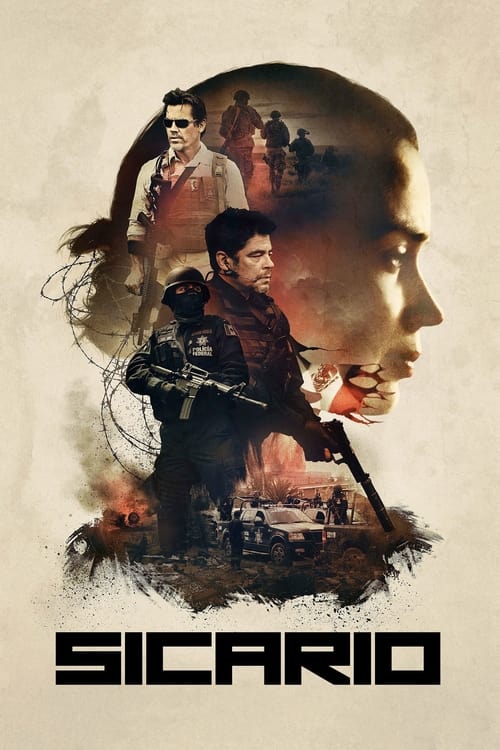
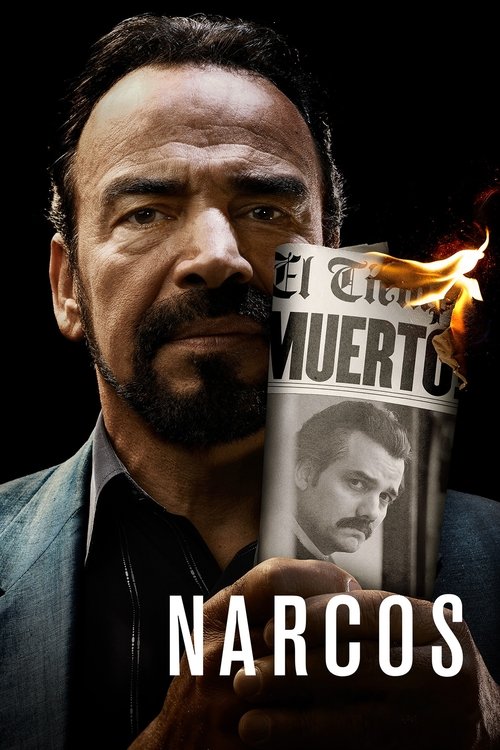
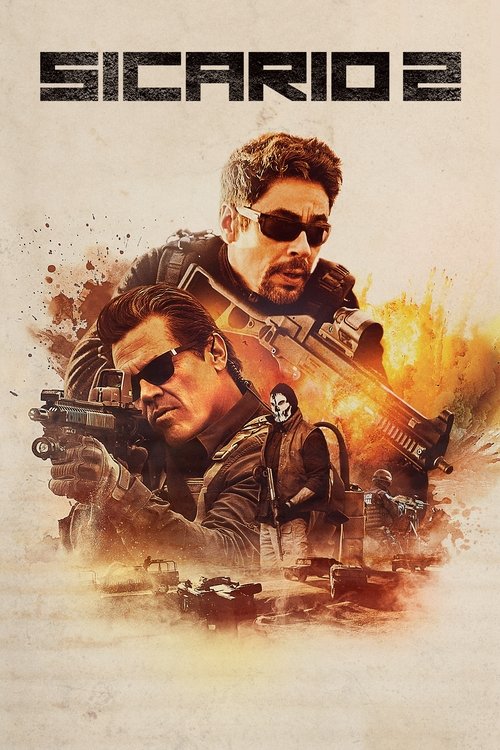
The American gaze looks south. Films like Sicario and Traffic, series like Narcos, approach the cartel as geography, as external threat, as the war that comes to the border. The American hero, whether a DEA agent, a trafficked mule, or a general, passes through; the cartel is the environment. The best of these stories know this framing is itself a kind of violence: they see the cost paid by the people who live there.
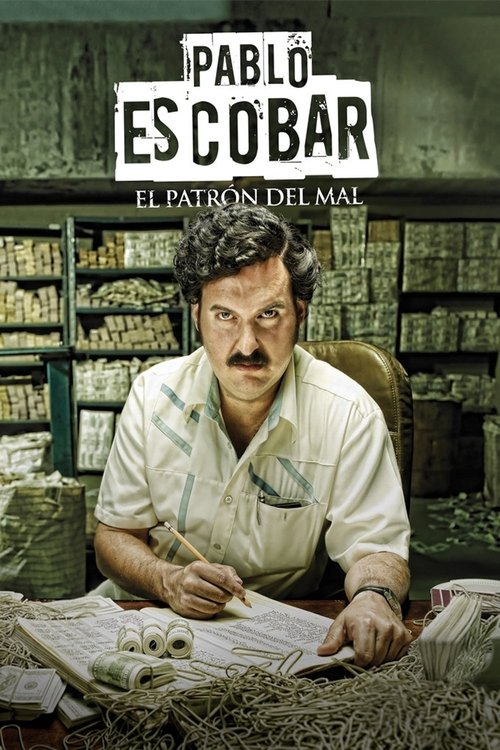
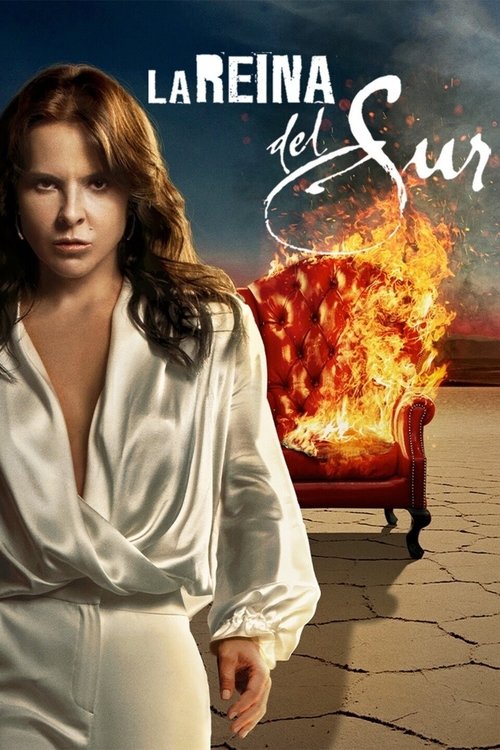
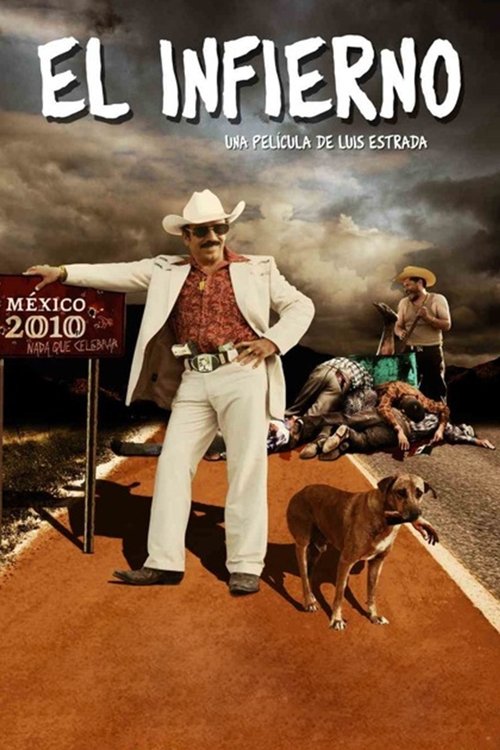
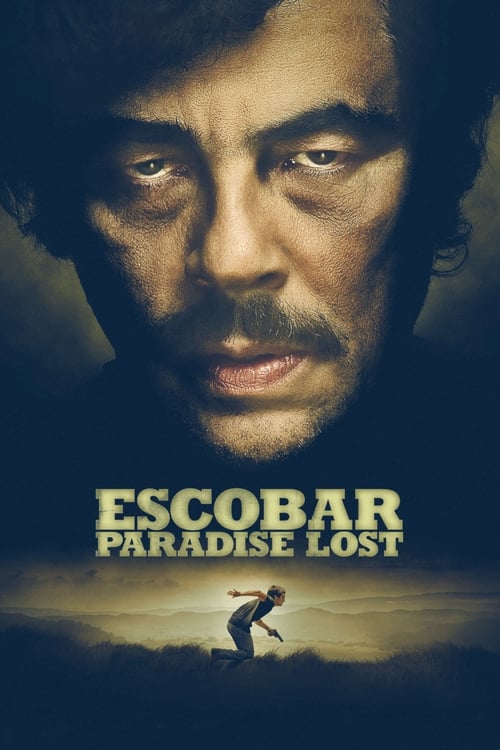
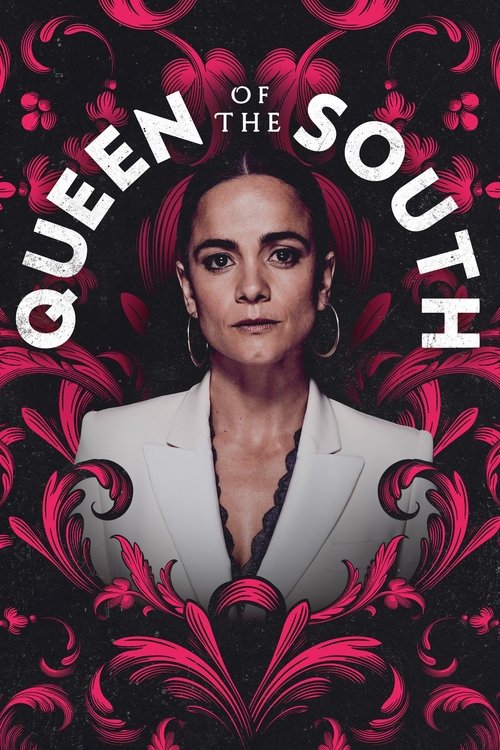
The narco-from-inside tradition inverts the gaze entirely. El Infierno, El Chapo, Pablo Escobar: The Drug Lord, La Reina del Sur and the Colombian Narcos: Mexico get behind the eyes of the people for whom the cartel is the only local economy that answers the phone. The moral landscape shifts when you are inside it.
The border, from the inside
Narco life on its own terms
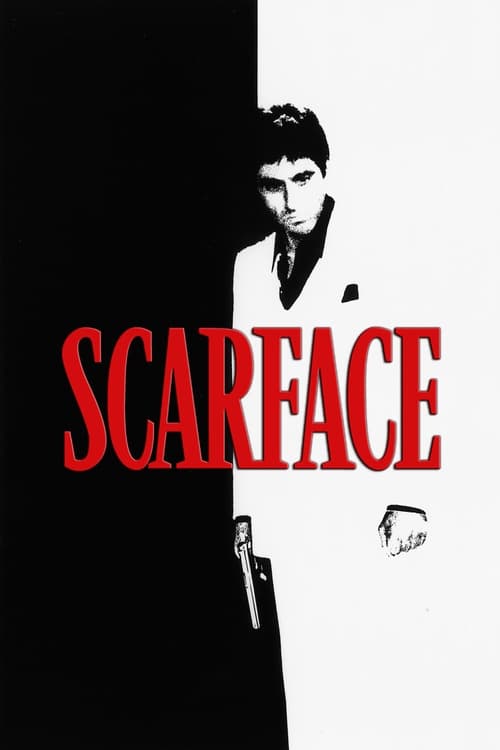
The greatest cartel film is not Scarface
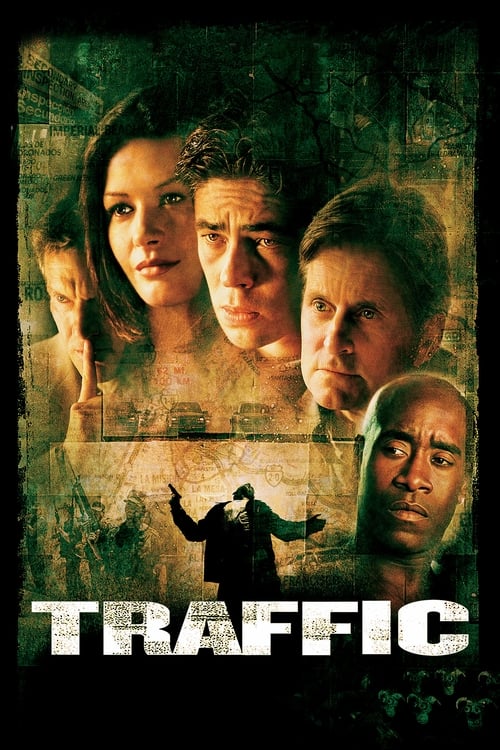
Traffic remains the most clear-eyed American film the genre has produced. Where Scarface is operatic myth, Traffic is system: three storylines, three countries, three different relationships to the same supply chain, all shown simultaneously in the same movie. The judge tasked with fighting the drug war discovers his daughter is an addict. The DEA agent in Tijuana discovers he is working for the wrong cartel. The wife who discovers her murdered husband's secret business finds she is better at running it than he was. Steven Soderbergh made a film about structure when everyone else was making films about kingpins, and it still hasn't been matched.
American eyes on the war
The cartel from the outside in
The narco story, decade by decade
- 1983De Palma turns Pablo-era excess into grand American myth. Scarface
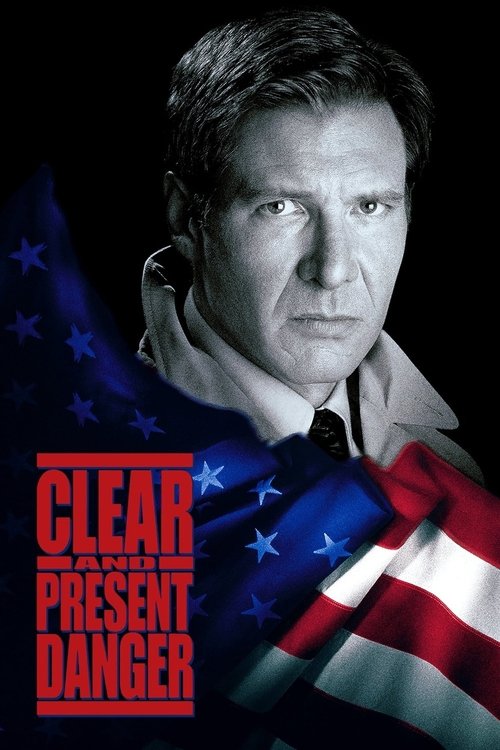
- 1994Harrison Ford squares off against a Cali-based cartel in a rare mainstream studio treatment. Clear and Present Danger
- 2000Soderbergh maps the whole supply chain in three interlocking stories. Traffic
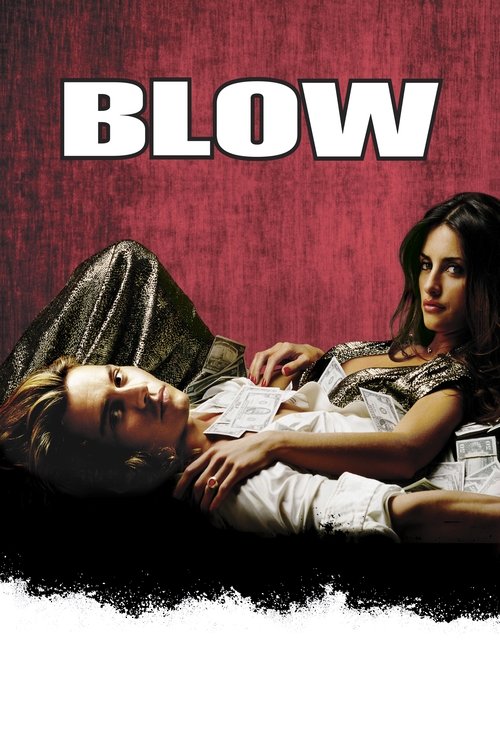
- 2001George Jung's true story becomes the definitive cocaine-boom biography. Blow
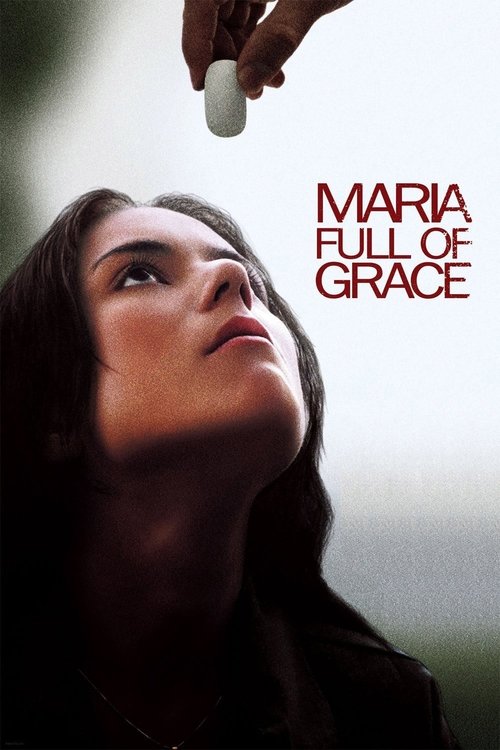
- 2004A young Colombian woman accepts one mule run to send money home. Maria Full of Grace
- 2008A high school chemistry teacher becomes a drug lord in the American Southwest. Breaking Bad
- 2015A Netflix series makes Pablo Escobar an international cultural fixture. Narcos
- 2015Denis Villeneuve's border thriller makes the drug war feel genuinely unknowable. Sicario
- 2020Saviano's journalism becomes a six-episode transnational series tracking one cocaine shipment. ZeroZeroZero
The series that does it on the largest scale
ZeroZeroZero is the most ambitious cartel series ever made, and also the least talked about. Based on Roberto Saviano's nonfiction, it follows one cocaine shipment from the Calabrian 'Ndrangheta, through a Texan trading family, to the Mexican cartel who will distribute it, and tells all three stories simultaneously in three languages. The result is a kind of global supply-chain documentary disguised as a thriller. It is the cartel genre grown up: no charismatic kingpin, no single hero, no American frame. Just the machine itself, turning.
Long-form: series that go deep
Eight episodes or more



The kingpin biography
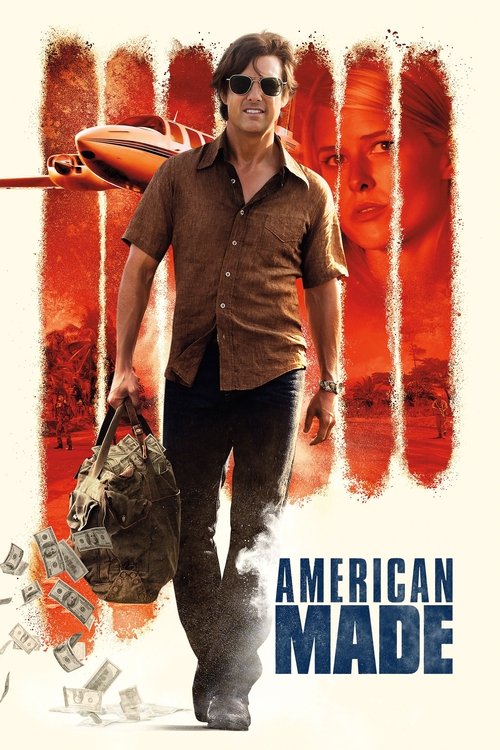
A distinct sub-genre: the true-crime life of a single major cartel figure, shown from rise to arrest or death. El Chapo (2017) traces Guzman from the Sinaloa hills through his global operation and his prison breaks. Pablo Escobar: The Drug Lord, the 74-episode Colombian telenovela, is possibly the most comprehensive screen treatment of any criminal in history. American Made recasts Barry Seal's story as dark comedy: a TWA pilot recruited by the CIA who ended up flying for Medellin.
What these stories share is the same uncomfortable finding: the kingpin, invariably, is a capable person in a broken economy. The system makes the man as much as the man makes the system.
Kingpin portraits
Rise, reign, and ruin
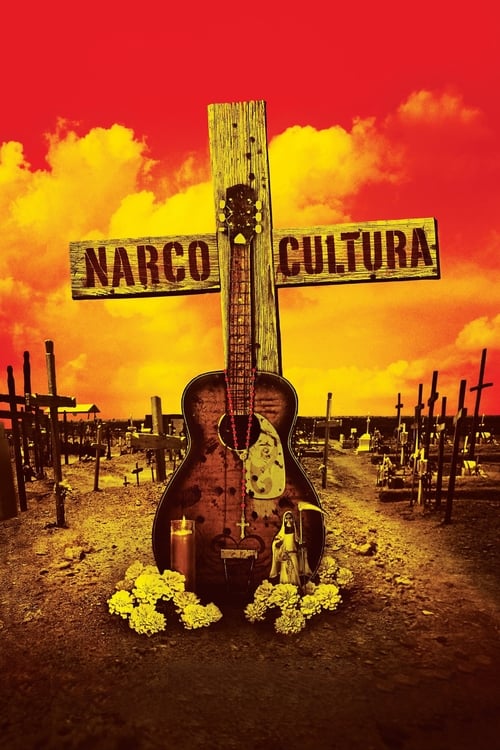
If you only read one
Ioan Grillo's El Narco is the essential nonfiction account of how Mexico's cartels transformed from regional smuggling operations into paramilitary states. Grillo spent a decade reporting from the front lines, and his book is notable for refusing the two most common evasions: it does not mythologise the kingpin, and it does not reduce the cartel to a foreign-policy abstraction. The cartels exist, he argues, because they solve real economic problems for real people, and neither military force nor prohibition has yet answered that problem. Read it alongside The Force, Don Winslow's portrait of a corrupt narcotics detective, to get the other side of the same economy.

On the page
Inside the narco trade: nonfiction and fiction


The games that let you play both sides
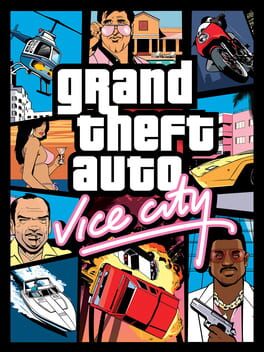
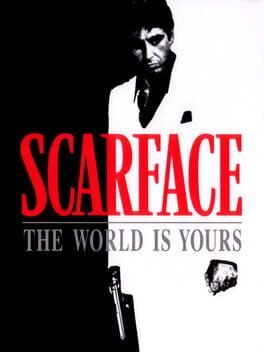
Games have largely treated the cartel world as either a power fantasy or a tactical sandbox. Cartel Tycoon is the more interesting case: a management sim that puts you in charge of a 1980s narco operation and then makes the macroeconomics depressing. The more efficiently you run it, the more violence you generate. Far Cry 6 turns Yara into an island dictatorship with clear cartel imagery, though it leans toward the action-movie end. Kane and Lynch: Dead Men sends two criminals through a South American drug war with the moral clarity of neither. Grand Theft Auto: Vice City remains the genre's most stylish game adaptation: a 1980s Miami built entirely from Scarface iconography, a full decade before the streaming era made cartel aesthetics ubiquitous.
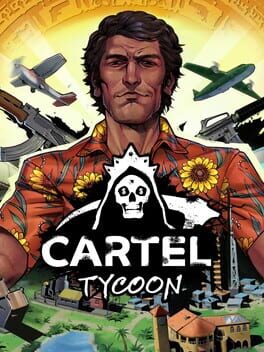
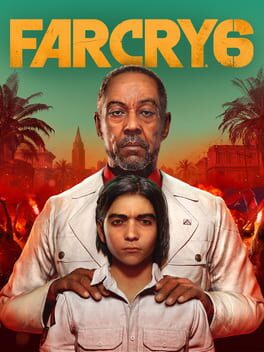
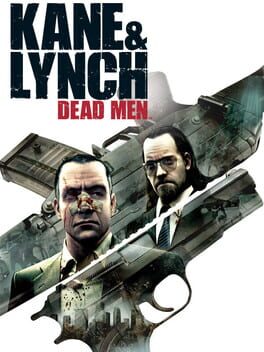
Games: power, crime, consequence
The cartel world as playable system
On the soundtrack
The cartel world has a soundtrack genre of its own: narcocorridos, the folk ballads that celebrate (and sometimes mourn) the cartel figures they name. Los Tigres del Norte were singing about smugglers when Scarface was still in post-production. The form is controversial in Mexico, where several states have banned its broadcast, and fascinating as ethnography: these songs are the community's own accounting of what the trade means to the people who live inside it.
The Scarface score, Giorgio Moroder's synth-saturated original, is the American counterpart: a sound that tells you exactly who Tony Montana thought he was. At the hip-hop end, Jay-Z's American Gangster (2007) is a fully realized concept album built around the drug-lord life, more interested in the moral arithmetic of the trade than the mythology.
The sound of the trade
Music from the narco world
More empires built on crime
Mafia & Organized Crime
Explore the Mafia & Organized Crime guide →The cartel is not the opposite of the legitimate economy. It is what the legitimate economy looks like when you take away the legitimacy.