

Some science fiction thinks big, and some thinks impossibly, gloriously big. The megastructure, sometimes called the Big Dumb Object, is an artificial construct on a scale that dwarfs planets: a ring of land wrapped around a sun, a sphere enclosing a star, a hollow world drifting between the stars. Larry Niven's Ringworld and Arthur C. Clarke's Rendezvous with Rama defined the form, Iain M. Banks turned the Orbital into a utopia, and Halo made the ringworld the most iconic image in video games.
This is the complete guide across every medium: the foundational novels, Banks's Culture and Alastair Reynolds's grand constructs, the games that let you explore or build a megastructure, the films and shows that put them on screen, the generation ships, and the vast silent alien artifacts that started it all.
The essential megastructures







The megastructure novels


Ringworld is the megastructure novel every other one answers to
Larry Niven took a simple, staggering idea, a ribbon of world a million miles wide wrapped all the way around a star, and worked out what it would actually be like to stand on it, break down on it, and try to survive it. The book won the Hugo and the Nebula and gave the genre its defining image of scale. Every ringworld, orbital and Dyson variant that followed is playing on the field Niven laid out, and its sense of vertiginous, engineered vastness has never been topped.
Iain M. Banks and the Culture


Alastair Reynolds's grand constructs


Build it yourself: the games




Megastructures on screen



The alien artifact



The timeline
- 1937Olaf Stapledon's Star Maker imagines civilizations engineering entire stars.
- 1970Larry Niven's Ringworld invents the modern megastructure novel. Ringworld
- 1973Arthur C. Clarke's Rendezvous with Rama perfects the Big Dumb Object. Rendezvous with Rama
- 1975Bob Shaw's Orbitsville sends humanity inside a Dyson sphere.
- 1987Iain M. Banks's Consider Phlebas introduces the Culture and its Orbitals. Consider Phlebas
- 2001Bungie's Halo makes the ringworld the most iconic megastructure in games. Halo: Combat Evolved Anniversary
- 2008WALL·E puts a generation ship and its lost humanity on the big screen. WALL·E
- 2011The Expanse begins its saga of alien megastructures and a ring to the stars. The Expanse
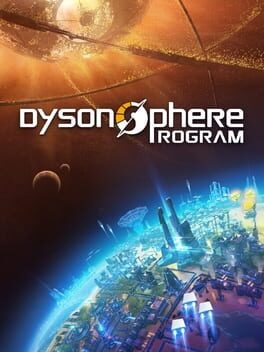
- 2021Dyson Sphere Program turns building a stellar megastructure into a game. Dyson Sphere Program
Rendezvous with Rama is the perfect Big Dumb Object story
Arthur C. Clarke understood that the most awe-inspiring thing in science fiction is not an alien but an alien object: a fifty-kilometre cylinder that drifts into the solar system, is explored, and departs without ever explaining itself. There is barely a plot, and that is the point. The wonder is in the exploration, the scale, and the profound indifference of the thing. It is the template for every enigmatic artifact since.
Iain M. Banks turned the megastructure into a utopia
In the Culture novels, the Orbital, a slender bracelet of a world spun for gravity around a star, is not a mystery to be survived but a paradise to live in, tended by godlike AI Minds. Banks used the sheer abundance of his megastructures to ask the questions scarcity science fiction cannot: what do people want, and do, when they can have anything? It is the most humane and politically serious use the genre has made of building big.
The architects
Keep exploring
Space Opera
Explore the Space Opera guide →Frequently asked
What is a megastructure in science fiction?
A megastructure is an artificial construct of enormous, often planetary or stellar scale: a ringworld encircling a sun, a Dyson sphere enclosing a star, a vast orbital habitat, or a generation ship carrying a whole society. Science fiction uses them to explore staggering scale, deep engineering, and what civilizations might build with unimaginable resources. Ringworld and Halo are famous examples.
What is a Big Dumb Object?
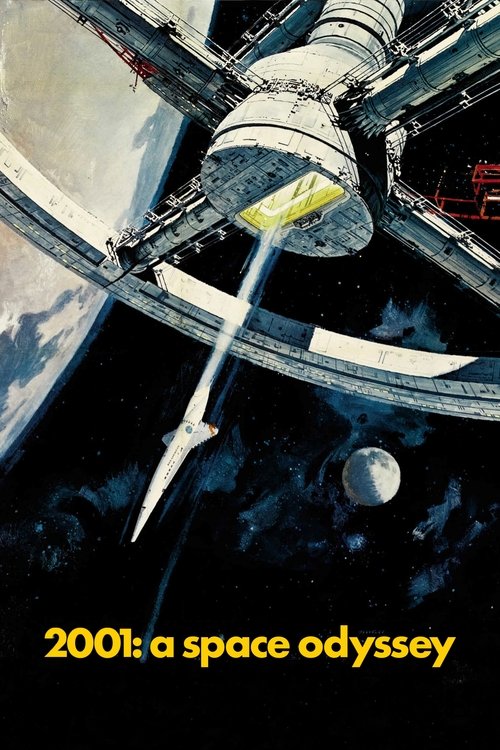
Big Dumb Object (BDO) is a fan term for an enormous, mysterious alien artifact whose purpose is unknown and often never explained. The story is usually about exploring it and grappling with its scale rather than any conflict. Arthur C. Clarke's Rendezvous with Rama is the classic example, along with the monolith of 2001: A Space Odyssey and the alien ships of Greg Bear's Eon.
What is the difference between a ringworld and a Dyson sphere?
A ringworld is a ribbon or band of habitable land encircling a star, spun for artificial gravity, as in Larry Niven's novel and the Halo rings. A Dyson sphere is a complete or partial shell enclosing a star to capture all its energy. Both are megastructures built around a sun, but the ringworld is a strip while the Dyson sphere aims to surround the star entirely.
Where should I start with megastructure science fiction?
For novels, Larry Niven's Ringworld and Arthur C. Clarke's Rendezvous with Rama are the essential starting points, followed by Iain M. Banks's Culture series and Alastair Reynolds's House of Suns. For games, the Halo series and Dyson Sphere Program; for screen, Elysium, Interstellar and The Expanse.