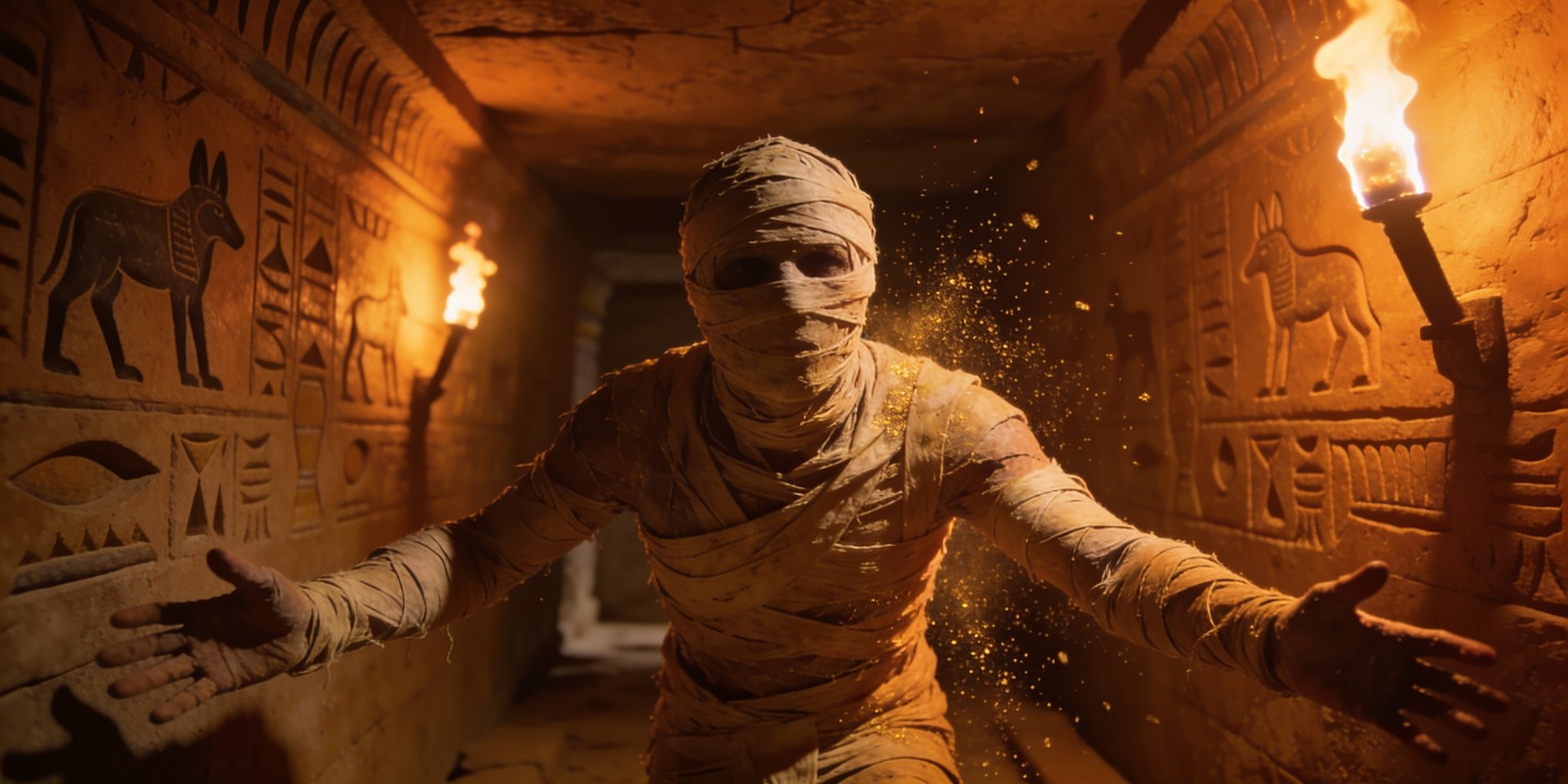

The mummy is unique among classic monsters. It does not bite, transform or claw out of thin air. It walks slowly, relentlessly, wrapped in the gravity of millennia, carrying a curse that belongs not to it but to the arrogance of whoever opened the tomb. The terror is moral as much as physical: the archaeologist who pulled the seal, the museum trustee who auctioned the amulet, the soldier who stripped the sarcophagus for souvenirs. The mummy is their punishment, returning with the patience of the dead.
The genre runs on two tracks that rarely cross. The horror track, from Boris Karloff's slow, authoritative Imhotep to Hammer's pulpy curse pictures to the quiet dread of Bram Stoker adaptations, keeps the mummy as genuine threat: ancient, implacable, and ultimately tragic. The adventure track, detonated by the 1999 Brendan Fraser blockbuster, treats the mummy as an obstacle in a sand-blown theme park, a source of set-pieces rather than dread. Both traditions are represented here, because both produced essential work.
Essential mummy stories
The canon, from the tomb to the screen

Boris Karloff invented the template
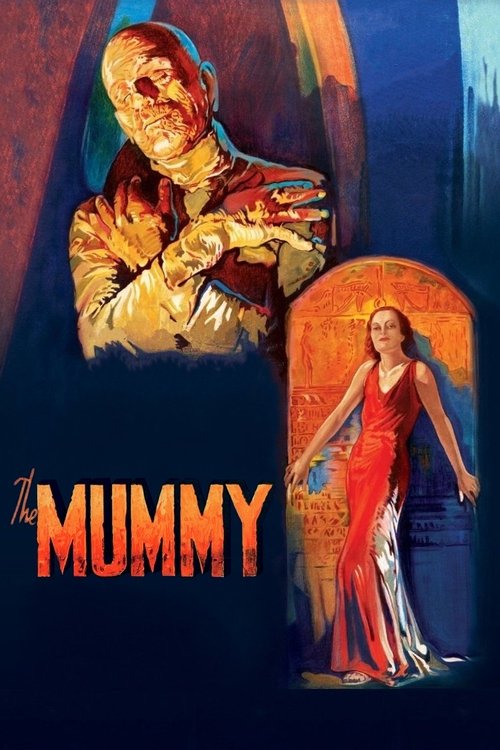
Before The Mummy (1932), nobody had thought seriously about what it meant for an Egyptian priest to return from the dead. Karl Freund's film gave us Imhotep, played by Karloff with a stillness more frightening than any jump scare: a man who has waited 3,700 years and is in no particular hurry now. The genius was making him sympathetic. He is not a monster from outside human experience. He is a man who loved someone and refused to accept that love had an expiration date. Every mummy film since owes him something, whether it acknowledges the debt or not.

The horror tradition
From Universal to Hammer to the art-house fringe

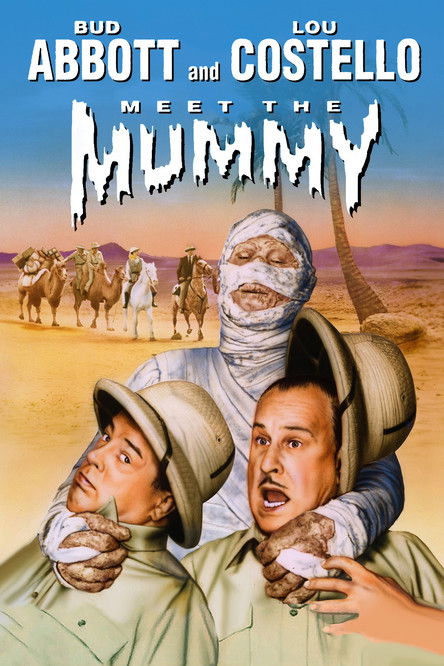
Hammer and the European curse tradition
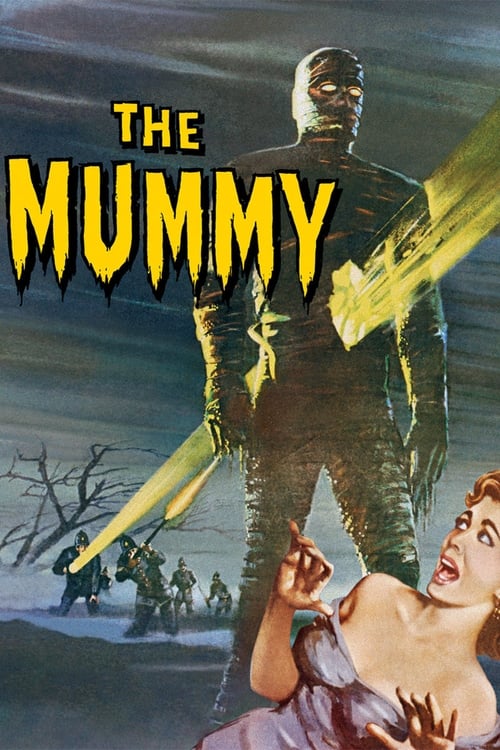
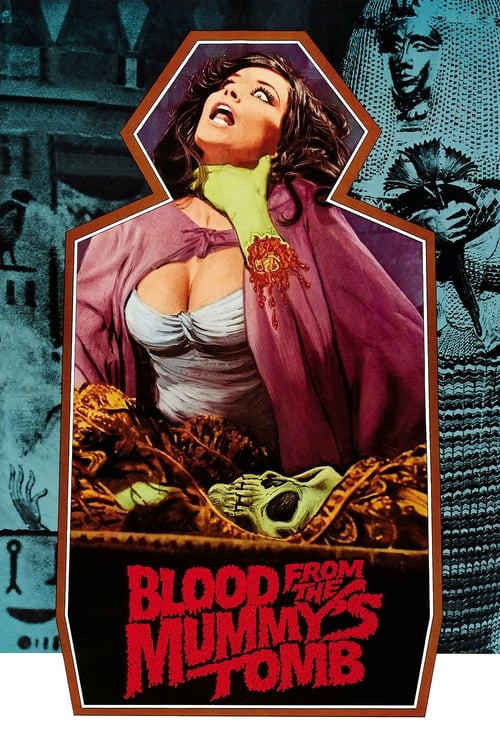
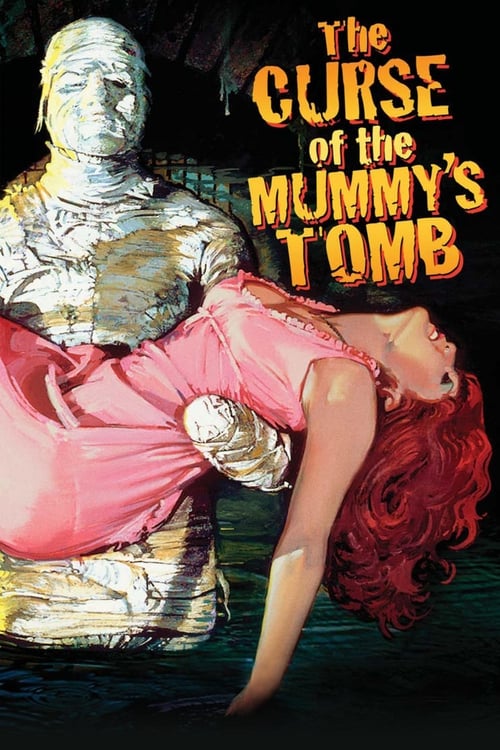
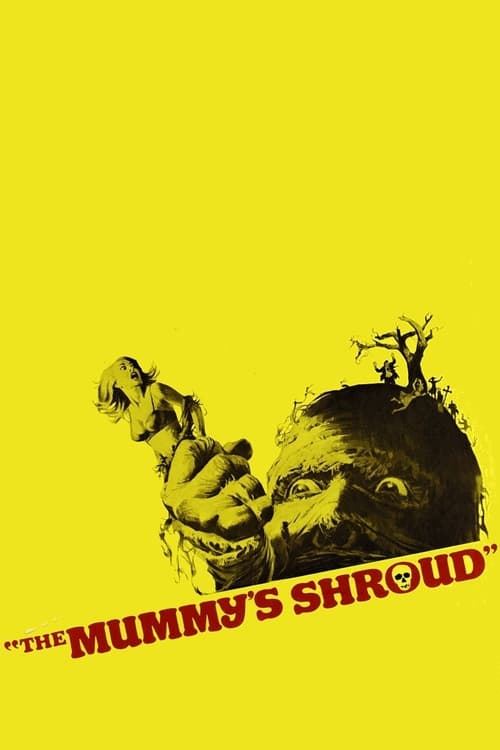
When Hammer Films acquired the Universal monster licences in 1959, they did what they did with Dracula and Frankenstein: stripped the gentility, added blood and colour, and put the result through their Bray Studios production line. Terence Fisher's The Mummy (1959) with Peter Cushing and Christopher Lee is the best of the Hammer run, partly because Lee understood that the creature required physical commitment, not just a shuffling gait. The curse pictures that followed, The Curse of the Mummy's Tomb and The Mummy's Shroud, are cheaper and more formulaic, but they established the Egyptian archaeology expedition as a genre set-piece that screenwriters would keep raiding for decades.
The 1999 film is better than its reputation
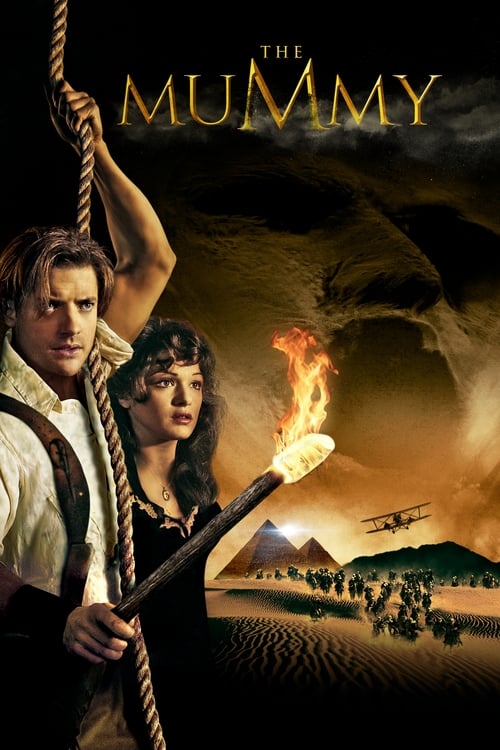
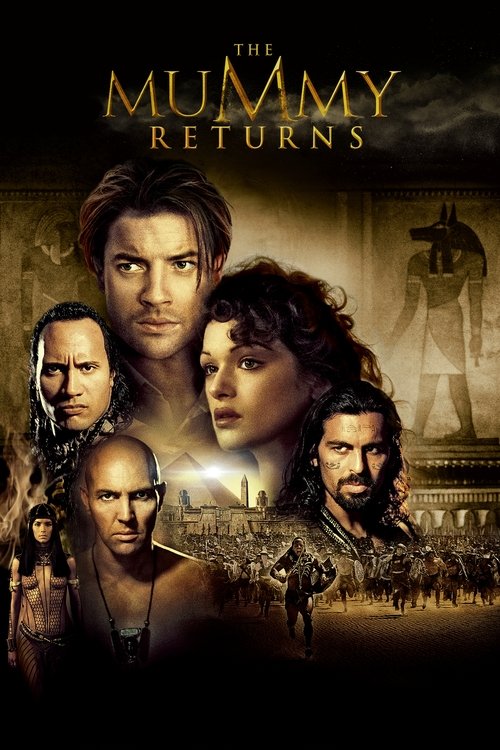
Critics at the time and since have treated The Mummy (1999) as a guilty pleasure, a loud B-movie with inflated production values. That reading undersells it. Stephen Sommers knew exactly what kind of film he was making: a widescreen Saturday matinee in the tradition of Raiders of the Lost Ark, with a horror monster domesticated into an adventure villain. Brendan Fraser's Rick O'Connell is a classic genre rogue, and Arnold Vosloo's Imhotep is surprisingly menacing even in CGI-heavy sequences that have aged less gracefully. What the film got right was structure: it earns its spectacle by building actual character stakes first. The sequel overdid everything, but the original holds up as expert genre filmmaking.
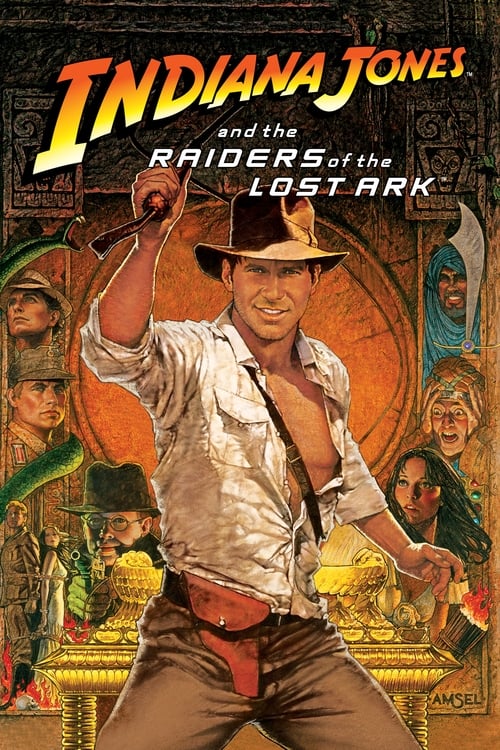
The adventure spectacle
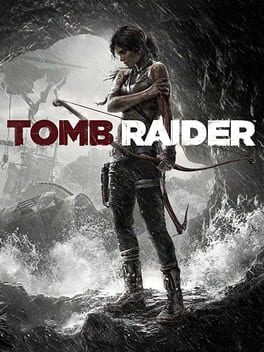
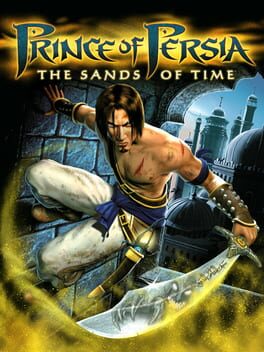
Tomb raiders, lost arks and desert-set blockbusters
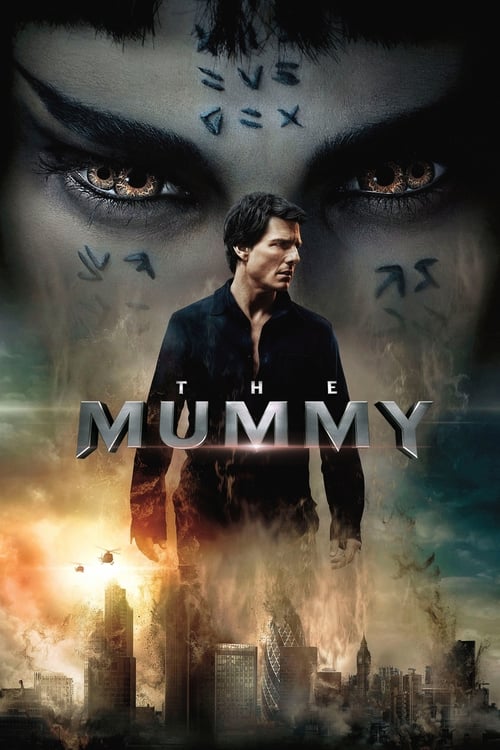
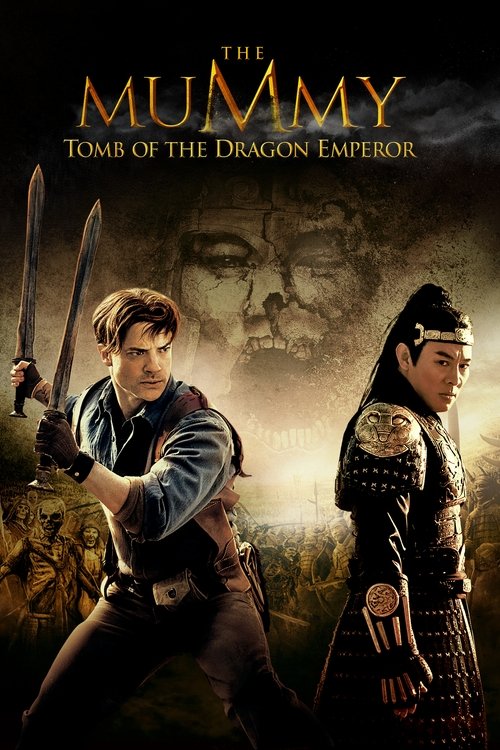
Bubba Ho-Tep is the finest mummy film nobody talks about
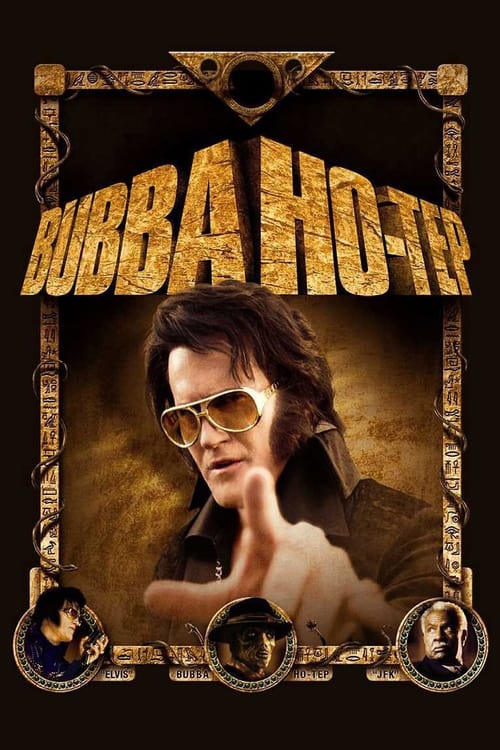
Don Coscarelli's Bubba Ho-Tep (2002) is a comedy, an Elvis movie, a mummy horror and a meditation on aging and dignity, often in the same scene. Bruce Campbell plays a very old Elvis Presley in a nursing home, convinced (perhaps rightly) that he swapped identities with an impersonator years ago. The mummy in question is an ancient Egyptian soul-sucker haunting the facility's corridors. What the film is actually about is men at the end of their lives, still fighting to matter. It is one of the only mummy stories that treats its monster as a metaphor and then does something genuinely moving with the metaphor. You should watch it twice.
On the small screen
Curses, pharaohs and wrapped antagonists across television
Games understood the setting better than most films
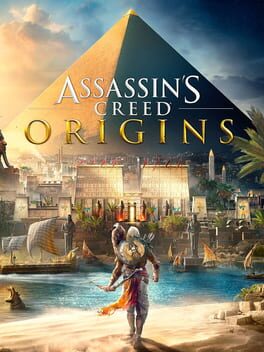
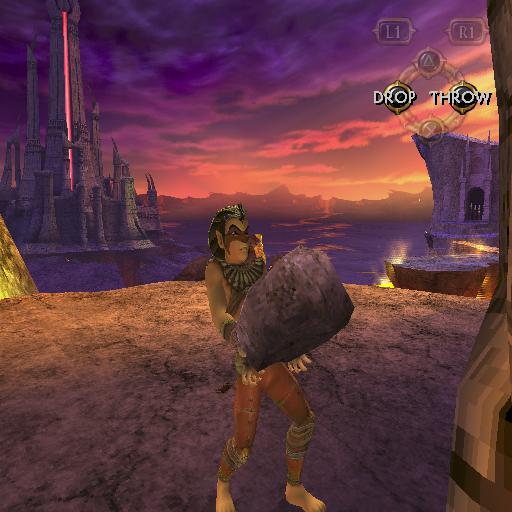
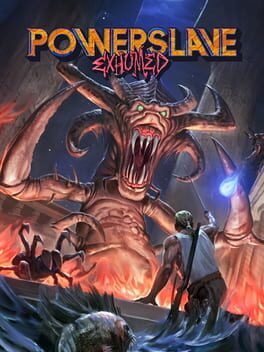
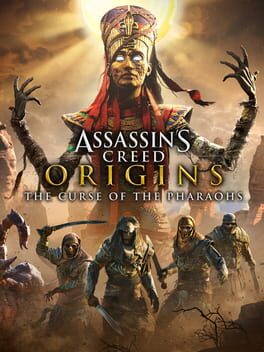
The FPS PowerSlave (1996, revived as Exhumed in 2022) put you alone on the island of Karnak fighting mummified soldiers alongside genuinely alien gods, a premise more unsettling than most films dared. Sphinx and the Cursed Mummy (2003) flipped the premise by making the mummy the hero, a gentle prince who solves puzzles by exploiting his inability to feel pain or triggers traps. Assassin's Creed Origins went deepest into ancient Egypt as a functioning world, not just a backdrop for bandaged antagonists: its Curse of the Pharaohs DLC made the mythological undead central rather than ornamental. Games have consistently found more angles on the material than cinema, possibly because they are free from the production pressures that push films toward the established Fraser template.
Ancient Egypt in games
Tombs, curses and the desert as playground

On the page
Fiction that takes the burial chamber seriously


Curses, tombs and the sands of Egypt
Ancient Egypt
Explore the Ancient Egypt guide →The tomb was not sealed to protect the dead from the living. It was sealed to protect the living from the dead. We keep getting that backwards.On the recurring lesson of three thousand years of mummy stories