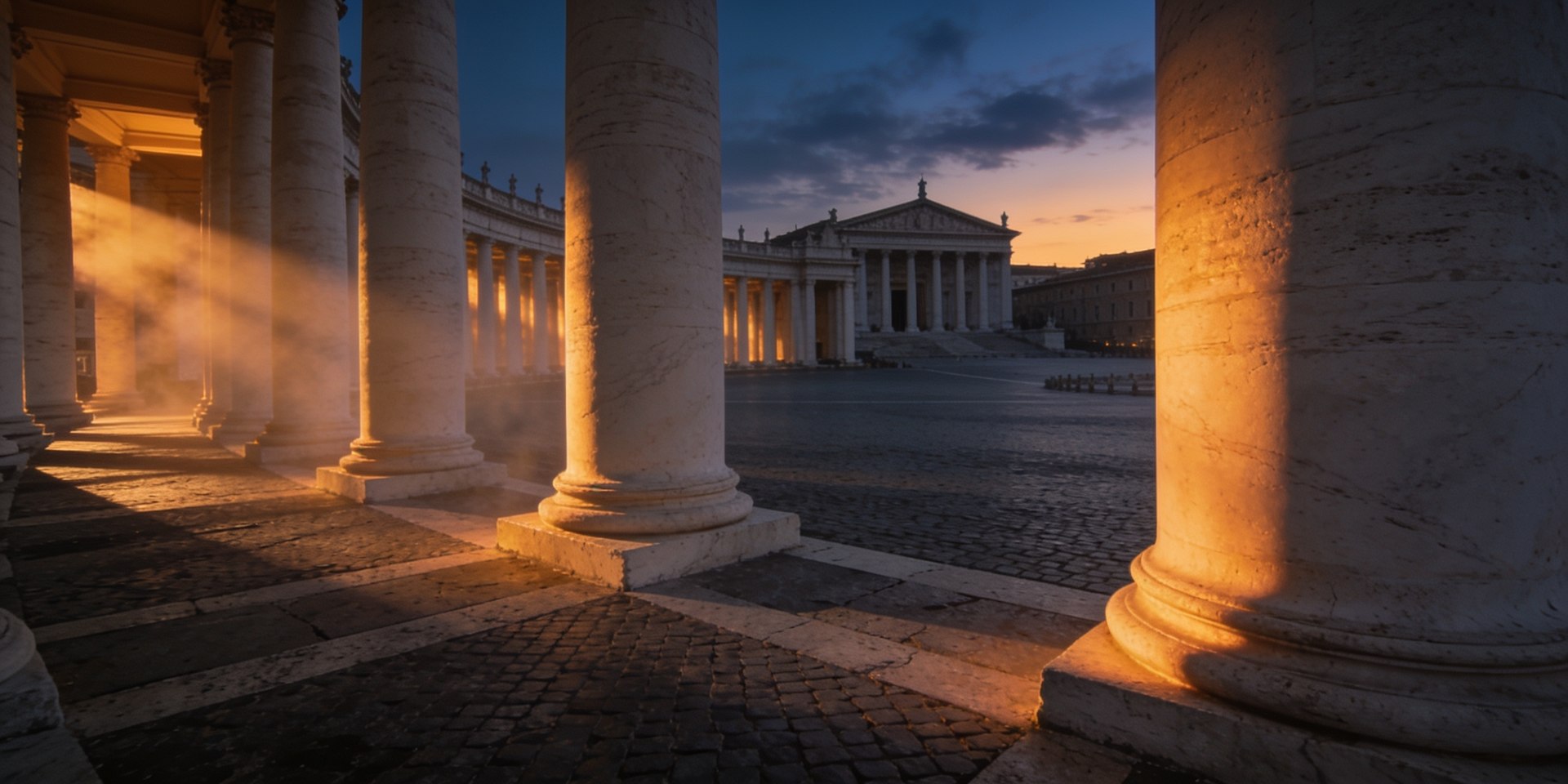

Rome is not a setting. It is a argument. Every story set inside its borders is, one way or another, about power: who holds it, what it costs to keep it, and what it does to the person who does. The Senate floor and the frontier camp are the same drama at different scales. Caesar's crossing of the Rubicon and the last emperor's surrender to Odoacer in 476 bracket seven centuries of ambition, civil war, administrative genius and spectacular personal failure. That arc has never been out of fashion, because we are still living inside the world it built.
The Roman Empire in popular culture ranges from sword-and-sandal spectacle to political tragedy, from grand strategy games that make you feel every cohort lost, to novels in which an aging Cicero dictates letters as the Republic he saved tears itself apart. The best of it earns the scale.
Essential Rome
The definitive cross-media canon of the Roman Empire
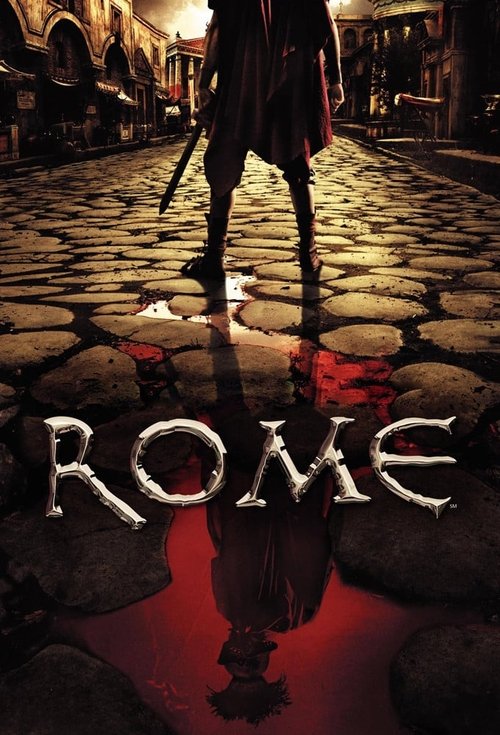


Rome (2005) is the gold standard
Two seasons, fifty-two years of Roman history, a budget that ended the production but left behind something nobody has matched since. HBO and the BBC's Rome is the gold standard for Rome on screen because it works at street level and Senate level simultaneously. Titus Pullo and Lucius Vorenus are fictional centurions dropped into a historically accurate cage match for the future of the world, and through them you feel every political shift as a change in the weather of the streets. The collapse of the Republic is not an abstraction here. It is the thing that decides whether the man your character is loyal to will be alive tomorrow.
The Republic falls
Caesar, Augustus, and the end of the old order
The emperor problem
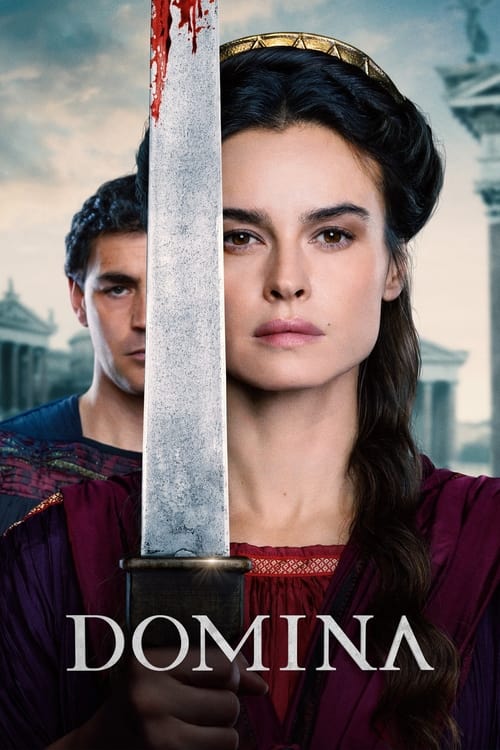
The Roman Empire produced, in roughly five centuries, a roster of rulers that reads like a personality-disorder handbook. Augustus, the cold genius who laundered a military dictatorship into a constitutional settlement. Tiberius, capable and paranoid in equal measure. Caligula, whose reign is still debated (how much was madness, how much was deliberate provocation of the Senate?). Claudius, the unexpected survivor. Nero, who found in performance the only honest outlet for a self he was otherwise required to suppress. The Julio-Claudian dynasty alone is richer dramatic material than almost any period of any civilization, and storytellers have been mining it for two thousand years.
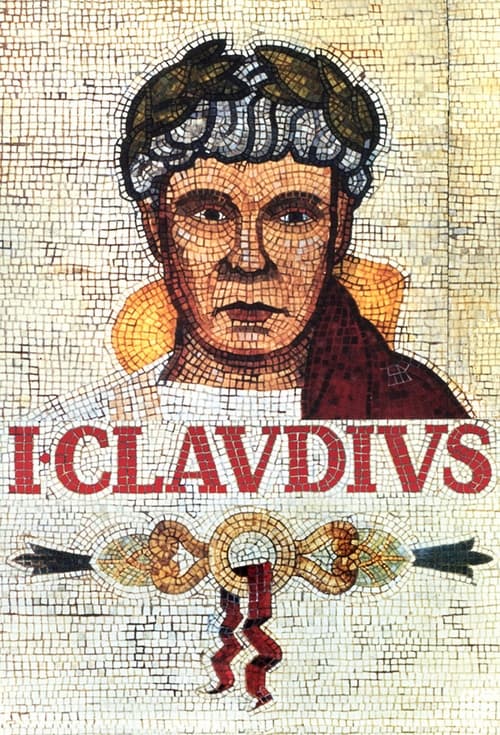
I, Claudius invented a genre
Robert Graves's 1934 novel, and the 1976 BBC series that adapted it with Derek Jacobi, Patrick Stewart and Siân Phillips, did something specific and lasting: it turned the court of Augustus into psychological realism. Livia Drusilla, as Graves writes her, is a patient, brilliant and entirely ruthless political operator whose methods would be recognizable in any capital in any century. The book and series together established the template for how political dynasty drama gets written in English. The Crown, Succession, Game of Thrones (the political parts): all of them are downstream of Graves and Jacobi working out what it means to survive in a family where power is the only currency.
Emperors and their courts
The Julio-Claudians, the Flavians, and the palace at the centre of the world


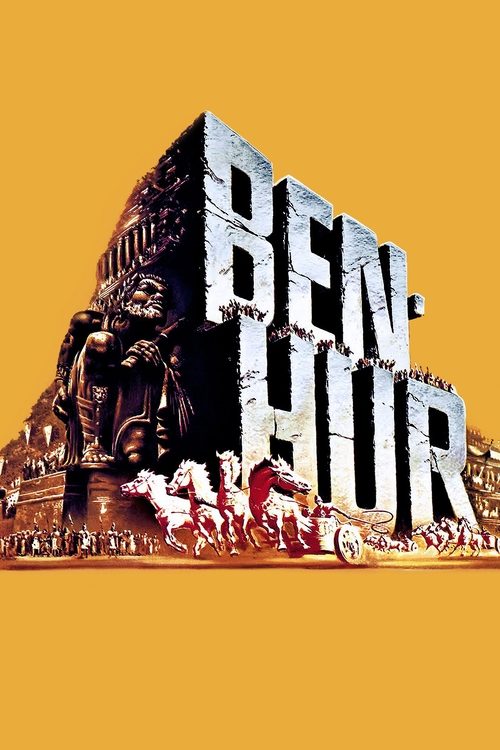
The best Roman game makes you feel the logistics
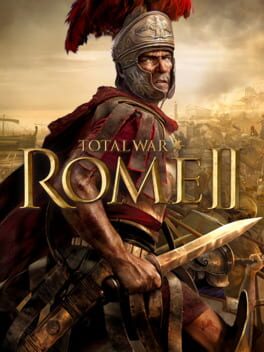
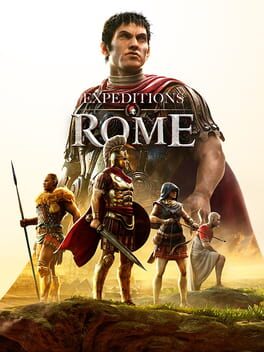
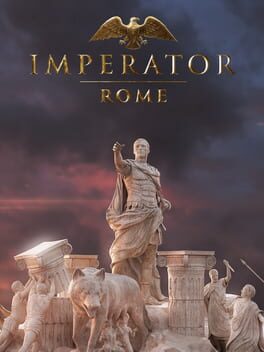
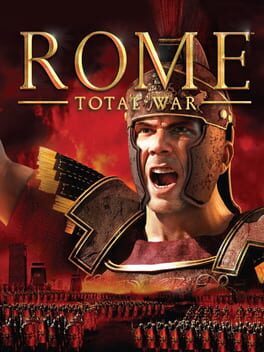
Most Roman games give you the spectacle: the battle line, the testudo, the moment the cavalry sweeps around the flank. What separates Total War: Rome II and Imperator: Rome from the pack is that they force you to feel the bureaucracy underneath the spectacle. You need grain. You need roads. You need to know which of your generals is loyal to you and which one just signed a pact with your richest senator. The empire is not a war, it is a system, and these games are the closest any medium has come to making you run one. When you lose a province in Imperator because you promoted the wrong proconsul, the history books suddenly make a different kind of sense.
Command the legions
Strategy, tactics and empire-building in games
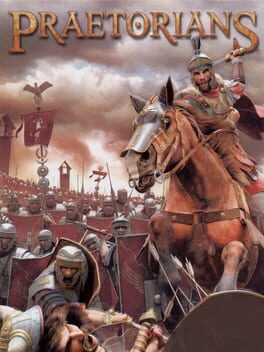
Legions at the edge of the map
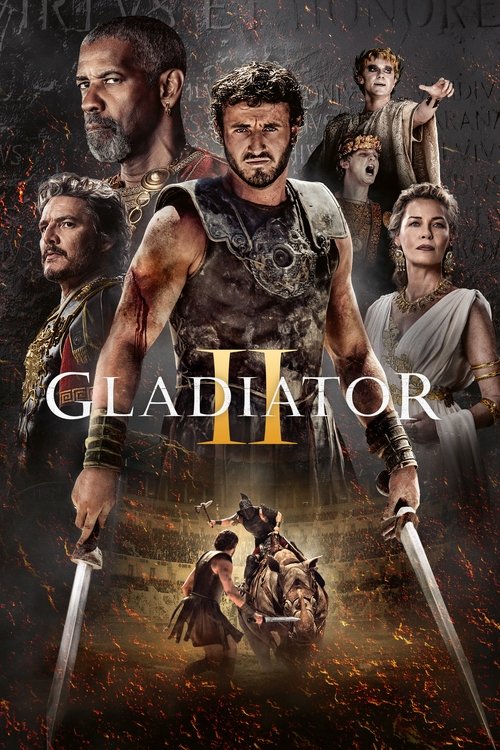
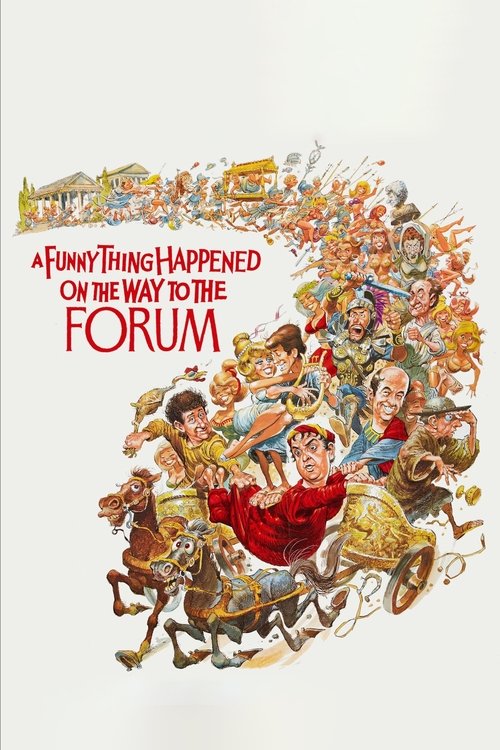
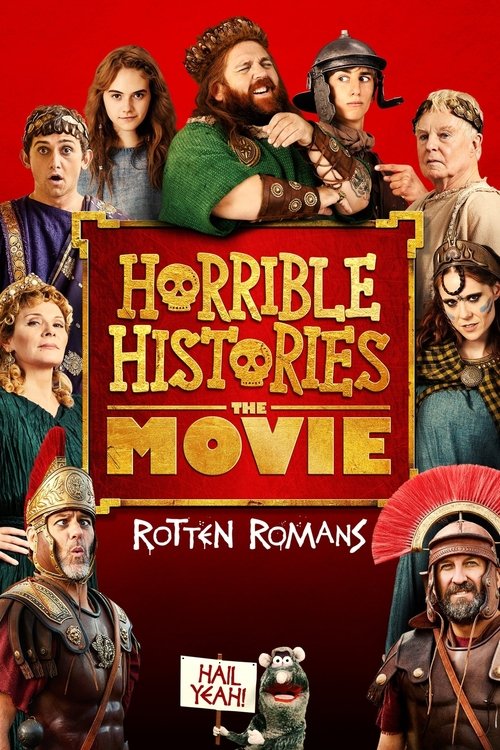
Films about the Roman frontier and the soldiers who held it
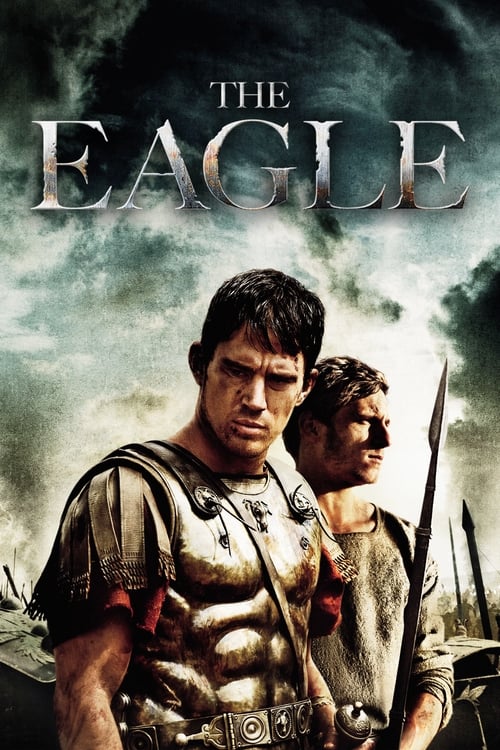
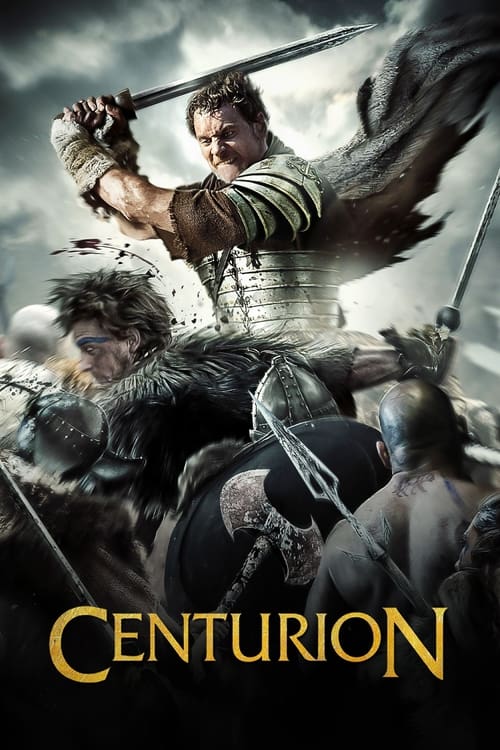
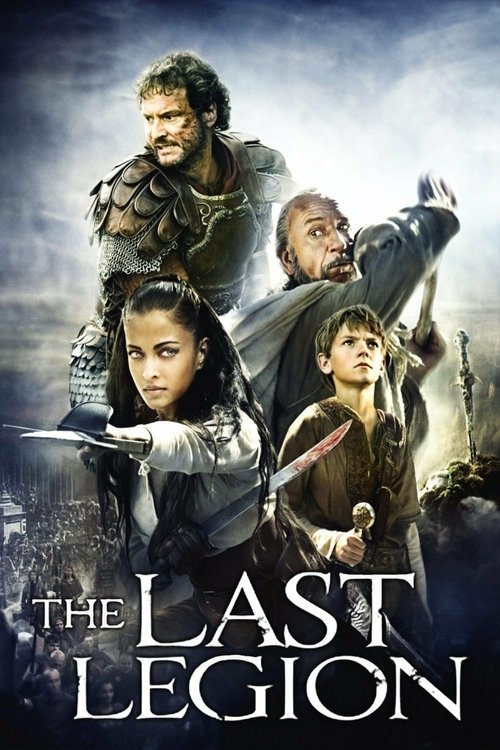
The fall is the real story
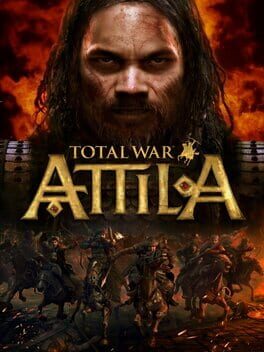
The Western Roman Empire did not end. It stopped being recognizable. No single catastrophe, no dramatic last battle (there was one, but no one at the time knew it was the last): just a slow withdrawal of coherence, a long political unraveling during which the idea of Rome continued to do real work in the world long after the armies stopped. Total War: Attila is the only major game to make the late empire genuinely feel like decline rather than just another campaign map. The roads are crumbling. Your treasury is empty. The barbarian federates you hired to replace the legions you can no longer afford are now the only thing standing between you and the thing they used to be. It is one of the most quietly devastating experiences in strategy games.
Rome on the page
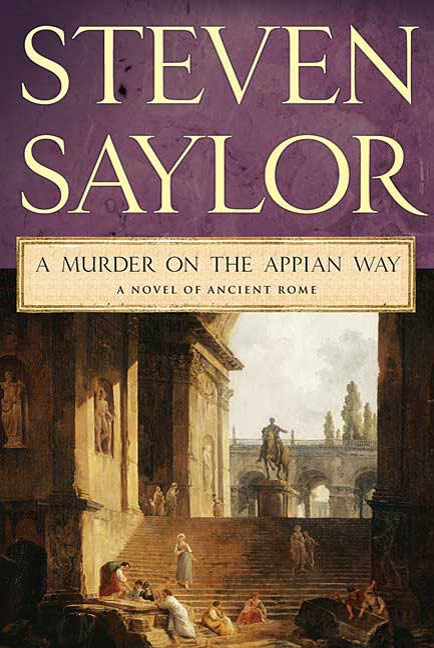
Novels and mysteries that walk the streets of the ancient city




Rome on television
From prestige drama to documentary
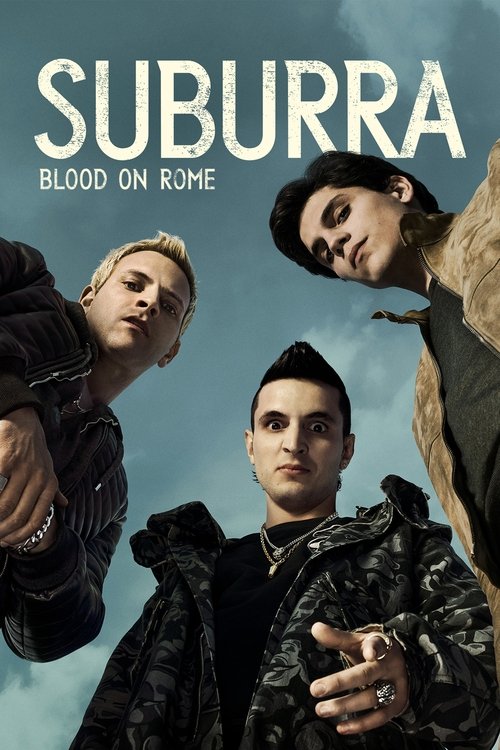
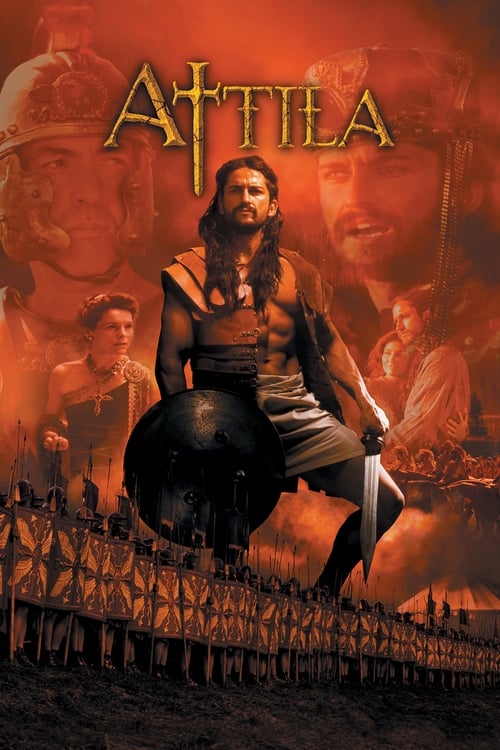
More empires, arenas and ancient power
Gladiators & Ancient Rome
Explore the Gladiators & Ancient Rome guide →All roads lead to Rome is not a description of geography. It is a description of how we think about power: that somewhere there is a centre, and the centre always falls.On the enduring myth of the eternal city