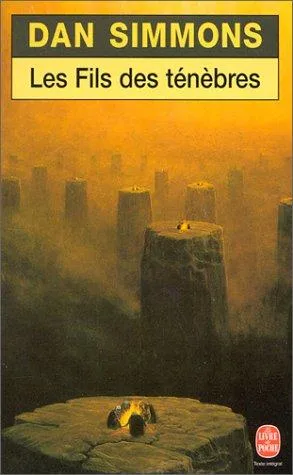
Children of the night (1992)
Children of the night is a 1992 fiction book written by Dan Simmons.
Post-Ceausescu Romania, its orphanages overflowing and its old families keeping older secrets. American hematologist Kate Neuman arrives to treat rare blood disorders and adopts Joshua, an abandoned infant whose immune system does something impossible: his body can absorb and use any type of blood. His condition could rewrite medicine. It also marks him. A centuries-old underground, the strigoi, wants the child back, and Kate's search for answers pulls her toward the historical figure behind the Dracula legend. Simmons grounds vampire myth in hematology and post-Cold-War wreckage, a medical thriller wearing gothic horror's teeth.
Similar books
Explore Children of the night guides
Children of the night in our writing
- Companion guide: Hyperion Cantos: The Complete Guide to Dan Simmons' Far-Future Epic
A few thoughts on Children of the night
Guillermo del Toro's The Strain runs the same experiment, vampirism as pathology loose in a modern city. Coppola's Bram Stoker's Dracula arrived the same year and plays everything Dan Simmons keeps clinical as full-blown opera. And Daybreakers pushes the blood-as-medical-resource premise to its corporate endpoint, vampirism managed by pharmaceutical logic, a lean 2009 sleeper worth the detour.
Vampires explained through science, not curses
Children of the Night grounds its strigoi in hematology, a blood condition instead of a curse. The Strain and Daybreakers do the same trick, turning vampirism into a virus and a biotech industry instead of folklore. iZombie hands a similar blood disorder to a coroner who eats brains, and Bram Stoker's Dracula anchors the whole myth to a real historical man.
Outbreaks and experiments that turn ordinary bodies into monsters
Kate Neuman's search for what made Joshua's blood impossible plays out here as outbreak stories instead of a medical mystery. Resident Evil: Death Island and Resident Evil: Vendetta both let a lab accident spread through a population until almost no one is left untouched. Stephen King's Cell does the same with a signal instead of a virus, Mary Shelley's The Last Man with a plague, and Frankenstein started the tradition of science building a monster from human tissue.
Ordinary bodies hiding an impossible secret science created
Joshua looks like any adopted infant until his blood turns out to rewrite the rules of medicine. Resident Alien hides an even bigger secret inside a small-town doctor's white coat, Doom Patrol and the Ninja Turtles both gather bodies remade by a lab accident nobody meant to survive, Heavenly Delusion keeps its kids inside a facility built around the same kind of secret, and Inuyashiki wakes up rebuilt by technology he never agreed to.