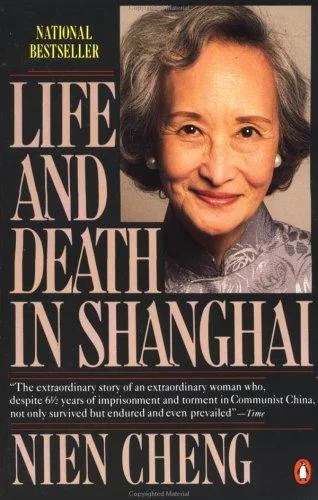
Life and death in Shanghai (1986)
Life and death in Shanghai is a 1986 biography book written by Nien Cheng.
In August 1966, Red Guards tore through Nien Cheng's Shanghai home. London-educated, widowed from an official of the old Nationalist regime, and an employee of Shell, she was an obvious target for the Cultural Revolution's fervor. When she refused to confess to crimes she had not committed, the state locked her in solitary confinement for more than six years. Her memoir records the deprivation, the interrogations, and the stubborn dignity of one woman who would not break, set against a nation Mao had turned against itself. It is testimony, not melodrama, written after she reached exile.
Similar books
Explore Life and death in Shanghai guides
A few thoughts on Life and death in Shanghai
Jung Chang's Wild Swans widens the same history across three generations of Chinese women. Zhang Yimou's film To Live follows an ordinary family battered by the identical decades of upheaval. For the prison-camp interior, Aleksandr Solzhenitsyn on Soviet confinement mirrors Nien Cheng's account of surviving an ideology that demanded confession above all.
First-hand accounts of endurance under oppression
Nien Cheng spent more than six years in solitary confinement rather than confess to crimes she never committed. These memoirs share that testimony of dignity under state cruelty, each written by someone who lived it: prison, persecution and survival recorded plainly, so a reader understands what one person can withstand when a whole system turns against them.
One person standing firm against the machinery of power
Cheng's memoir sets a single stubborn woman against a nation Mao turned on itself. These true and fact-based stories share that spine: individuals who hold their convictions when power, prejudice or persecution demands they bend, from a physicist facing political ruin to men who refuse to surrender their principles under enormous pressure.