Return to Krondor (1998)
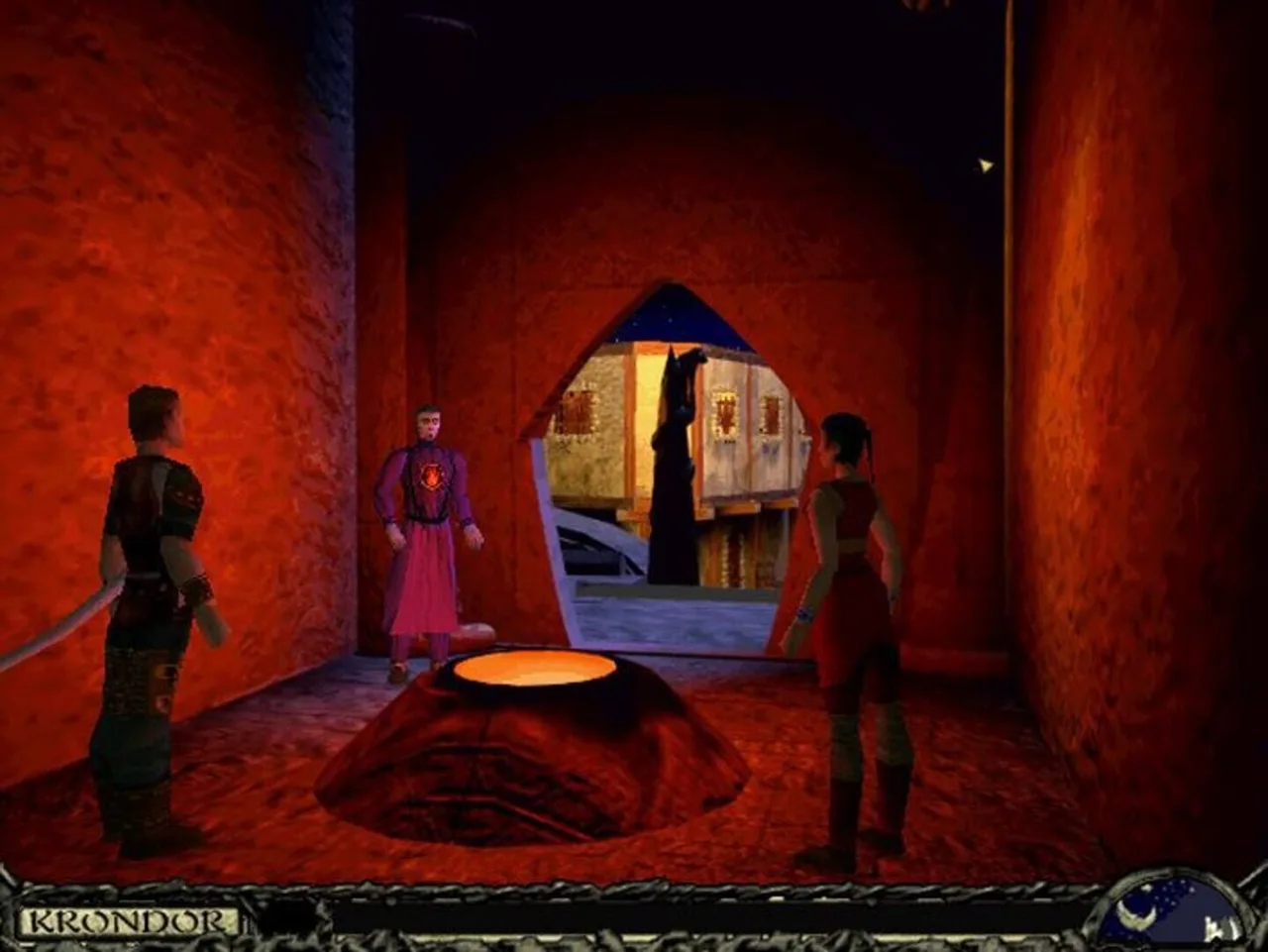
Return to Krondor is a 1998 role-playing (rpg) video game made by PyroTechnix and 7th Level.
The Ishapian Church has lost its holiest relic. The Tear of the Gods went down with a treasure ship in the Bitter Sea after pirates in the pay of the half-mad sorcerer Sidi botched the theft. Recovering it drags your small band into a three-sided war for the relic, from the high halls of Krondor's palace down through the city sewers and into a temple to something older than the gods. Set in Raymond E. Feist's Midkemia and following Betrayal at Krondor, this 1998 sequel trades the original's austerity for early 3D while keeping its story-heavy, tactical roots.
Similar games
Explore Return to Krondor guides
Return to Krondor in our writing
- Companion guide: The Golden Age of the CRPG: 1981 to 1999
A few thoughts on Return to Krondor
Betrayal at Krondor is the essential predecessor, richer in writing and freedom. Feist's Riftwar novels, starting with Magician, are the source world these games adapt, and Krondor and Prince Arutha come straight off the page. For story-first party RPGs of the same late-nineties moment, Baldur's Gate is the obvious next campaign.
Story-driven classic CRPGs from the same golden age as Krondor
Return to Krondor keeps Betrayal at Krondor's dense plotting and turn-based tactics even as it moves into early 3D. Baldur's Gate, Planescape: Torment, Ultima VII: The Black Gate, Pool of Radiance, Darklands, Wasteland, and The Elder Scrolls II: Daggerfall come from that same run of story-first RPGs where dialogue and consequence mattered as much as combat math.
Political fantasy where a small band decides a kingdom's fate
The Tear of the Gods drags Return to Krondor's small band into a three-sided war that could break Feist's Midkemia. The Fellowship of the Ring, A Game of Thrones, The Name of the Wind, and Game of Thrones share that same scale, where a handful of travelers carry consequences meant for an entire kingdom.
Medieval-fantasy RPGs with a living world and real consequences
Return to Krondor sends a tactical party through palace halls, sewers, and an ancient temple with real stakes at every turn. Gothic, Gothic II: The Night of the Raven, The Witcher 3: Wild Hunt, and Kingdom Come: Deliverance build that same lived-in medieval world, where choices and combat both carry lasting weight.
Fantasy adventure movies built on real castles, swords, and mud
Return to Krondor's palace intrigue and pirate raids sit in the same medieval adventure tradition as Conan the Barbarian, Excalibur, and Dragonslayer, three films built on real castles, swords, and practical effects rather than digital spectacle. Monty Python and the Holy Grail shares the same unpolished, physical medieval setting, played for laughs instead of drama.