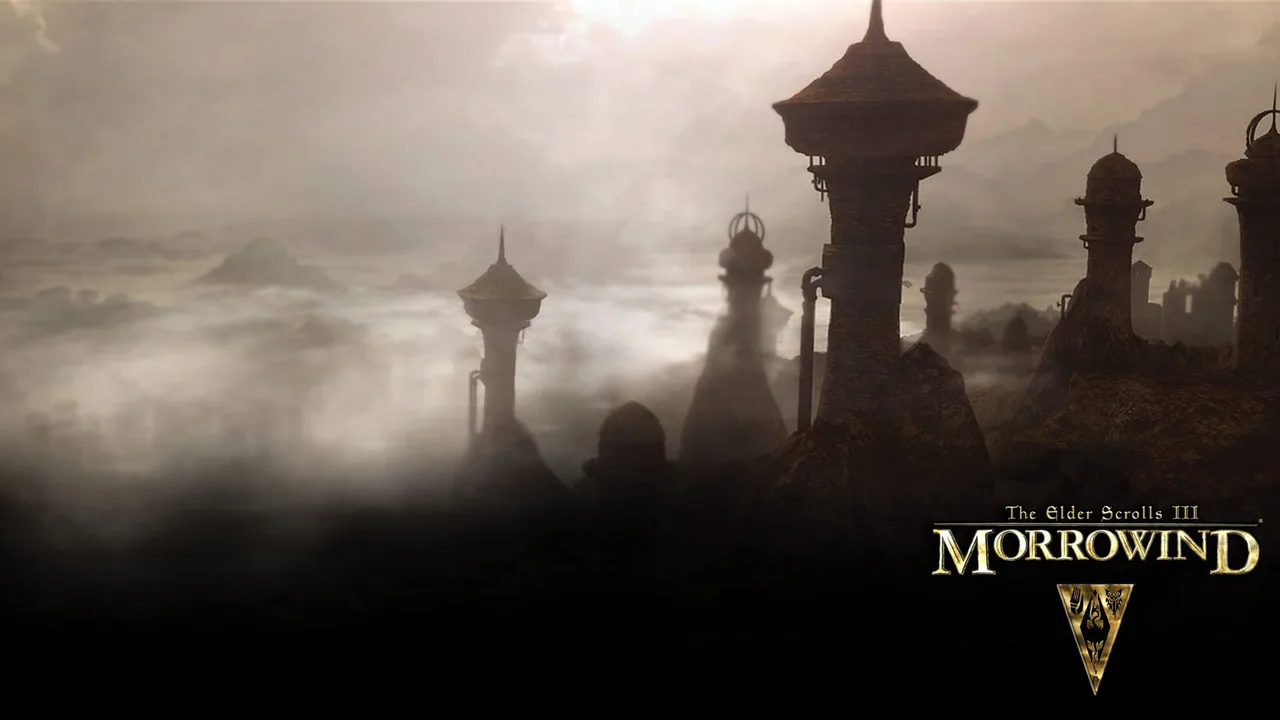
The Elder Scrolls III: Morrowind (2002)
The Elder Scrolls III: Morrowind is a 2002 role-playing (rpg) video game made by Bethesda Game Studios.
You arrive in chains on the volcanic island of Vvardenfell, released into a land like nowhere else in fantasy: giant fleas ferry travelers between towns, mushroom towers rise over ash wastes, and living gods rule from a mountain. Free of quest markers and hand-holding, you read, ask, and wander your way into a prophecy naming you the reborn hero Nerevar. Guilds, great houses, and ash-blighted cults all want a piece of you. Dense, alien, and unforgiving, the third Elder Scrolls trusts the player to get lost, and rewards it richly.
Similar games
Explore The Elder Scrolls III: Morrowind guides
The Elder Scrolls III: Morrowind in our writing
A few thoughts on The Elder Scrolls III: Morrowind
Frank Herbert's Dune is Morrowind's spiritual twin, a desert world of feuding houses, a foretold messiah, and religion braided into politics, and the two films render it in full. For scheming dynasties, Game of Thrones scratches the same itch, while House of the Dragon narrows it to one bloodline's ruin. Howard Shore's The Lord of the Rings: The Return of the King: Original Motion Picture Soundtrack scores the wandering.
Desert worlds run by prophecy and noble houses
Morrowind hands you a prophecy about a reborn hero while its Great Houses jockey for Vvardenfell's future, a setup Dune fans will recognize instantly. Frank Herbert's novel and Denis Villeneuve's film built the same chosen-one-versus-noble-houses machinery around Arrakis decades apart. House of the Dragon and Game of Thrones swap the desert for Westeros but keep the same succession scheming underneath every alliance.
Fantasy sagas built for wandering, not rushing
Morrowind trusts you to get lost in Vvardenfell without a quest marker in sight, and these sagas ask for the same patience. Brisingr and Oathbringer both spend hundreds of pages on the small politics between the prophecy's big moments. Wizard and Glass slows an entire quest down for one long detour into a hero's past, and Redwall builds a whole world small enough to wander at leisure.
Open worlds so big you lose a weekend in them
Morrowind's alien island rewards wandering over rushing, the same instinct these games are built around. The Witcher 3 and Skyrim both hand over a continent-sized map and let side stories eat entire evenings. God of War's Norse wilds and Red Dead Redemption 2's frontier trade the ash wastes for mountains and prairie, but keep Morrowind's patience for detail over hand-holding.
Music for an ash-choked, alien age
Vvardenfell's volcanic ash and living gods need music with real weight behind it, which these records supply. The Return of the King's score is still the reference point for orchestras carrying an ancient world's dread. King Crimson's debut and Fates Warning's The Spectre Within lean on guitars instead of strings for the same doom, and Dimmu Borgir's IX Equilibrium pushes the coldness even further.