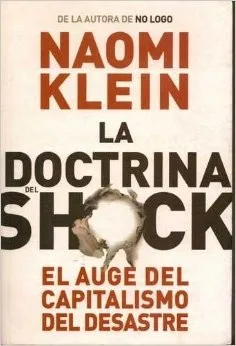
The Shock Doctrine (2007)
The Shock Doctrine is a 2007 financial crises book written by Naomi Klein.
Naomi Klein argues that free-market revolutions rarely arrive by consent. They arrive, she writes, in the disorientation after a shock: a coup, a war, a hurricane, a financial collapse. Drawing a line from Milton Friedman's Chicago School through Pinochet's Chile, post-Soviet Russia, and occupied Iraq, she describes how deregulation and privatization get pushed through while citizens are too stunned to resist. She calls it disaster capitalism. Critics have charged her with oversimplifying, and she names her opponents plainly. The book reads as both economic history and indictment, built to change how the reader watches the next crisis unfold.
Official site
Similar books
Explore The Shock Doctrine guides
A few thoughts on The Shock Doctrine
Naomi Klein and Alfonso Cuaron condensed the argument into a short film, and Michael Winterbottom's 2009 documentary of the same name carries it to the screen at length. Viewers who want the wider Klein worldview can pair it with the Michael Moore documentary Capitalism: A Love Story, which tracks the same crises from the American street.
Exposés on how power exploits crisis and chaos
Klein traces a straight line from Pinochet's Chile to occupied Iraq, showing how deregulation gets pushed through while people are too stunned by disaster to resist. These works dig into the same machinery of exploitation, whether it's financial collapse, state propaganda, or a justice system, showing how institutions turn a crisis or a population's vulnerability into profit and control.
Contrarian and classic reads for understanding how power really works
The Shock Doctrine argues against orthodox free-market thinking by naming its winners and losers directly, and these books sit on either side of that same debate. They cover foundational economics, a skeptic's guide to the numbers used to sell policy, and studies of debt and power as tools of control, useful whether you agree with Klein or want to test her case against the source material.