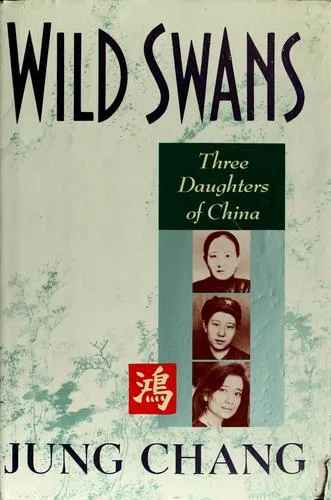
Wild Swans (1989)
Wild Swans is a 1989 mujeres en china book written by Jung Chang.
Jung Chang tells a century of Chinese history through three women in her own family: a grandmother with bound feet given as a warlord's concubine, a mother who rose inside the Communist Party, and Chang herself, a teenage Red Guard during the Cultural Revolution. The private detail is what lands, the marriages and betrayals and small daily fears set against famine, denunciation, and her father's persecution. Chang writes with a reporter's clarity and a daughter's closeness, and the sweep of the political catastrophe never swallows the people living inside it. A grave, absorbing family record.
Official site
Similar books
Explore Wild Swans guides
A few thoughts on Wild Swans
Barefoot Gen carries the same weight of a child watching history crush a family, drawn from the author's own survival of Hiroshima. On film, Zhang Yimou's To Live follows one Chinese household across the same decades of upheaval Jung Chang lived through, and Farewell My Concubine sets private lives against the Cultural Revolution with operatic force. All three trade in endurance rather than spectacle.
Individual families living through a nation's revolution
Wild Swans follows three generations of women through famine, denunciation and the Cultural Revolution's daily fear, and these tell that same kind of story from inside a different upheaval. Farewell My Concubine and To Live watch ordinary Chinese lives bend and break across decades of political convulsion, The Rose of Versailles carries its heroine through the French Revolution's collapse, and Barefoot Gen follows a boy's family surviving in Hiroshima's aftermath.
Enduring imprisonment and persecution without losing yourself
Chang's father is persecuted and her family denounced without ever losing its private decency, and these hold onto the same thread. Fear No Evil is Natan Sharansky's account of years in the Soviet Gulag, The Crucible turns Salem's hysteria into a portrait of persecution by accusation, Refugee follows families forced to flee political catastrophe, and The Shawshank Redemption finds a man who keeps his mind free inside an unjust prison.