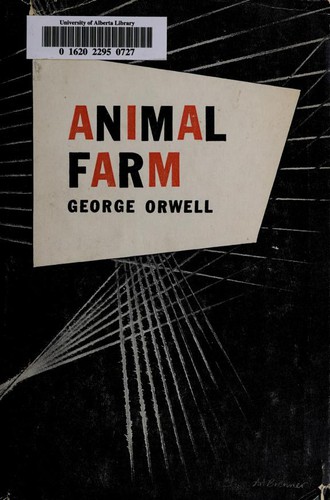

The book that almost never existed
George Orwell finished Animal Farm in February 1944, but spent eighteen months hunting for a publisher. Victor Gollancz, Jonathan Cape, and T.S. Eliot at Faber and Faber all turned it down, nervous about offending the Soviet Union at a time when the USSR was a wartime ally. Secker and Warburg finally published it in August 1945, three months after the war in Europe ended, and it sold out almost immediately.
The story is short, around 30,000 words, and almost diagrammatic: the animals of Manor Farm overthrow their drunken farmer, rename the place Animal Farm, and build what is supposed to be a classless society. The pigs take over. The commandments get rewritten at night. By the end the pigs are walking upright and the other animals cannot tell them from men. Every line has a real-world target. Orwell was mapping the Soviet revolution, the rise of Stalin, the betrayal of the working class by the very party that claimed to represent it.
That allegory, both precise and open-ended, is what made Animal Farm so easy to adapt. The book is short enough to stage or animate without much cutting, and the politics translate to almost any era in which power corrupts. The first adaptation arrived within two years of publication, and they have not stopped coming since.
Every Version of Animal Farm
The source novel and every major adaptation across media

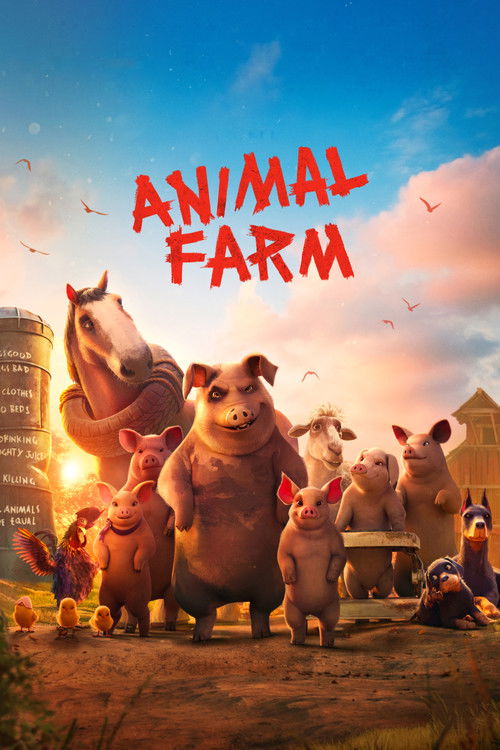

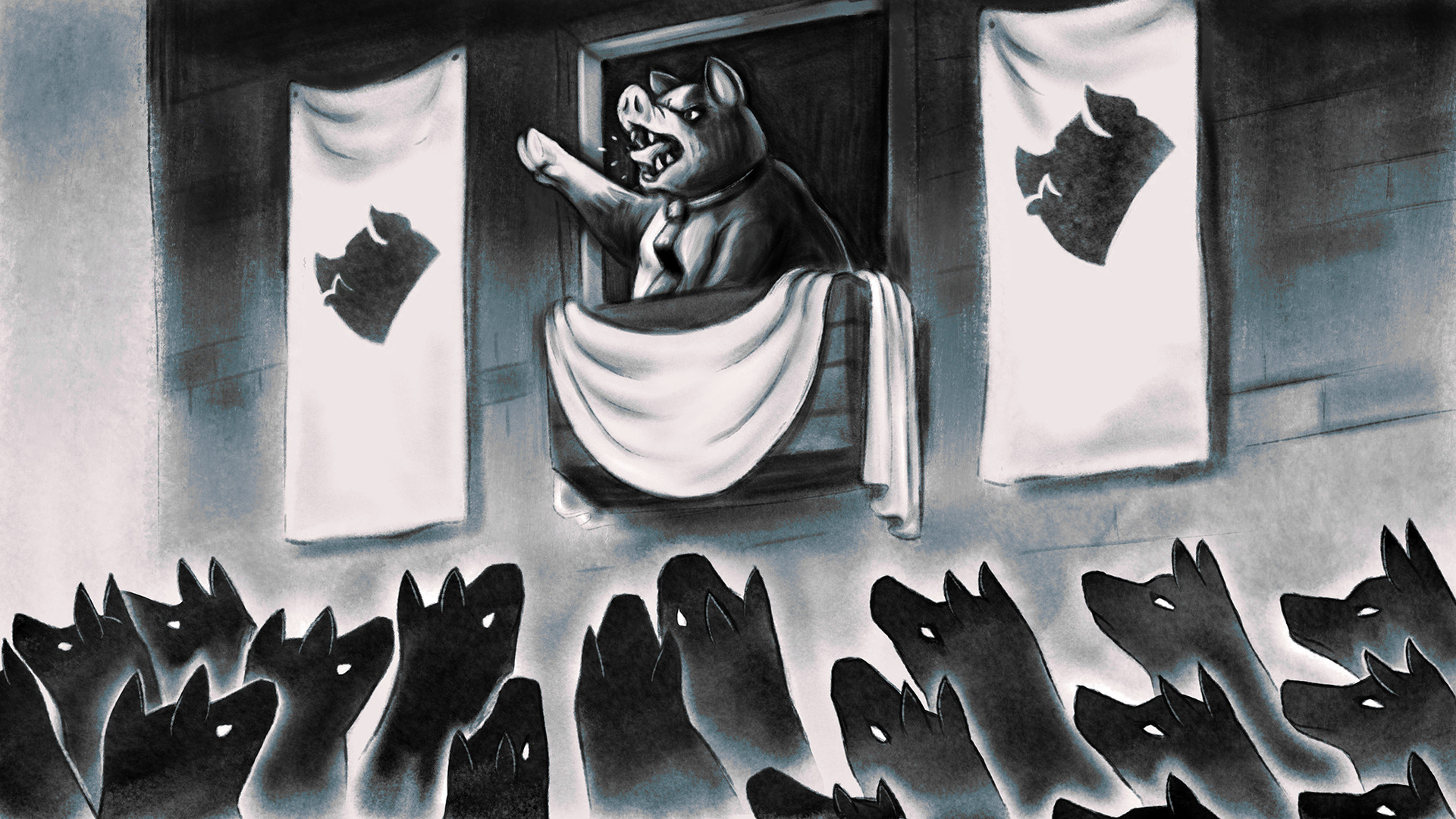
Animal Farm through the decades
- 1945Orwell's novella published by Secker and Warburg after eighteen months of rejections Animal Farm
- 1947BBC radio adaptation, adapted by Orwell himself, broadcast on the Third Programme in January
- 1954Halas and Batchelor animated film, Britain's first feature animation with worldwide release Animal Farm
- 1984Peter Hall stage musical at the National Theatre, London, with music by Richard Peaslee and lyrics by Adrian Mitchell
- 1999Live-action TV movie with Jim Henson Company animatronics, starring Patrick Stewart and Kelsey Grammer, directed by John Stephenson TV Animal Farm
- 2019Fully authorized graphic novel adaptation illustrated by Odyr, published by Mariner Books Animal Farm
- 2020Choice-driven narrative video game by Nerial with full Orwell Estate endorsement Orwell's Animal Farm
- 2026Animated feature directed by Andy Serkis, starring Seth Rogen, Glenn Close, and Woody Harrelson, released theatrically May 2026 Animal Farm
The 1954 animation is visually essential but don't trust its ending
John Halas and Joy Batchelor's 1954 animated feature is, frame for frame, the most visually accomplished screen version of the story. The watercolor backgrounds carry genuine dread, and the satire lands harder in animation than in live action. What the film cannot be called is faithful. The CIA secretly funded the production and rewrote the ending: rather than the animals staring through the window unable to tell pigs from farmers, they stage a second revolt and overthrow the pigs. The political point Orwell made, that the revolution simply produces new masters, is exactly what the CIA paid to remove. Watch it for the images. Understand why the ending was changed and by whom.
The 1999 TV film makes the same mistake, more expensively
The Jim Henson Company's live-action 1999 TV film, with Patrick Stewart as Napoleon and Kelsey Grammer as Snowball, is technically extraordinary. The animatronic animals are convincing in ways that should not be possible, and Alan Janes's script is tighter than a ninety-minute TV movie has any right to be. It is also remembered poorly, and for good reason: it adds an optimistic second uprising, just like the 1954 film before it. Two separate productions, forty-five years apart, both flinched at the same moment. That is not a coincidence. It is a measurement of how uncomfortable Orwell's real ending remains.
The Odyr graphic novel is the version to hand someone who will not read prose
The 2019 graphic novel adaptation illustrated by Odyr, the first fully authorized graphic version, makes a strong case for comics as the natural medium for this story. The visual logic of panels suits allegory: you can show two things at once, you can let silence sit on a page. Odyr's color palette is deliberately bruised, and the pigs grow increasingly human in silhouette across the book in a way that is more effective than any caption. For readers who know the story so well the prose no longer bites, this version bites again.
If you love Animal Farm: essential dystopian fiction
Political fables and stories about power, propaganda, and betrayal


If you love Animal Farm: screen adaptations of political novels
Films and series that translate literary dystopias to the screen

If you love Animal Farm: revolutionary betrayals on screen
Stories about idealism curdling into tyranny

Orwell and Political Dystopias
For Fans of George Orwell
Explore the For Fans of George Orwell guide →All animals are equal, but some animals are more equal than others.George Orwell, Animal Farm (1945)