
A mask, a manifesto, a bonfire night
V for Vendetta began as a serial comic strip in Warrior magazine, a British anthology published from 1982 to 1985. Writer Alan Moore and artist David Lloyd set their story in a near-future fascist Britain, drawing on Guy Fawkes mythology, anarchist political philosophy, and the theatrical tradition of the lone avenger. Moore was explicitly responding to Thatcherism and what he saw as the authoritarian direction of British politics. Lloyd's choice to give the masked vigilante a grinning Guy Fawkes face, later illuminated white against black capes and shadows, was the visual decision that would eventually travel further than either of them could have imagined.
When Warrior folded, the serial was incomplete. DC Comics picked it up, reprinting the existing chapters and commissioning a concluding arc that ran from 1988 to 1989. That ten-issue collected edition, published under DC's Vertigo imprint, is the definitive text. Everything else, including the 2006 film, is downstream of that original work. The Guy Fawkes mask, once a theatrical prop, has since become the face of real-world protest movements worldwide, giving the story a second and entirely unplanned life outside any medium.
V for Vendetta across the decades
- 1982Serial begins in Warrior magazine (UK) V for Vendetta
- 1985Warrior folds; story left unfinished
- 1988DC Comics reprints and commissions conclusion V for Vendetta
- 198910-issue run concludes; collected edition released V for Vendetta
- 2006Wachowski-produced film released worldwide V for Vendetta
- 2006Film soundtrack released
- 2011The Guy Fawkes mask becomes the symbol of Anonymous and Occupy protests globally
The definitive version: the original graphic novel
The DC/Vertigo collected edition is the work everything else is measured against. Moore's script is dense with literary allusion, from Shakespeare to Aleister Crowley, and Lloyd's artwork uses near-monochrome palettes that make the occasional splashes of color genuinely alarming. The fascist Britain it depicts is uncomfortably specific rather than cartoonishly dystopian. It is the rare political comic that argues a coherent position rather than simply gesturing at one.

The film is better than its reputation suggests
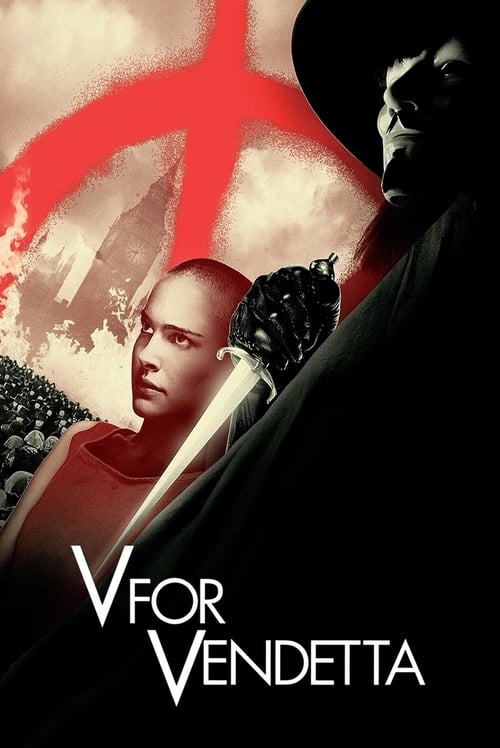
James McTeigue's 2006 film, produced by the Wachowskis and adapted by them, strips away a considerable amount of Moore's anarchist theory and softens the story's moral ambiguities. Hugo Weaving's performance as V, delivered entirely through voice and body language from behind a fixed mask, is a genuine technical achievement. Natalie Portman's Evey is more sympathetically drawn than in the comic. Alan Moore disowned it, as he disowns most adaptations of his work, but taken on its own terms as a political thriller with a strong aesthetic, it holds up well.
Start with the graphic novel
The story exists in two essential forms: the graphic novel and the film. The soundtrack is a companion to the film, not a third independent work. The honest recommendation is simply this: read the graphic novel first. The film compresses and Hollywood-izes a story that works precisely because it refuses easy resolution. Watch the film afterward and its compromises are visible but forgivable. Watch it first and the comic will feel richer still. Either order works. Neither version is bad.
If you love the graphic novel
Other Alan Moore works and political comics with the same density


If you love the film
Political thrillers and dystopian cinema with a similar pulse

If you love the mask and the myth
Stories about lone avengers, political theatre, and the power of symbols

If you love the dystopian Britain
Near-future Britain and surveillance-state fiction across media


More dystopias and revolutions
Dystopian Societies
Explore the Dystopian Societies guide →Behind this mask there is more than just flesh. Beneath this mask there is an idea, and ideas are bulletproof.V for Vendetta (2006 film)