
The Man Who Made Science Fiction Think
Isaac Asimov was a biochemistry professor, a one-man encyclopedia, and the most prolific science fiction writer who ever lived. Over five decades he published more than 500 books, ranging from Foundation to guides on the Bible, Shakespeare, and the history of chemistry. But it is the fiction that endures: the Robot stories and their Three Laws, the sweeping Galactic Empire of the Foundation saga, the rational detective Elijah Baley threading his way through a future that feels uncomfortably logical.
What a fan loves about Asimov is not action or horror or Gothic dread. It is the problem. Every Asimov story is, at its core, a puzzle. An apparently unbreakable rule that turns out to be breakable. A society that looks stable until someone does the math and realises collapse is centuries away but already baked in. A robot who cannot harm a human, until the definition of harm turns out to be elastic. His prose is plain, even brisk, but the ideas underneath are enormous: the shape of civilisation, the nature of mind, the moral weight of a created being. He is the patron saint of readers who want their escapism to leave them a little wiser.
Essential Isaac Asimov
Where to start, and where to go deep


Civilisations That Tick Like Clockwork
Grand-scale futures where history is a force of nature




Robots, AI, and the Question of Mind
Stories that take machine consciousness seriously




The Rational Detective in Impossible Worlds
Logic under pressure, where the universe is the crime scene





The Long View: History as Science
Works that treat social forces the way physics treats matter



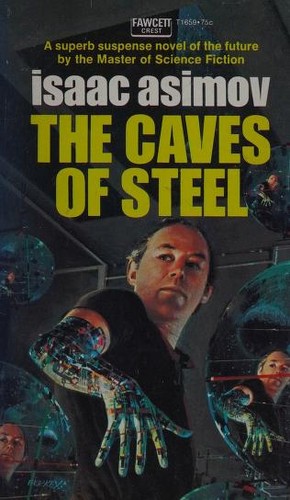
Start with The Caves of Steel, not Foundation
The Caves of Steel is Asimov at his most readable: a locked-room murder mystery set inside a city of eight million people who have never seen the sky. Elijah Baley and his robot partner R. Daneel Olivaw are one of the great odd-couple pairings in science fiction, and the novel is short, propulsive, and complete in itself. Foundation demands patience and rewards long investment. The Caves of Steel delivers the same core ideas about mind and society in two hundred tightly plotted pages.
Apple's Foundation series gets the scale right, if not always the spirit
The Apple TV adaptation takes genuine swings at translating Asimov's most visual idea: the sheer physical grandeur of a Galactic Empire in slow decline. The production design earns its budget. What it cannot quite replicate is the source material's central pleasure, watching an argument win. Hari Seldon's power is pure intellectual audacity, and television, which runs on conflict and feeling, keeps reaching for swords when the books would reach for an equation. Watch it for the spectacle; return to the books for the satisfaction.
Outer Wilds is the closest a game has come to the Asimov feeling
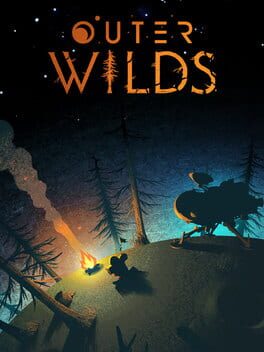
Outer Wilds is, structurally, an Asimov story: the universe contains a mystery, and you solve it by gathering information and reasoning from first principles, not by fighting anyone. The satisfaction when the final pieces click into place is identical to the feeling at the end of a great Robot short, the sudden reversal where everything you observed turns out to mean the opposite of what you assumed. No other game lands that specific intellectual reward.
Violence is the last refuge of the incompetent.Isaac Asimov, Foundation
The Asimov Universe: Key Dates
- 1942Three Laws of Robotics introduced in 'Runaround'
- 1951Foundation published
- 1953Second Foundation completes the original trilogy
- 1954The Caves of Steel, first Lije Baley novel
- 1972The Gods Themselves wins Hugo and Nebula
- 1982Foundation's Edge begins the sequel arc
- 1985Robots and Empire merges the two series
- 1988Prelude to Foundation, the final published novel
- 2021Apple TV Foundation series, Season 1