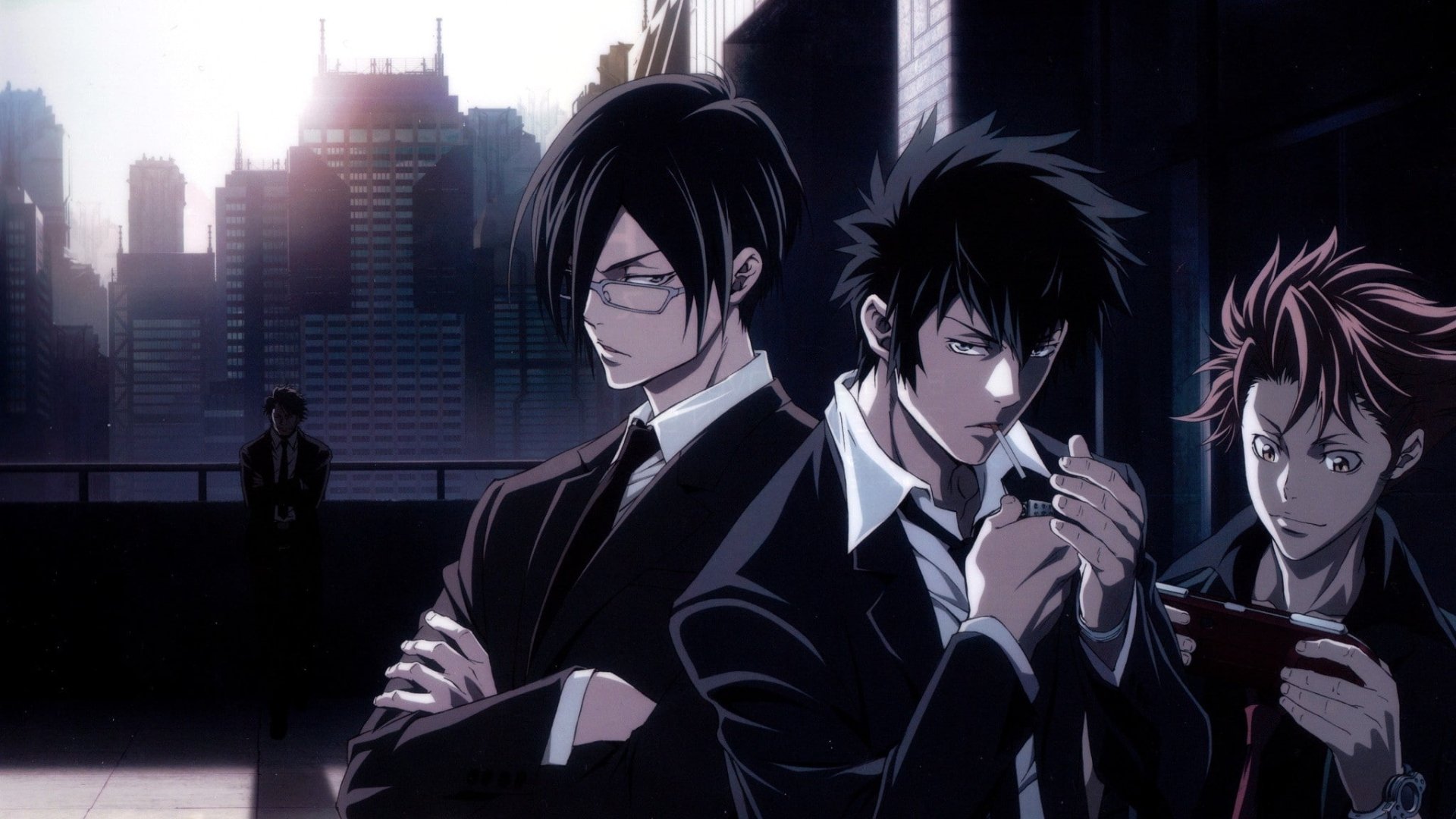

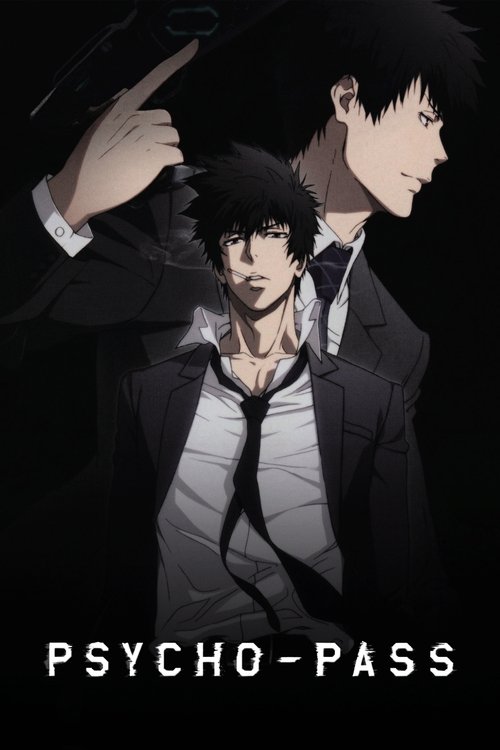
Psycho-Pass debuted in 2012 as a Production I.G. co-production with Nitroplus, written by Gen Urobuchi, and it arrived with a premise that cuts straight to the nerve: in 22nd-century Japan, the Sibyl System scans every citizen's mental state and assigns a numerical Crime Coefficient. Cross the threshold and the Enforcers come. The show follows Akane Tsunemori, a rookie Inspector who keeps asking the question the system is designed to make people stop asking: what does it mean to be guilty before you act? Three TV seasons, multiple films, a manga line, a stage play, and games later, that question has never gotten smaller. What holds the franchise together is its willingness to sit with real discomfort: Sibyl is not obviously evil, order it enforces is not obviously false, and the people enforcing it are not obviously corrupted. That ambiguity is what fans keep coming back for.
Essential Psycho-Pass
The anime canon, in order of weight
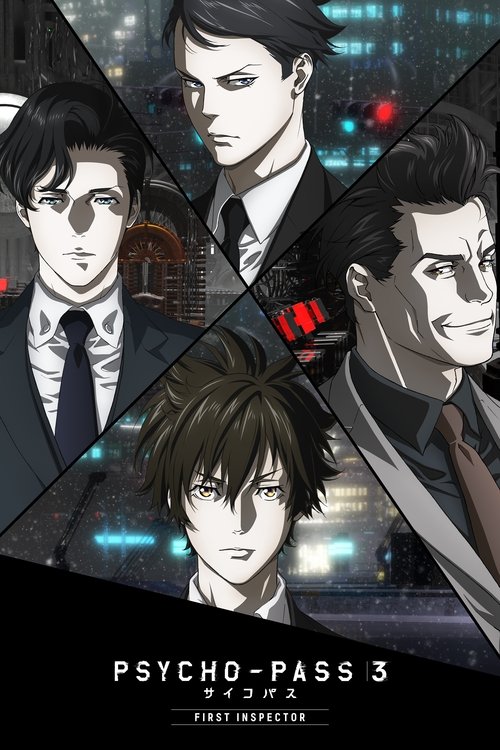
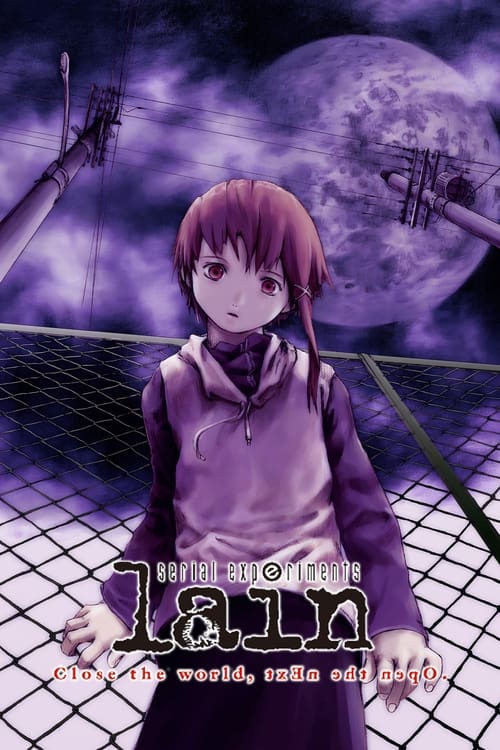
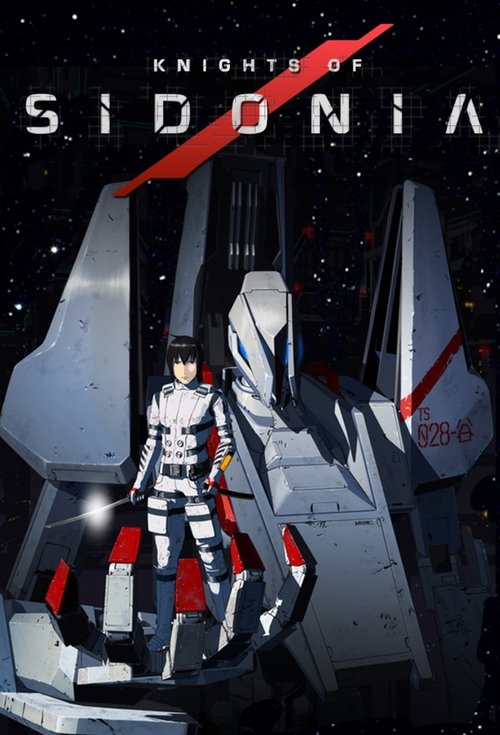
Same Shade of Grey: Dystopian Anime
Series that share Psycho-Pass's bite and moral seriousness
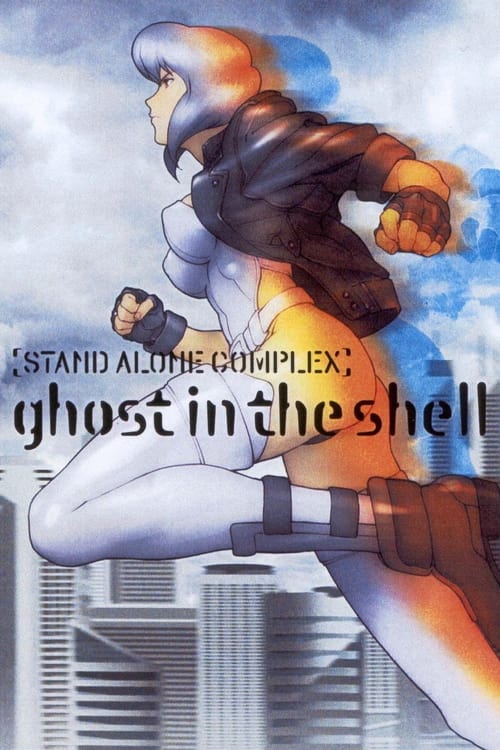
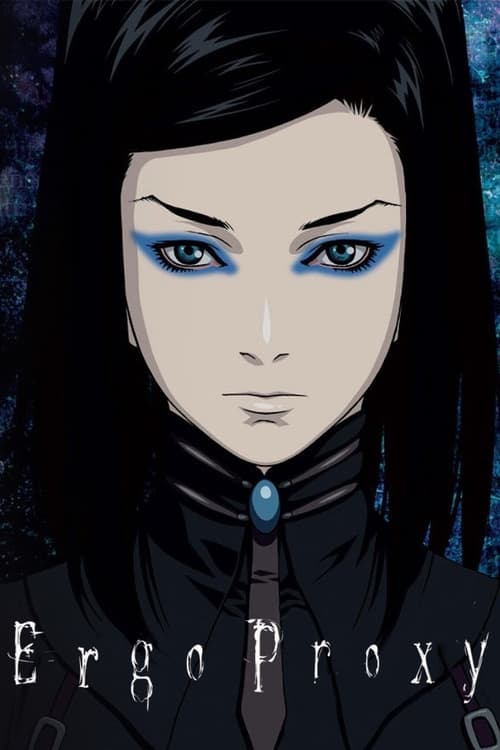



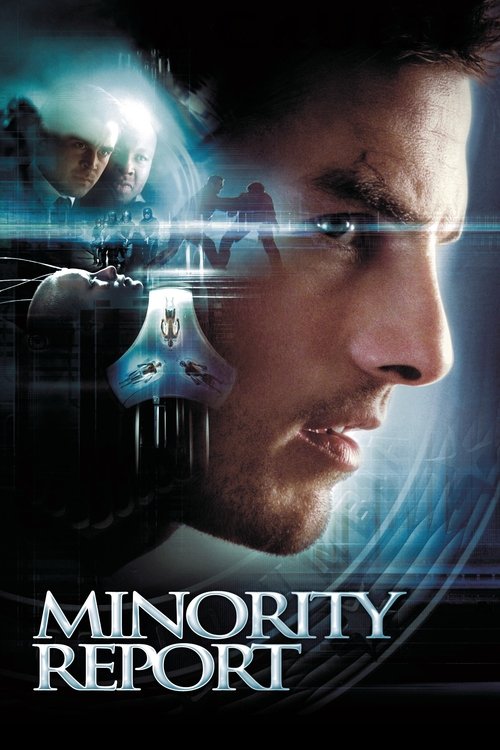
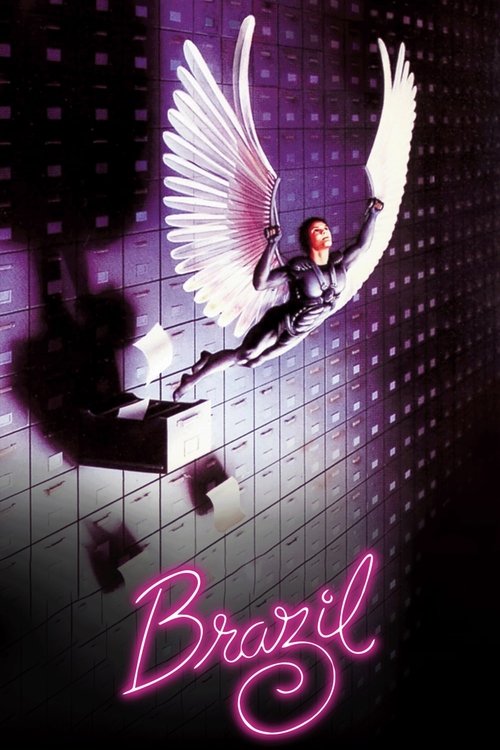
Surveillance State Cinema
Films and series that put the machinery of control under a lens



The Manga and Light Novels
Print expansions of the Psycho-Pass world and its literary ancestors


Games with the Same Dread
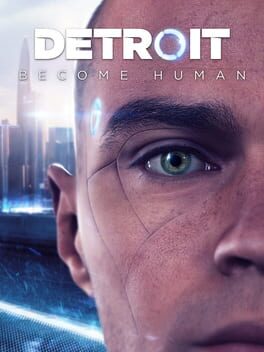
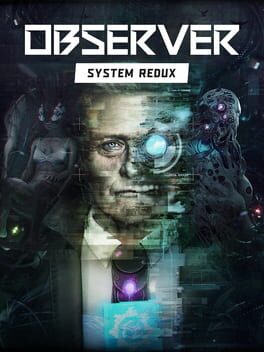
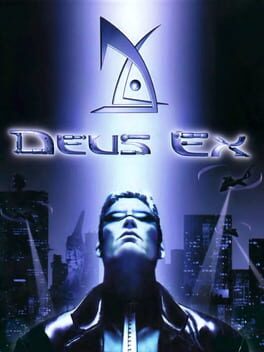
Games built on surveillance, systemic corruption, and hard choices



Gen Urobuchi Doesn't Let You Win
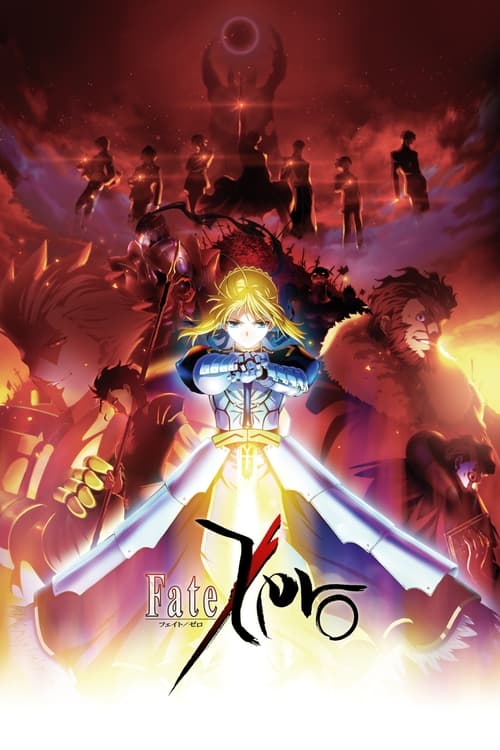
The authorial voice behind Psycho-Pass Season 1 is also responsible for Puella Magi Madoka Magica, Fate/Zero, and Aldnoah.Zero. Urobuchi's thesis is consistent across all of them: good intentions are not a shield, systems outlive the people who build them, and moral clarity is a luxury. Psycho-Pass is his bleakest engineering of that thesis because the villain is also the only thing holding society together. His other works reward the same appetite: beautiful surfaces, structural rot underneath.

Production I.G. Knows How Cities Break
Production I.G. has a longer track record with cerebral near-future anime than almost any studio, from the original Ghost in the Shell film through Stand Alone Complex and into Psycho-Pass. The visual grammar they share is not coincidence: clinical architecture that signals total control, character designs that refuse to be conventionally expressive, action that feels heavy and consequential rather than spectacular. If Psycho-Pass's world felt credible, the studio's institutional knowledge of this exact aesthetic is a large part of why.
The Police Procedural as Philosophy Course
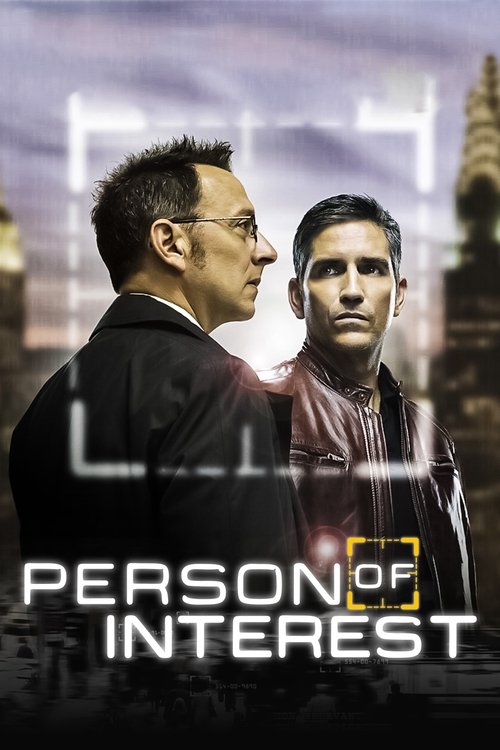
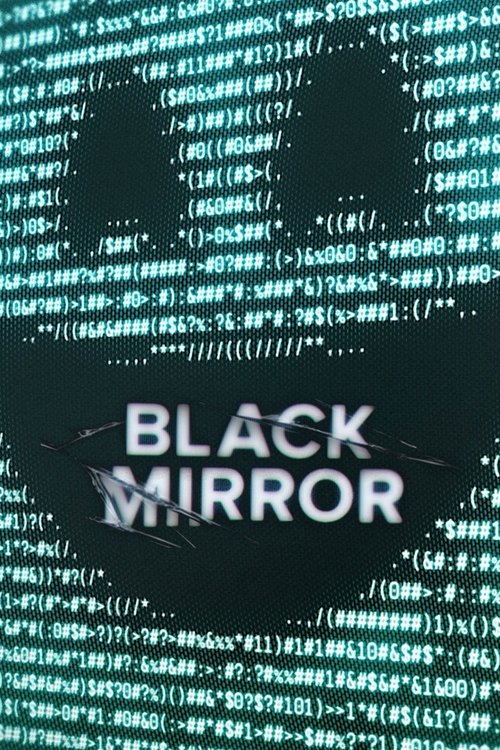
Psycho-Pass is a police procedural the same way Plato's Republic is a political pamphlet. The case-of-the-week structure is scaffolding for questions about whether justice administered by a perfect system is justice at all. The writers are clearly familiar with Hannah Arendt, Philip K. Dick, and Michel Foucault. That makes it rare company among crime shows: Person of Interest takes the surveillance angle and runs it as thriller, Dark as mystery, Black Mirror as cautionary vignette. Psycho-Pass commits to the philosophical argument across 40-plus episodes.
The Psycho-Pass Timeline
- 2012Season 1 premieres on Fuji TV Psycho-Pass
- 2014Season 2 expands the cracks in Sibyl Psycho-Pass
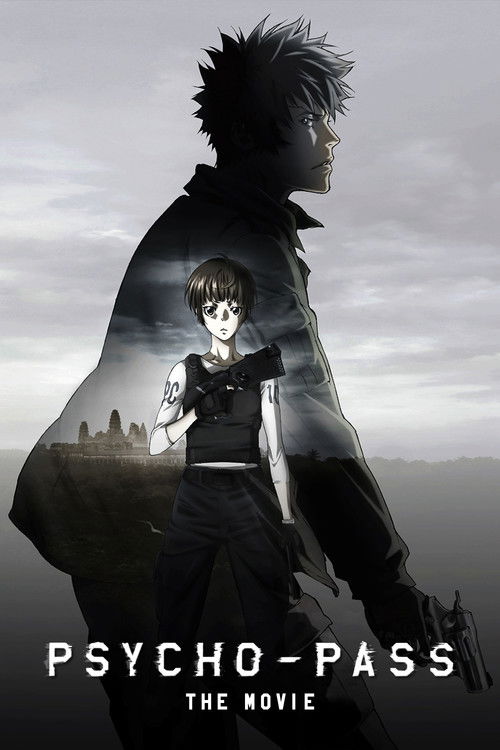
- 2015Kogami returns in the feature film PSYCHO-PASS: The Movie
- 2019Season 3 introduces a new Inspector duo Psycho-Pass
- 2020First Inspector resolves the Season 3 arc Psycho-Pass 3: First Inspector
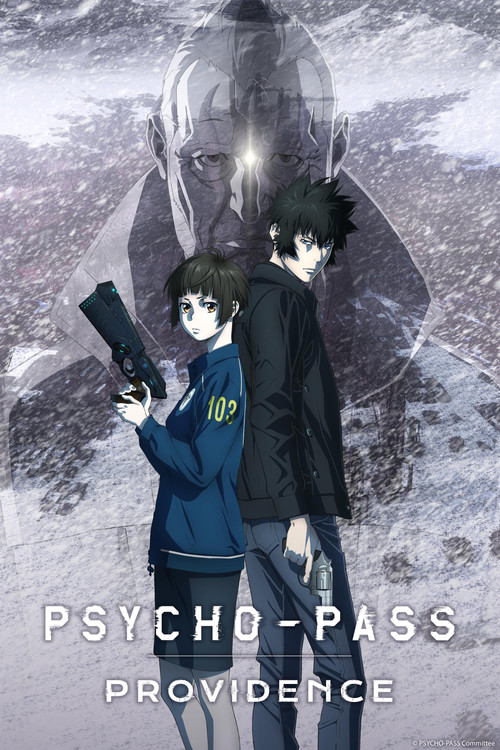
- 2023Providence ties together the full saga Psycho-Pass: Providence
More cyberpunk dystopia and minds
For Fans of Ghost in the Shell
Explore the For Fans of Ghost in the Shell guide →The law doesn't protect people. People protect the law. And when people stop asking whether the law is just, something much worse than crime takes hold.Psycho-Pass, Season 1