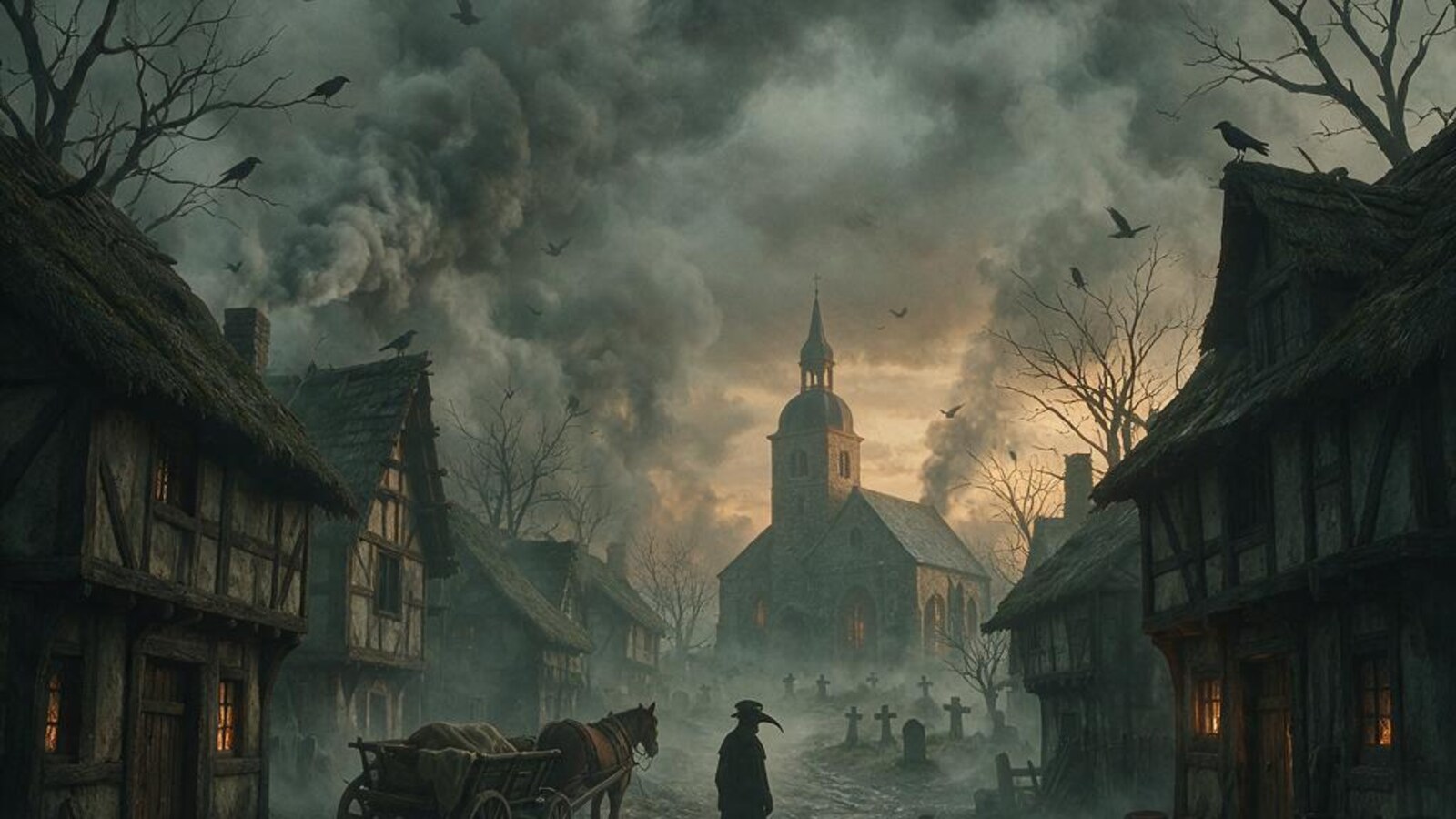

No catastrophe has haunted the imagination quite like the Black Death. In a few years of the 14th century it killed perhaps half of Europe, and the stories set in its shadow carry a very particular dread: not a monster you can fight, but an invisible, indifferent death that empties villages, breaks the Church's promises, and turns the world upside down. The beaked plague doctor, the cart of the dead, the flagellant procession, the mass grave: these are the images of a civilization staring into the abyss.
The setting has produced some of the most atmospheric work in every medium: the metaphysical chess game of The Seventh Seal, the acclaimed stealth-survival of A Plague Tale, the murder-in-the-monastery mystery of The Name of the Rose, and a shelf of grim historical novels. Below is the whole pestilent age: the essential plague films, the medieval horror, the games that made you flee the swarm, and the books that chronicled the great dying.
Essential Black Death stories
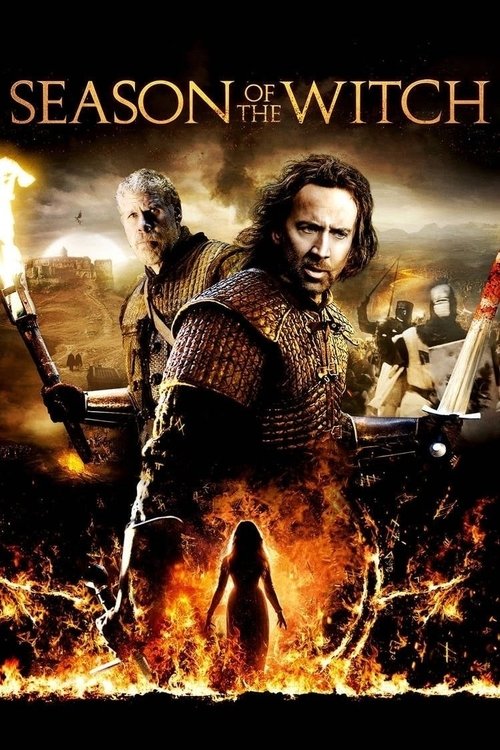
Medieval horror and dread
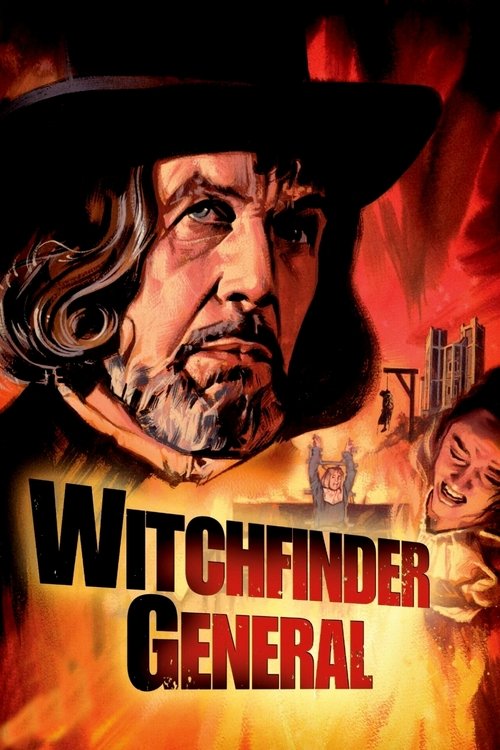
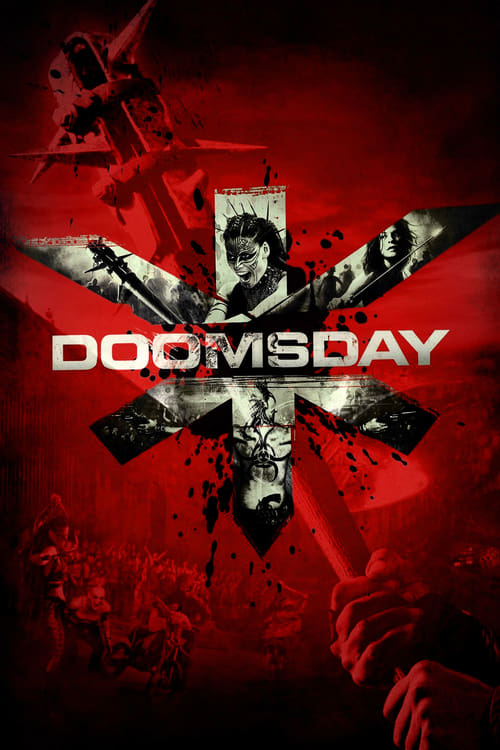
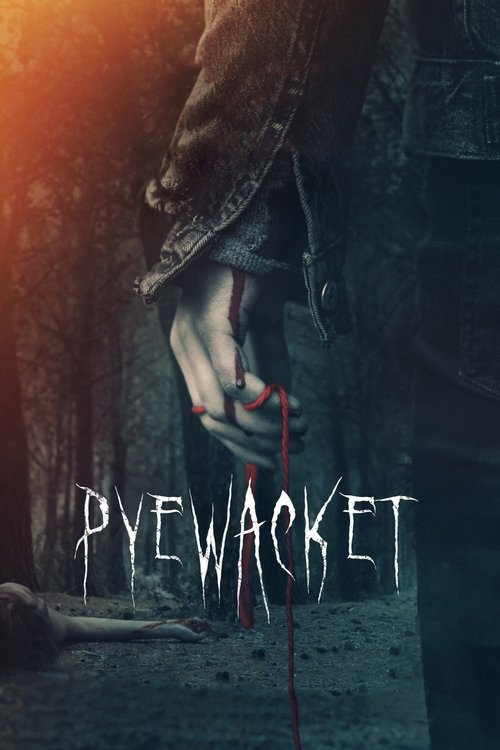
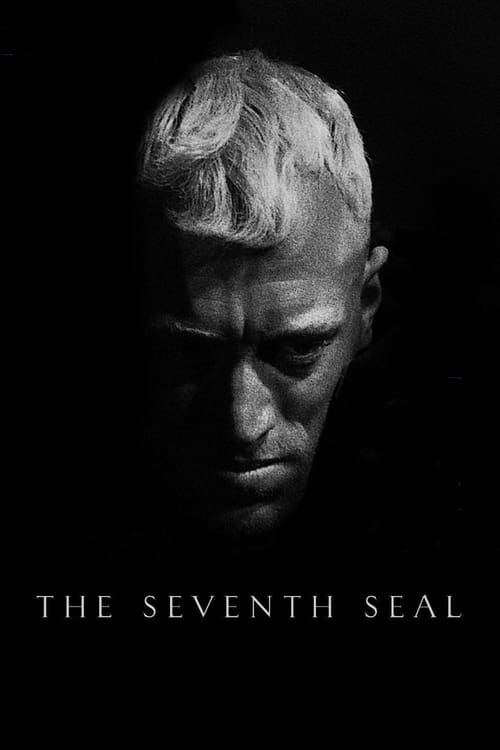
The Seventh Seal is the definitive plague film
A knight returns from the Crusades to a Sweden ravaged by the Black Death and plays chess with Death himself for his soul. Ingmar Bergman turned the plague year into the greatest meditation ever filmed on faith, doubt, and mortality, all stark black-and-white imagery and unbearable questions. No film has ever stared harder at the abyss the plague opened, or found more beauty there.
Flee the swarm: the games
On the page: chronicles of the great dying


The timeline
- 1957The Seventh Seal makes the plague a meditation on death The Seventh Seal
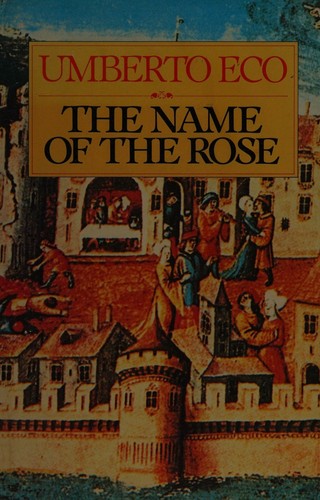
- 1980The Name of the Rose novel sets a mystery amid the pestilence The Name of the Rose
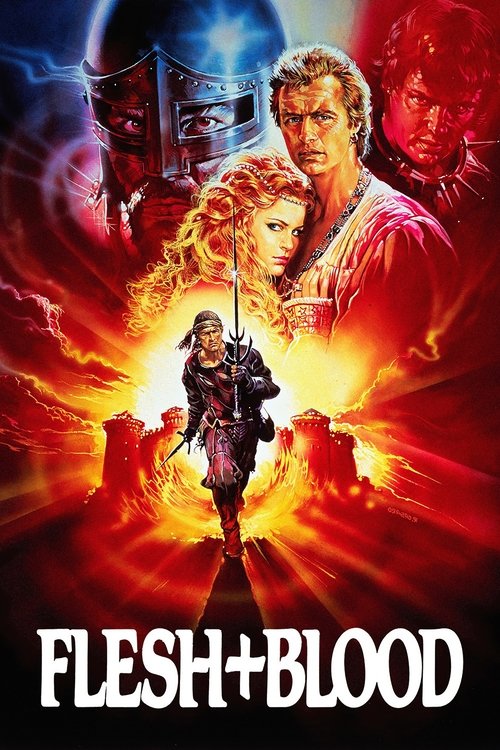
- 1985Flesh and Blood brings plague-era grit to the screen Flesh + Blood
- 1992Doomsday Book sends a historian back to the Black Death Doomsday book
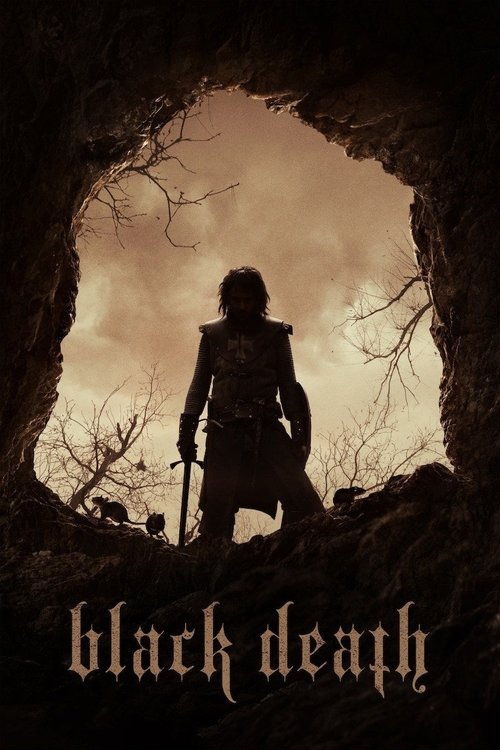
- 2010Black Death revives the medieval plague film Black Death
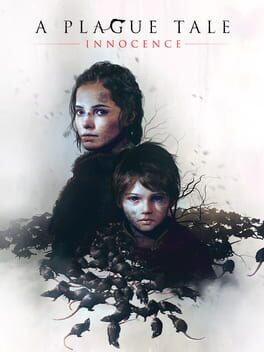
- 2019A Plague Tale makes the swarm playable A Plague Tale: Innocence
A Plague Tale made the swarm unforgettable
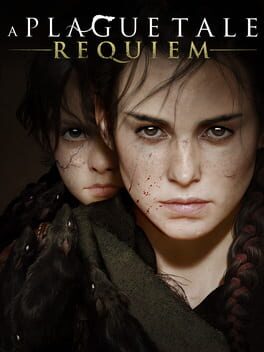
Two children flee the Inquisition and a supernatural tide of plague rats across a dying France, and Asobo Studio turned the Black Death into one of gaming's most striking images: rivers of rats that recoil only from the light. It is a story of childhood in an ending world, and its oceans of vermin are the most visceral evocation of the plague any medium has produced.
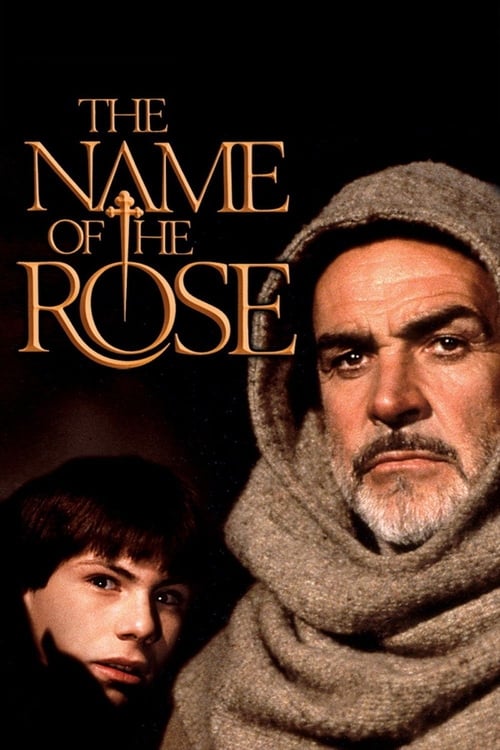
The Name of the Rose found a mystery in the monastery
Umberto Eco set a labyrinthine murder investigation in a plague-shadowed 14th-century abbey, and both the novel and the film treat the age of pestilence as a world where knowledge itself is dangerous and death is everywhere. It proved the medieval plague setting could carry a gripping detective story as easily as an elegy, its dread seeping into every candlelit corridor.
The plague doctor became horror's darkest icon
The beaked mask, the waxed robe, the cane to examine the dying without touching them: the plague doctor is one of history's most genuinely frightening real figures, and fiction has seized on it endlessly. It embodies the whole genre, a symbol of medicine helpless before catastrophe, of death itself given a face. No costume in horror carries so much authentic dread.
Keep exploring
Folk Horror
Explore the Folk Horror guide →Frequently asked
What is a medieval plague story?
A medieval plague story is set during or around the Black Death, the catastrophic bubonic plague pandemic that devastated 14th-century Europe. These works use the era's imagery, such as plague doctors, mass graves, flagellants, and collapsing faith, to explore mortality, dread, and social breakdown. Examples include Ingmar Bergman's The Seventh Seal, the game A Plague Tale, and Umberto Eco's The Name of the Rose.
Why is the Black Death such a powerful setting for fiction?
The Black Death offers an antagonist that cannot be fought: an invisible, indiscriminate death that killed roughly half of Europe and shattered the medieval worldview. That makes it ideal for stories about faith, futility, and human behavior under existential threat. Its stark, uncanny imagery, from the beaked plague-doctor mask to carts of the dead, gives filmmakers, novelists, and game designers a uniquely haunting visual language.
Where should I start with medieval plague stories?
Ingmar Bergman's The Seventh Seal (1957) is the essential film and one of cinema's greatest works. For a modern, accessible entry, the game A Plague Tale: Innocence is stunning, and the film Black Death is a solid grim thriller. Readers should try Umberto Eco's The Name of the Rose or Connie Willis's time-travel novel Doomsday Book.