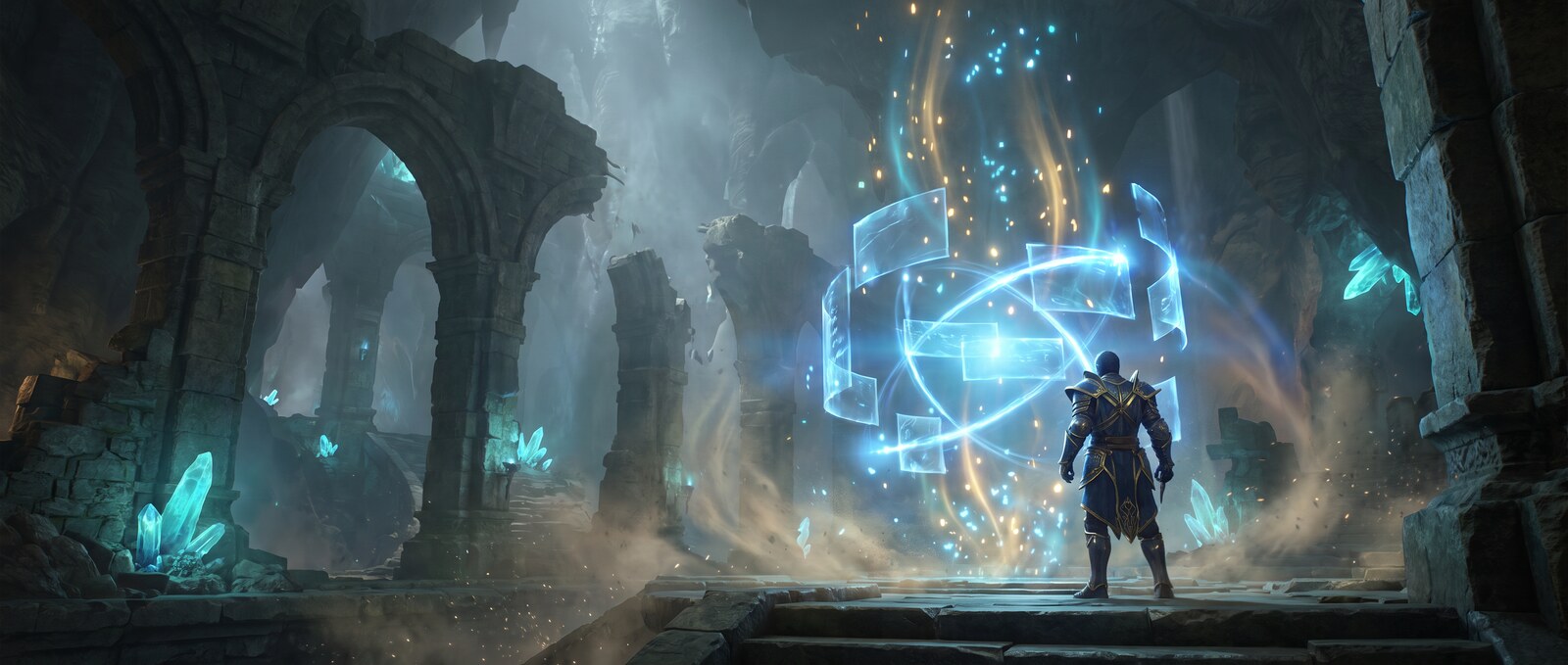

Progression fantasy is the genre of getting stronger. Its stories are built around explicit, satisfying growth: characters climb ladders of levels, ranks, cultivation stages or magic systems, and the pleasure is in watching a nobody become a powerhouse through effort, cleverness and grind. Its LitRPG wing borrows the stat sheets and skill trees of video games outright. Born on web-serial sites and self-publishing, it has become one of the fastest-growing corners of fantasy, and Solo Leveling carried it to a global audience.
This is the complete guide across every medium: the Western cultivation and system novels, the LitRPG landmarks, the clever time-loop progressions, the leveling-up anime, the superhero web serials, the cozy corner of the genre, and the role-playing games that inspired it all.
The essential progression fantasy




The Western cultivation and system novels


Cradle is the Western cultivation masterpiece
Will Wight took the Chinese cultivation formula, the underdog who climbs realm by realm toward the heavens, and rebuilt it with tight plotting, real character arcs and a satisfying sense of escalating scale that Western fantasy rarely nails. Lindon's journey from powerless outcast to a genuine force is the platonic ideal of progression fantasy: every power-up is earned, every breakthrough lands, and the twelve-book series never loses momentum. It is the best on-ramp the genre has.
Clever progression and time loops


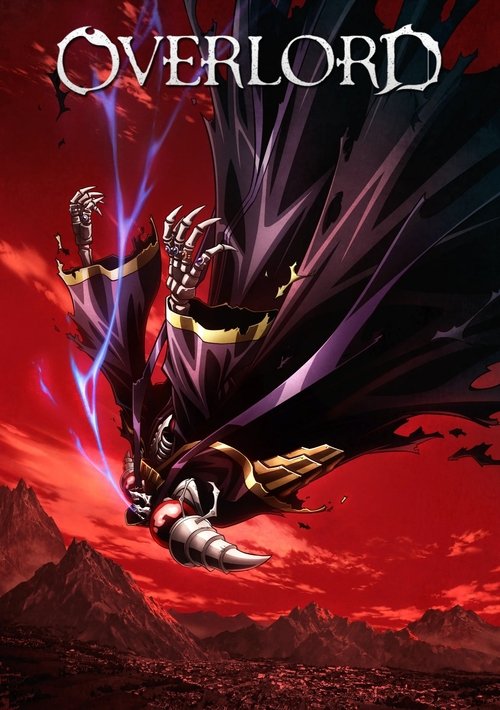
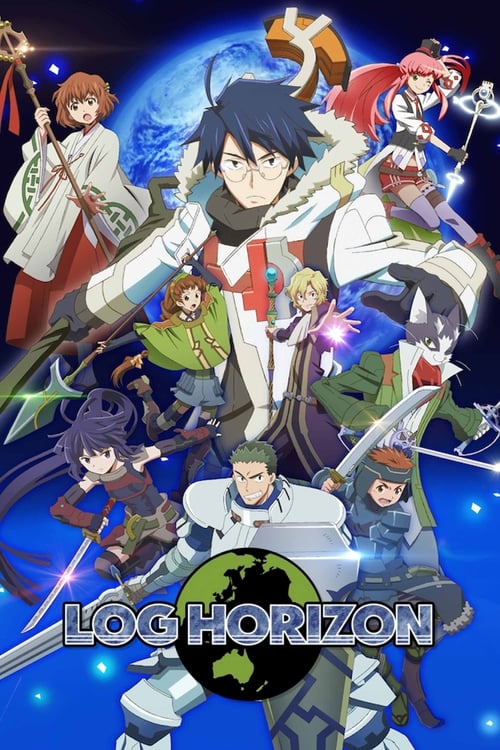
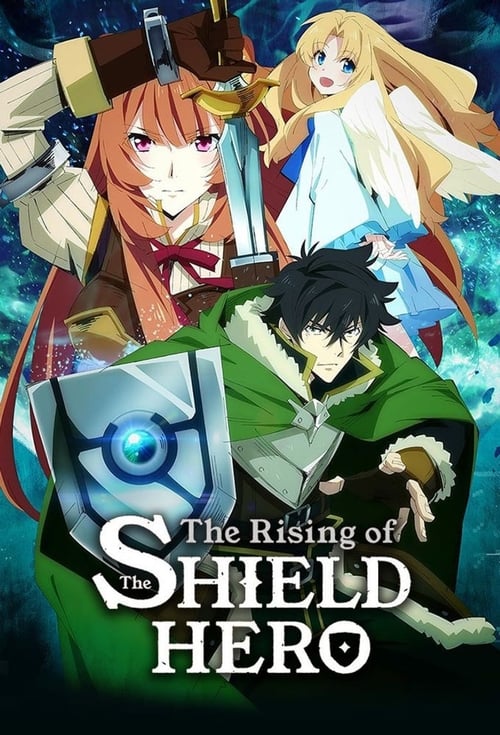
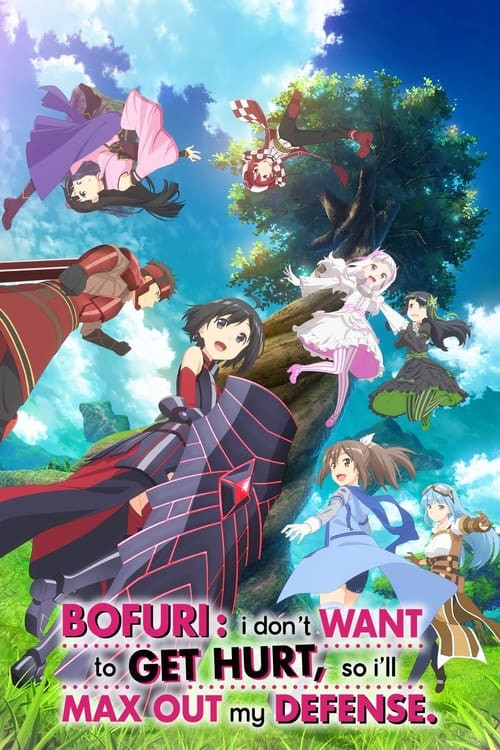
Leveling up in anime


The RPGs that inspired a genre
Dungeon Crawler Carl is the LitRPG that broke out
Matt Dinniman's story of a man and his ex-girlfriend's cat surviving a planet-destroying dungeon crawl broadcast as a sadistic intergalactic game show is somehow the funniest, most heartfelt and most furious book in the genre. It uses the LitRPG stat-sheet framework to satirize reality television, capitalism and cruelty, and it proved the genre could produce genuine literary word-of-mouth hits. It dragged LitRPG out of its niche and onto the bestseller lists.
The timeline
- 2011The web serial Worm proves the long-form progression story can be a phenomenon. Worm
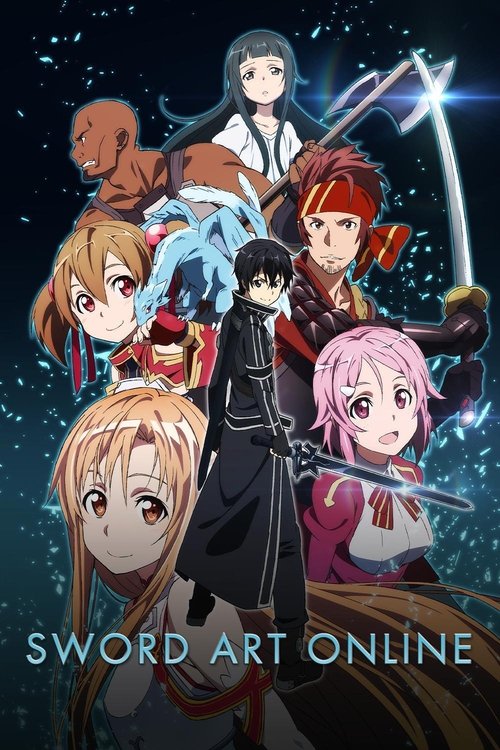
- 2013Sword Art Online popularizes the game-world leveling story worldwide. Sword Art Online
- 2016Will Wight's Cradle becomes the Western cultivation flagship. Unsouled
- 2017Mother of Learning and a wave of web serials build the progression-fantasy scene.
- 2018Solo Leveling explodes as a manhwa and supercharges the genre. Solo Leveling
- 2020Dungeon Crawler Carl carries LitRPG onto the bestseller lists. Dungeon Crawler Carl
- 2024The Solo Leveling anime brings leveling up to a mass global audience. Solo Leveling
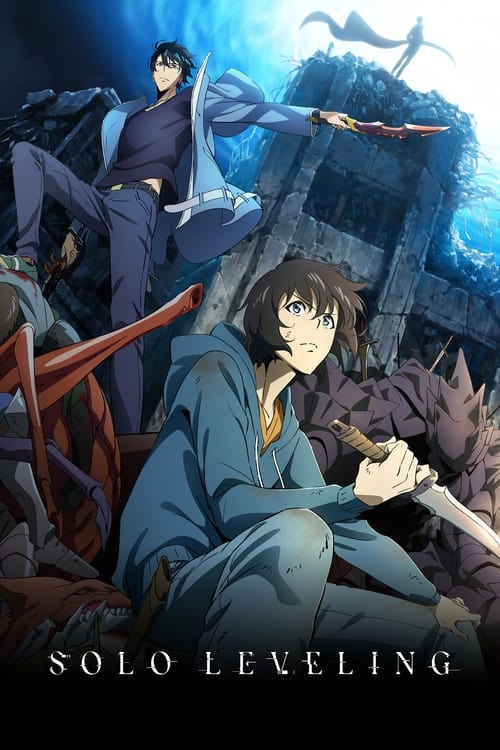
Solo Leveling made leveling up pure spectacle
The Korean web novel and its blockbuster manhwa and anime took the genre's core fantasy, a weak nobody who alone can grow without limit, and rendered it as gorgeous, escalating action. Sung Jinwoo's rise from the world's weakest hunter to its most powerful, commanding an army of shadows, is progression fantasy distilled to its most viscerally satisfying. More than any other work, it carried the leveling-up story to a mainstream global audience.
The Wandering Inn is the genre's sprawling epic
Pirateaba's web serial is one of the longest works of fiction ever written, and it uses that vastness to do something few progression stories attempt: build an entire living world around its leveling system, seen through the eyes of an ordinary young woman running an inn. Its Levels and Skills are real mechanics, but the heart is character and community. It is proof that progression fantasy can be enormous, humane and genuinely literary.
Keep exploring
Isekai: The Complete Guide to Another World
Explore the Isekai: The Complete Guide to Another World guide →Frequently asked
What is progression fantasy?
Progression fantasy is a fantasy subgenre defined by a central focus on characters growing measurably more powerful over time through a clear system, magic ranks, cultivation stages, levels or skills. The core appeal is the satisfying, visible sense of advancement as a protagonist rises from weakness to strength. It grew largely from online web serials and self-publishing, with Cradle and He Who Fights with Monsters as flagship examples.
What is LitRPG?
LitRPG (literary role-playing game) is a subgenre of progression fantasy in which the story explicitly uses video-game mechanics: stat sheets, experience points, levels, skills, quests and system notifications appear in the text itself. Characters are often literally inside a game or a game-like world. Dungeon Crawler Carl and The Land are prominent examples. All LitRPG is progression fantasy, but not all progression fantasy is LitRPG.
How is progression fantasy related to cultivation and isekai?
They overlap heavily. Chinese cultivation (xianxia) is a foundational influence, its realm-by-realm advancement is pure progression, and works like Cradle are Western cultivation stories. Isekai often features game-like systems too. Progression fantasy is the broader umbrella defined by the growth mechanic itself, whatever the setting or how the character got there.
Where should I start with progression fantasy?
Will Wight's Cradle is the most recommended entry point for cultivation-style progression, and Dungeon Crawler Carl is the breakout LitRPG. He Who Fights with Monsters and The Primal Hunter are popular system novels, Mother of Learning is a beloved time-loop progression, and Solo Leveling is the essential manhwa and anime.