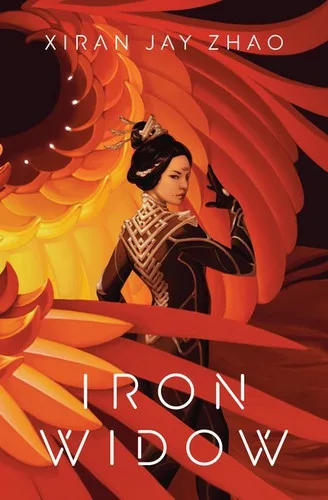
Iron Widow (2021)
Iron Widow is a 2021 young adult fiction book written by Xiran Jay Zhao.
In Huaxia, boys pilot giant transforming mechs called Chrysalises to fight the aliens beyond the Great Wall, and the girls paired beside them tend to die from the mental strain. Zetian volunteers as a concubine-pilot with a single aim, to reach the ace responsible for her sister's death. Xiran Jay Zhao fuses Chinese history with mecha spectacle and open rage, giving Zetian a mind sharp enough to turn a system built to spend girls like fuel back against its makers. Loud, angry, and unafraid of its own politics. Pacific Rim by way of The Handmaid's Tale.
Similar books
Iron Widow in our writing
- Companion guide: YA Fantasy & Science Fiction: The Complete Guide
- Companion guide: YA Science Fiction: Starships, Cyborgs and the Kids Who Outthink the Adults
A few thoughts on Iron Widow
Pacific Rim is the obvious jump for the co-piloted mecha and the kaiju scale. For the darker psychology of children strapped into war machines, Neon Genesis Evangelion sits under this book's whole nervous system. And Darling in the Franxx shares the exact setup of paired boy-and-girl pilots, though Xiran Jay Zhao interrogates that arrangement far more sharply.
Mecha pilots paired up inside a system built to spend them
Zetian survives a piloting system built to burn through girls like fuel, and this angle circles that machinery. Neon Genesis Evangelion and Pacific Rim send teenagers into giant mechs built by adults who need them expendable, DARLING in the FRANXX pairs its pilots the way Iron Widow pairs concubines with aces, and Scythe and The House of the Scorpion each spend a body, ritually ended or cloned, the same way.
Dystopias where a girl's body becomes someone else's property
Zetian's worth gets measured only by how long she survives inside a war machine, and these books share that same unease about who controls a body or mind. Feed wires advertising directly into a teenager's skull, The Host and Obsidian both trade human autonomy for an alien presence, and The Knife of Never Letting Go strips away private thought entirely.
Fantasy uprisings against empires that spend their own people
Zetian turns her fury at Huaxia's war machine into open rebellion, and this shelf shares that anger at empire. An Ember in the Ashes and its sequel pit conscripted fighters against a martial empire, Children of Blood and Bone and its sequel return a stolen magic to the people it was taken from, and The Girl of Fire and Thorns turns a reluctant princess into a leader that empire underestimated.
Power that gets handed to a girl instead of chosen by her
Zetian never asked to pilot a Chrysalis any more than Katsa asked for a Grace built for killing, and this group returns often to girls handed power they never requested. Graceling and its companion Fire watch a woman decide what to do with an ability everyone else wants to use, while the Shadow and Bone trilogy puts that same weight on Alina's forced role as a living weapon.