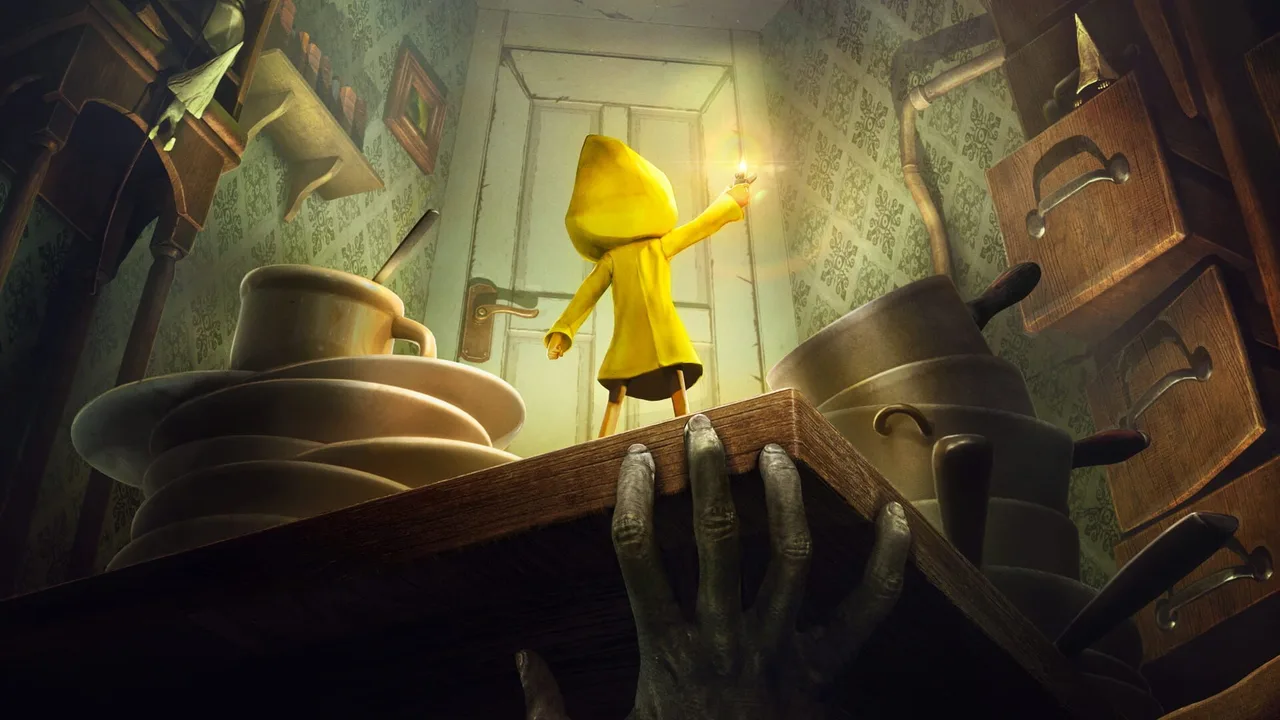
Little Nightmares (2017)
Little Nightmares is a 2017 platform video game made by Tarsier Studios.
Six is small, hungry, and dressed in a yellow raincoat. The Maw is a vast iron vessel somewhere at sea, crewed by enormous, lurching guests and the grotesque staff that serves them. Little Nightmares is a side-scrolling puzzle horror game built almost entirely from dread and scale: the environments tower over Six, and the beings that inhabit them move with a wrongness that is more disturbing than any conventional monster design. Tarsier Studios built something that feels closer to a nightmare remembered than a story told.
Similar games
Explore Little Nightmares guides
Little Nightmares in our writing
- Companion guide: Demonic Children
- Companion guide: Dreams & the Subconscious
- Companion guide: Fairy-Tale Retellings
- Companion guide: Portal Fantasy & Other Worlds
A few thoughts on Little Nightmares
Little Nightmares stands alone as a work of atmospheric horror design, where the silence and scale carry more weight than any explanation would. Its sequel deepens the world without requiring this entry as a prerequisite.
Small, vulnerable protagonists trapped somewhere far too big for them
Six spends Little Nightmares dwarfed by everything around her, the Maw's halls and its lurching guests built at a scale that makes her feel like prey the moment she enters a room. Backrooms and From trap their characters inside spaces with their own hostile logic, Lights Out turns an ordinary house into something that watches back, and Portal 2 leaves its human alone inside a facility built to outlast her.
Gothic, atmospheric dread instead of jump-scare noise
Little Nightmares builds its horror out of scale and silence rather than sudden shocks, letting the Maw's groaning halls do most of the work before anything appears. IX Equilibrium and The Spectre Within reach for that same suffocating atmosphere through music, Blade Runner's score turns dread into ambience, The Girl Who Drank the Moon wraps a fairy tale in unease, and Lee Cronin's The Mummy leans on mood over gore.