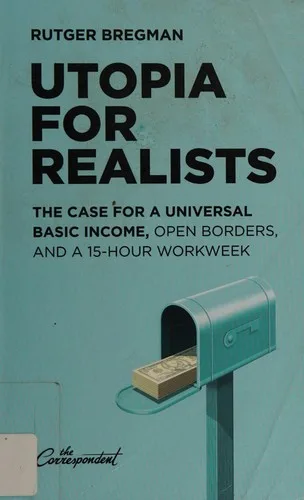
Utopia for Realists (2016)
Utopia for Realists is a 2016 utopias book written by Rutger Bregman and Elizabeth Manton.
Rutger Bregman argues that ideas once dismissed as utopian belong back on the political agenda. A universal basic income paid to everyone, a fifteen-hour workweek, open borders and the free movement of people: the Dutch historian treats each as a practical proposal rather than a fantasy, marshaling economic history, real-world experiments and hard data to make his case. First drafted as essays for the journal De Correspondent, the book moves past the familiar left-right divide to ask what a wealthy society could actually do with its abundance. Brisk, argumentative, and grounded in evidence rather than slogans.
Similar books
Explore Utopia for Realists guides
A few thoughts on Utopia for Realists
Readers drawn to Rutger Bregman's data-driven optimism about work and money should watch Requiem for the American Dream, Noam Chomsky's documentary on how concentrated wealth reshapes democracy. It runs in the opposite emotional direction but wrestles with the same questions about inequality, labor, and what an economy owes its citizens.
Nonfiction that makes a radical fix to the system sound like common sense
Bregman treats a basic income, a shorter workweek and open borders as tested policy rather than fantasy, backing each with economic history and real experiments. Requiem for the American Dream traces the same concentration of wealth on screen, while Debt, The Wealth of Nations, Manufacturing Consent, No Logo and The New Jim Crow apply that same rigorous, history-grounded case to money, markets, media and prisons.