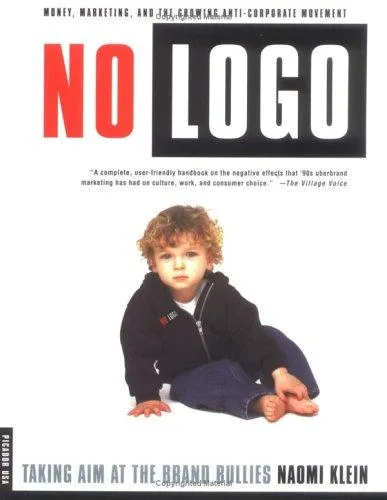
No Logo (1999)
No Logo is a 1999 brand name products book written by Naomi Klein.
Naomi Klein turns a reporter's eye on the rise of the superbrand. Across the 1990s, she argues, companies stopped selling products and started selling logos, identities, and lifestyles, while outsourcing the actual making of things to distant factories. The book maps that shift through sweatshops, ad-saturated schools, reclaimed public space, and the young activists pushing back. Published just after the 1999 Seattle protests, it became a founding text of the anti-globalization movement and an international bestseller. Klein writes with the momentum of good journalism, stacking evidence until a full picture of corporate power comes into focus.
Similar books
Explore No Logo guides
A few thoughts on No Logo
Naomi Klein's argument pairs naturally with The Corporation, a documentary that treats the company as a legal person and asks what kind of person it turns out to be. Adam Curtis's series The Century of the Self traces how public relations learned to sell desire itself, deepening the same story of branding, consumption, and manufactured need.
Books and films that pull back the curtain on corporate power
No Logo traces how companies swapped making things for selling identities, tracking the machinery behind that shift in factories, ad campaigns and boardrooms. The Corporation asks the same question on film, turning the modern company inside out, Manufacturing Consent maps how media serves the same power structures, The Shock Doctrine follows Klein's own argument into disaster capitalism, and Debt digs into the deeper economic logic underneath it all.
Nonfiction that rewired how a generation saw the system
No Logo became a founding text of the anti-globalization movement by handing readers a new way to read the world around them. The Wealth of Nations did that first for markets themselves, The New Jim Crow does it for mass incarceration, How to Lie with Statistics does it for the numbers people quote at you, and Eichmann in Jerusalem does it for how ordinary people enable atrocity.