
Everyone knows the terms before the deal is even offered. Power now, payment later, and the payment is you. The Faustian bargain is the rare story whose ending the audience already understands while the hero pretends not to, and that dramatic irony is exactly why we keep telling it. We watch a man sign because we want to see what he thinks he can outsmart, and we stay because we know he cannot.
The shape never changes. There is a want so large it overrides judgment: youth, fame, a number-one record, a way out of a small life. There is a counterparty who is unfailingly polite, often charming, always patient. There is a clause nobody reads closely. And there is the collection scene, which is the whole point, the moment the interest comes due. From Goethe's study to a Mississippi crossroads at midnight to a roguelike where every death teaches you the contract anew, the devil keeps offering the same pen. The genius of the genre is that the deal is never really about the devil. It is about what a person will trade away to be more than they are.
Essential deals with the devil
The canon of bad bargains across every medium


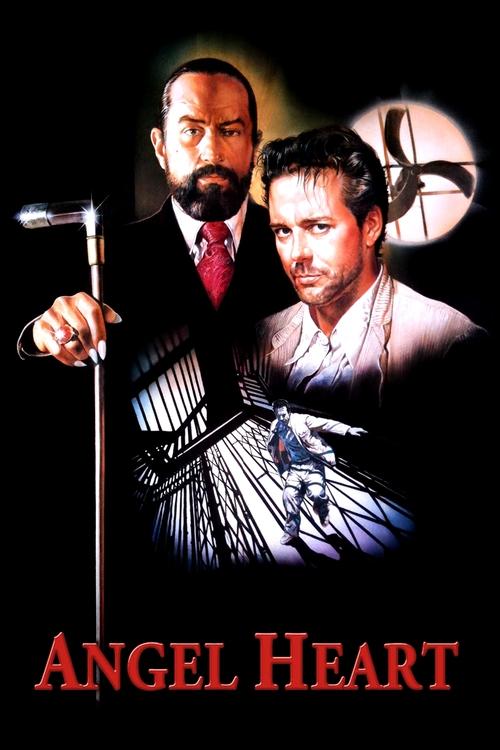
Angel Heart is the deal you forgot you made
Alan Parker's Angel Heart (1987) is the smartest twist the genre ever pulled, because it hides the contract from the man who signed it. Mickey Rourke's Harry Angel is hired by a soft-spoken client named Louis Cyphre to find a missing crooner, and the detective plot is a slow walk down into the realization that the investigator and the quarry are the same ruined soul. Robert De Niro plays Cyphre with manicured nails and total calm, peeling a hard-boiled egg while he explains that the soul is the only currency that matters.
What makes it land is the dread of having already lost. Most devil stories let you watch the bargain happen. This one starts after the ink is dry and makes the horror retroactive: the debt was always yours, you just refused to remember signing. The New Orleans setting, all rust and ceiling fans and voodoo drums, turns the whole film into a confession booth.
The bargain on film
From the silent Faust to slick modern temptations



The crossroads and the blues
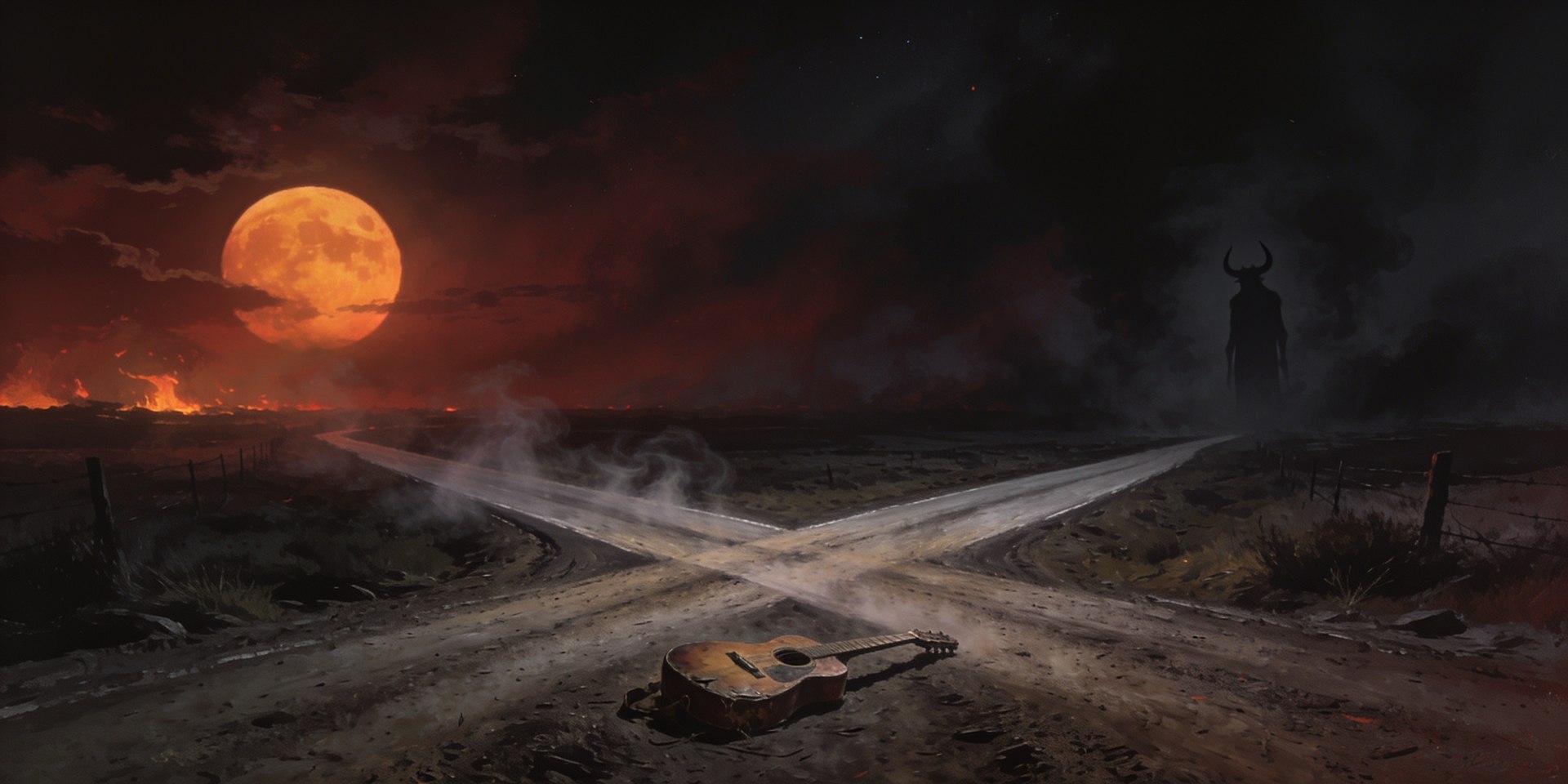
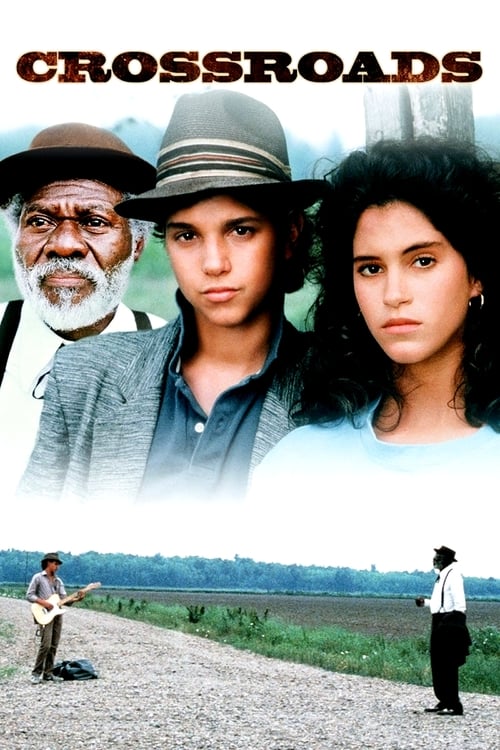
The most enduring American version of the legend belongs to music. Robert Johnson, the Delta bluesman who recorded a couple dozen songs in the 1930s and died at twenty-seven, supposedly took his guitar to a crossroads at midnight and traded his soul for the ability to play it. The story is almost certainly folklore grafted onto a man who simply practiced harder than anyone around him, but it stuck because his recordings sound like something acquired rather than learned. Cross Road Blues and Me and the Devil Blues are the genre's foundational texts disguised as twelve-bar songs.
That myth became the engine for an entire seam of music about selling out for the sound. The crossroads bargain runs straight through rock and metal: the swagger of Highway to Hell, the doom that Black Sabbath built a genre on, the Rolling Stones letting Lucifer narrate his own résumé. The deal is the music industry's oldest metaphor for itself.
Songs of the soul sold
Robert Johnson's crossroads and the records it haunted
Hades made the contract a game loop
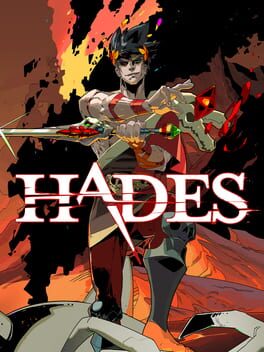
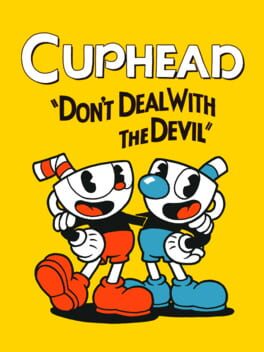
Games found the perfect form for the bargain, because a game can make you live the terms instead of merely watching them. Supergiant's Hades is the clearest example: every escape attempt from the underworld is a negotiation, a string of small deals struck with gods and the dead for power that always costs you something on the next run. The whole structure is a contract you renew every time you die.
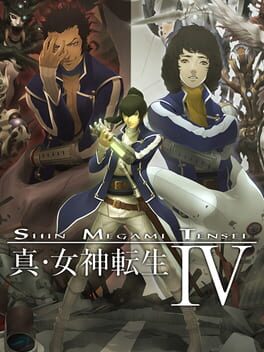
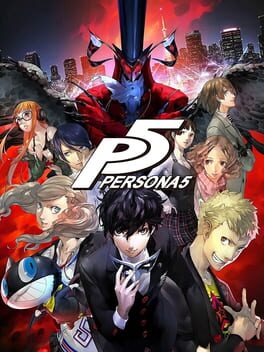
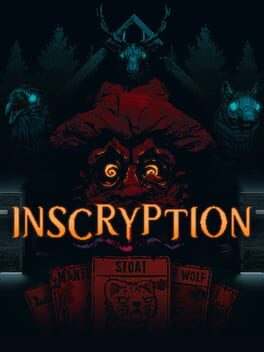
The deeper tradition runs through the Japanese role-playing game. Shin Megami Tensei literally has you recruit demons by bargaining with them mid-battle, and Persona 5 turns its demonic pacts into the source of your power and your guilt at once. Inscryption hides a Faustian wager inside a card game that keeps escalating the stakes of what you are willing to wager. These are not stories about a deal. They are deals you keep choosing to make, click by click, until you understand the cost in your own hands.
Bargains you play
Demon pacts, roguelike contracts and underworld debts
The devil on television
Reapers, fallen angels and a hellhound with a heart
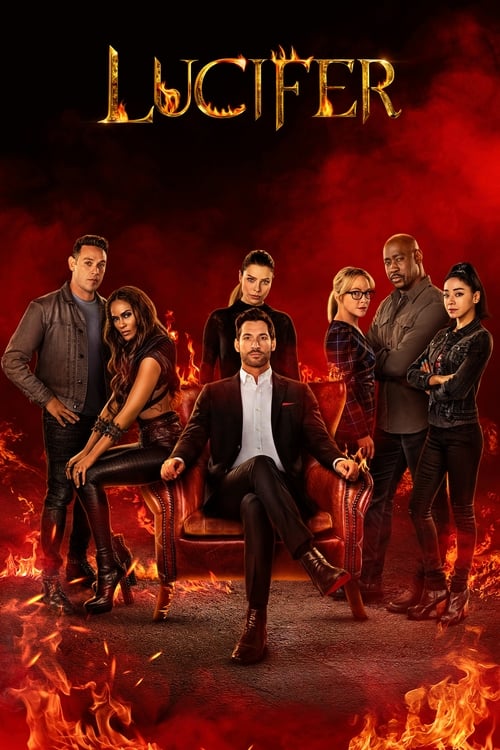
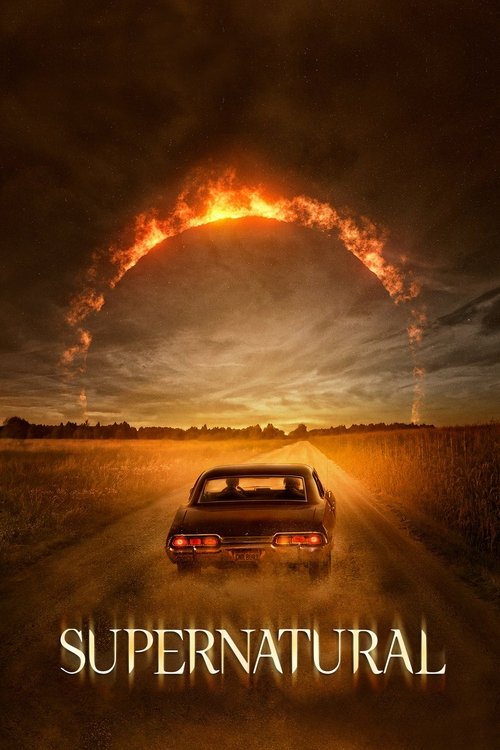
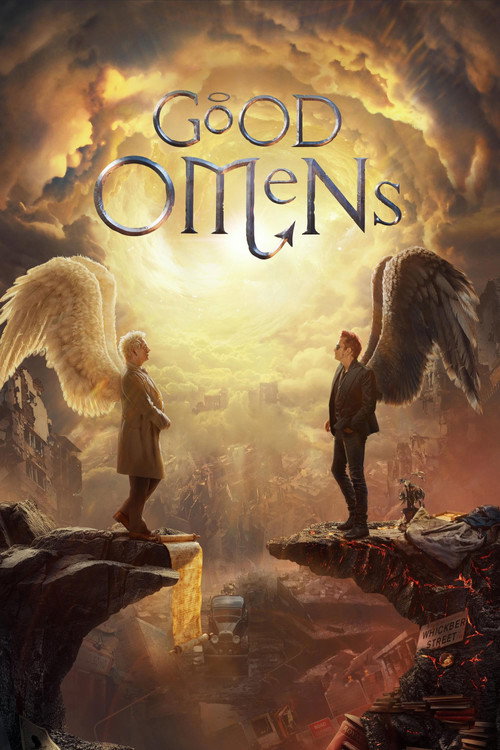
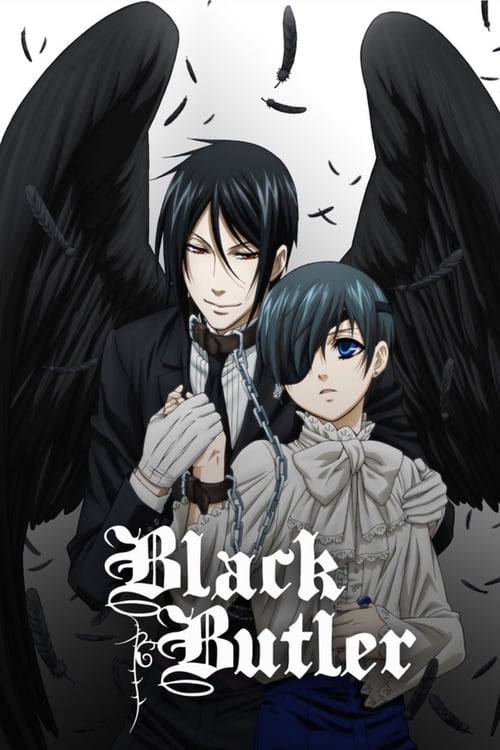
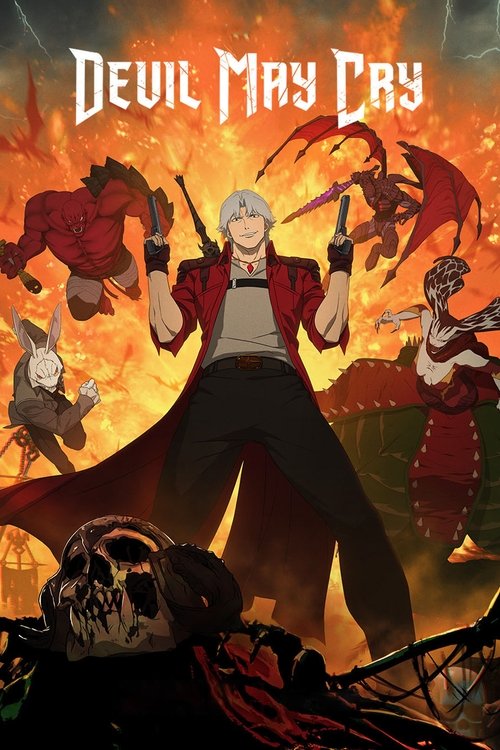
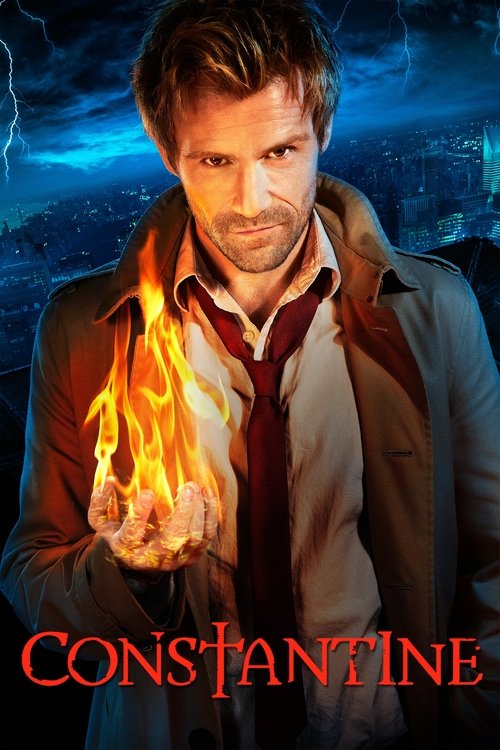
The contract is never really about the devil. It is about what a person will trade away to be more than they are.On the one story the Faustian bargain has always been telling
The pact on the page
The written tradition is the oldest and the deepest. Goethe's Faust is the towering version, a scholar who has exhausted human knowledge and still feels he knows nothing, so he wagers his soul against a single moment so perfect he would beg time to stop. Thomas Mann's Doctor Faustus relocates the bargain to a composer in the long shadow of the twentieth century, trading sanity for genius while Germany makes a far larger deal of its own. Mikhail Bulgakov's The Master and Margarita lets the devil simply walk into Stalin's Moscow as a foreign professor, and the funniest, fiercest novel in the canon spins out from there.
The genre also lives in the smaller, sharper cautionary tale. The Monkey's Paw compresses the whole moral into three wishes and one unbearable price. Oscar Wilde's portrait of Dorian Gray is a bargain with no named demon at all, only a wish granted and a bill that comes due in the attic. The lesson is always the same one the books deliver more patiently than any other medium: read the clause about what happens later.
Bargains on the page
Goethe, Mann, Bulgakov and the wishes that cost everything


![The picture of Dorian Gray [adaptation]](https://covers.openlibrary.org/b/id/14314474-L.jpg)


The Devil and Daniel Webster is the only one who wins
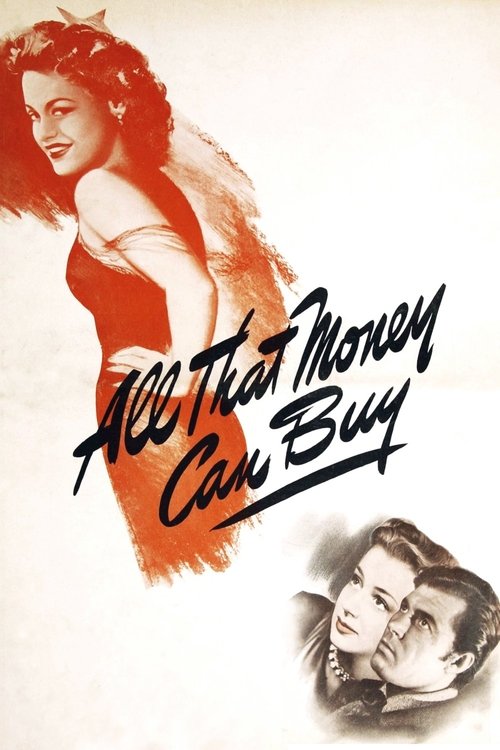
Almost every devil story ends with the bill paid in full. All That Money Can Buy (1941), the film of Stephen Vincent Benet's The Devil and Daniel Webster, is the great American exception, and it earns the win the hard way. A struggling New Hampshire farmer signs away his soul for seven years of prosperity, and when Mr. Scratch comes to collect, the orator Daniel Webster takes the case to a jury of the damned and argues the man's soul back.
What makes it more than a loophole is the argument itself. Webster does not deny the contract. He appeals to the one thing the devil cannot fully own, the stubborn human capacity to be more than a sum of bad choices. Walter Huston plays Scratch as a chuckling, neighborly menace, and the film treats temptation as an American institution as much as a supernatural one. It is the rare entry that believes the debtor deserves a defense.
Hellfire and the wider bargain
Hunters, comic-book damnation and the price of a wish