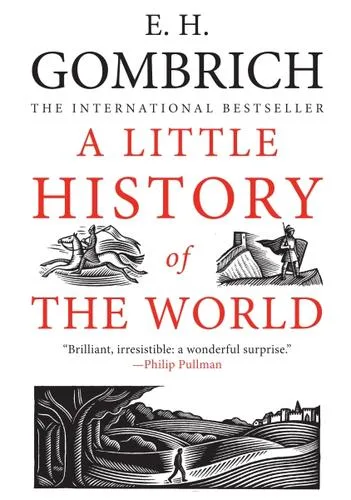
A little history of the world (2005)
A little history of the world is a 2005 juvenile literature book written by E. H. Gombrich.
Ernst Gombrich wrote this sweeping history in 1935, at twenty-six, reportedly in a matter of weeks, and addressed it directly to young readers. Across forty short chapters he carries the story of humankind from the Stone Age to the modern era, pausing over Egypt, Greece, Rome, the great religions, invention, and war. His voice stays conversational, favoring the shape of events over a pile of dates and names. The art historian's eye shows in how he lingers on craft and culture. Translated into English near the end of his long life, it endures as a gentle, generous introduction to the human past.
Similar books
Explore A little history of the world guides
A few thoughts on A little history of the world
Readers who enjoy history told as one continuous story can watch Kenneth Clark's Civilisation, a landmark series that traces Western art and ideas with the same humane sweep. For a hands-on version of that big-picture view, Sid Meier's Civilization lets players guide a people from the Stone Age through the atomic era.
Sweeping nonfiction that explains how one system built the modern world
Gombrich's A Little History of the World carries a young reader from the Stone Age to the present in short, plainspoken chapters, and these books do something similar for a single thread of civilization. The Wealth of Nations traces how markets remade society, Debt rewrites money's history from the ground up, Manufacturing Consent follows how modern media shapes public belief, and No Logo charts how brands took over public life.
Real history that reads like a story instead of a textbook
A Little History of the World keeps its scholarship conversational, favoring story over a pile of dates, and these titles share that same readable pull. Into Thin Air turns a real mountain disaster into propulsive narrative nonfiction, The New Jim Crow builds its argument through lived history, Eichmann in Jerusalem follows a trial as it unfolds, and How to Lie with Statistics explains a dry subject through plain, memorable examples.