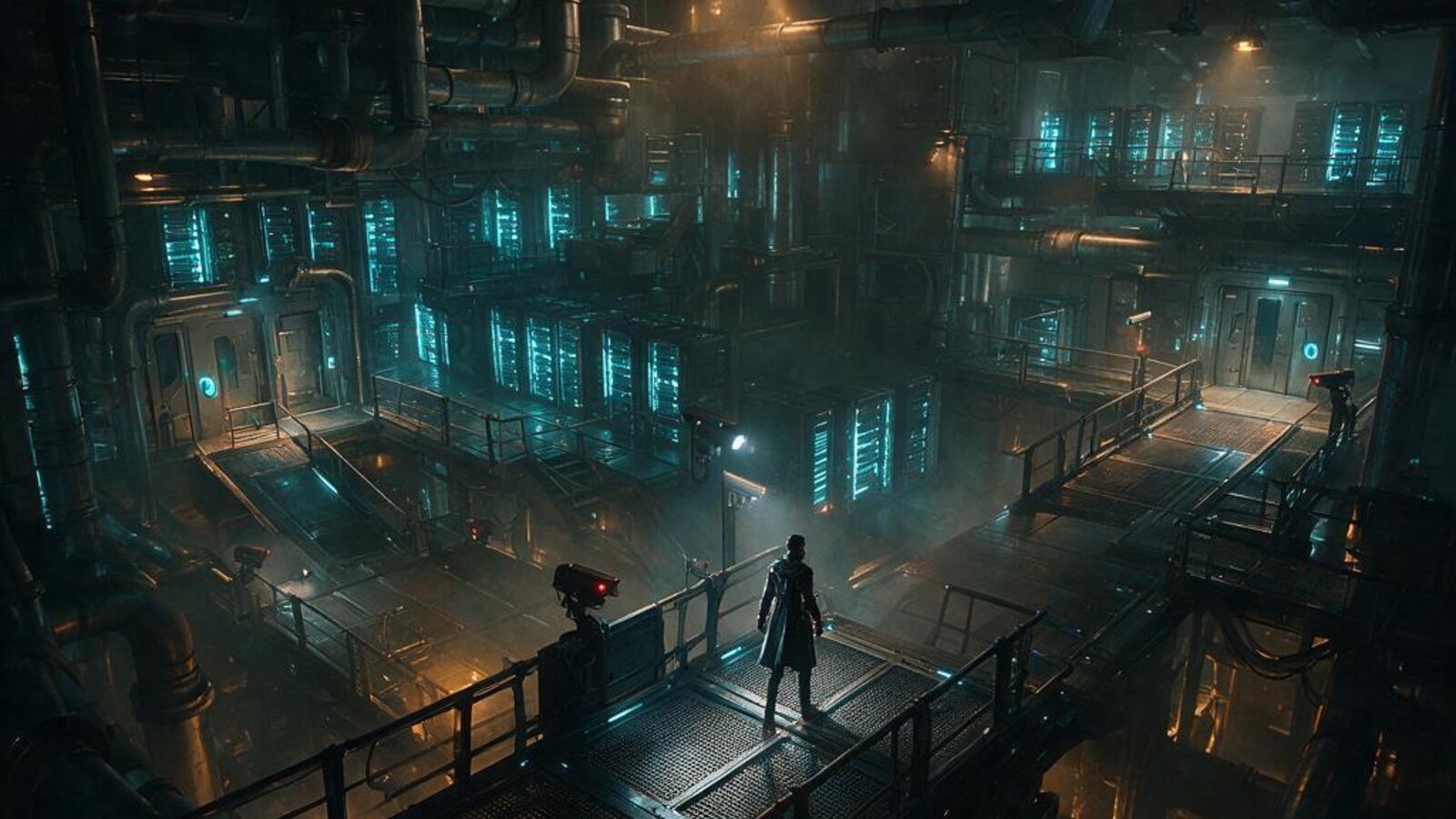

The immersive sim is less a genre than a design philosophy: build a world out of consistent, interacting systems, hand the player a toolkit, and let them find their own way through. Stealth past the guard, hack the turret to shoot him, stack crates to reach the vent, or freeze the pipe and climb the ice. The game does not care which one you pick. It just simulates the consequences.
The lineage runs from Looking Glass Studios (System Shock, Thief) through Ion Storm (Deus Ex) to Arkane Studios (Dishonored, Prey), with a small, fervent circle of successors keeping the flame alive. These games rarely top sales charts, but they define what players mean when they say a world feels real. Here is the whole family: the classics, the modern torchbearers, and the indie revival.
Essential immersive sims



The classics and their sequels






Deus Ex is still the genre's high-water mark
Twenty-five years on, nothing has matched the sheer breadth of Deus Ex. Every locked door has three answers, every conversation branches, and the world-building conspiracy holds up because the systems let you test it yourself. It is clumsy to play now, but no game has out-designed it.
Arkane's modern canon




The indie revival and systemic cousins
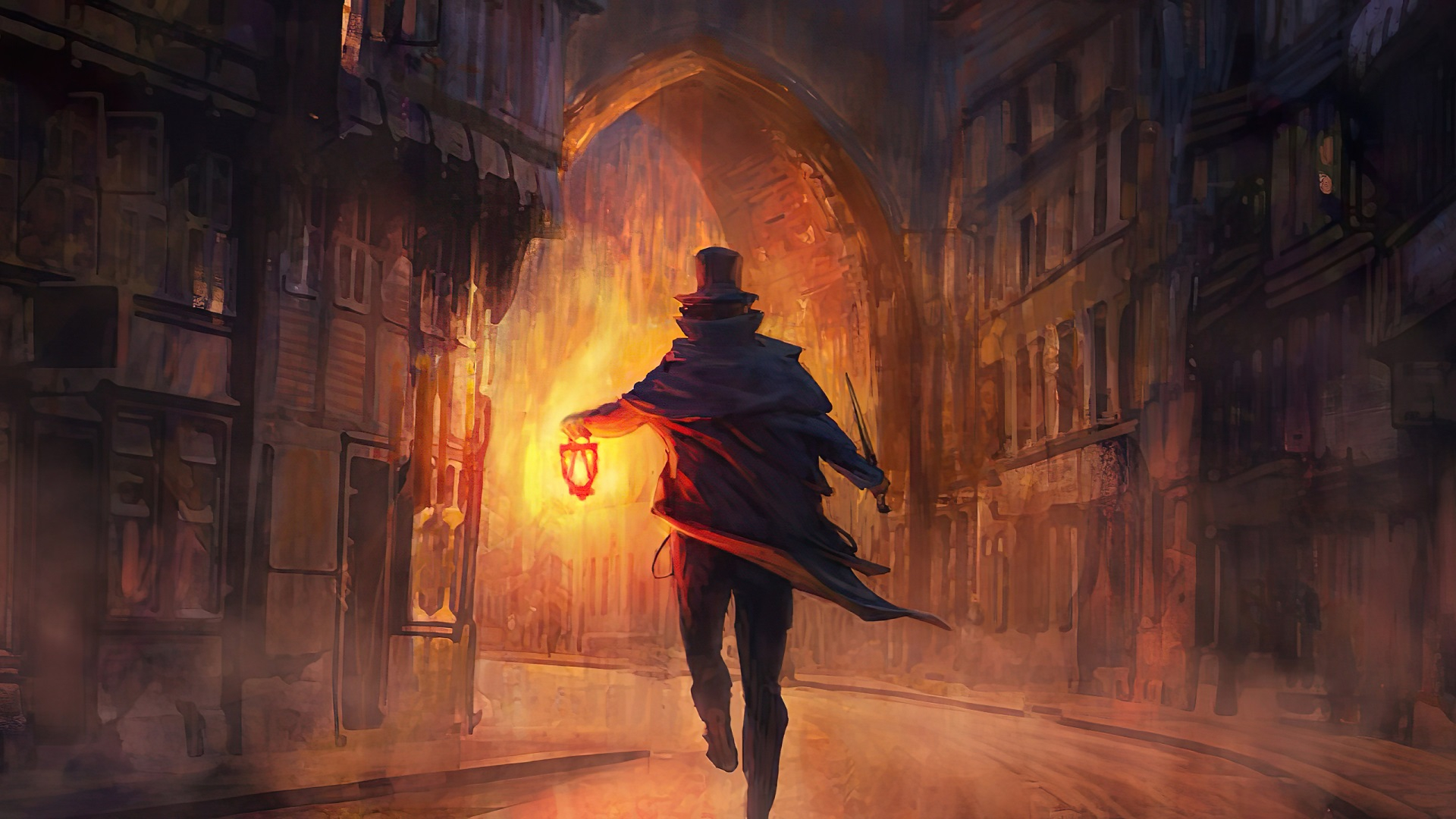





The timeline
- 1992Ultima Underworld pioneers the first-person systemic dungeon Ultima Underworld: The Stygian Abyss
- 1994System Shock fuses the sim with sci-fi horror System Shock
- 1998Thief makes stealth a game about light and sound Thief: The Dark Project
- 1999System Shock 2 introduces SHODAN and RPG progression System Shock 2
- 2000Deus Ex sets the genre's high-water mark Deus Ex
- 2007BioShock brings the immersive sim to the mainstream BioShock
- 2011Human Revolution revives Deus Ex for a new generation Deus Ex: Human Revolution - Director's Cut
- 2012Dishonored launches Arkane's signature series Dishonored
- 2017Prey delivers Arkane's most simulated world Prey
- 2022Weird West carries the torch into indie isometric Weird West
Prey is the best-simulated world Arkane ever built
Talos I is a single continuous space you can traverse in a dozen ways, and the Typhon threat rewires how you read every room. The GLOO cannon and mimic-shifting turn traversal and combat into pure improvisation. It flopped on release and it is a masterpiece.
Thief invented the shadow as a resource
Before Thief, stealth was a scripted set-piece. Looking Glass made darkness a physical quantity you manage: douse the torch, listen to the guard's footsteps on stone versus carpet, and vanish. The light gem is one of the great UI ideas in all of games.
System Shock 2 is where horror met the sandbox
SHODAN is gaming's greatest villain, and the Von Braun is a survival-horror ship you can approach as a hacker, a psi-soldier, or a marine. Its RPG systems bleed dread into every choice. BioShock is the famous descendant, but the original is scarier and deeper.
Keep exploring
Cyberpunk: The Complete Guide to the Wired World
Explore the Cyberpunk: The Complete Guide to the Wired World guide →Frequently asked
What is an immersive sim?
An immersive sim is a game built from consistent, interacting systems that give the player multiple valid ways to solve any problem. Instead of a single scripted path, the world simulates physics, AI behavior, stealth, hacking, and the environment so that improvisation and emergent solutions are the point. Deus Ex, Thief, and Prey are the defining examples.
What was the first immersive sim?
Looking Glass Studios' Ultima Underworld (1992) and System Shock (1994) are usually credited as the first true immersive sims, establishing the first-person, systems-driven design that Thief and Deus Ex would refine. The term itself was popularized later by developers describing this Looking Glass lineage.
Why do immersive sims rarely sell well?
Immersive sims ask players to experiment rather than follow a guided path, which makes them harder to market and less immediately accessible than linear action games. Prey (2017) and the Dishonored games are critically revered but were commercial disappointments, which is why the genre now survives largely through smaller studios and indie revivals like Weird West and Gloomwood.